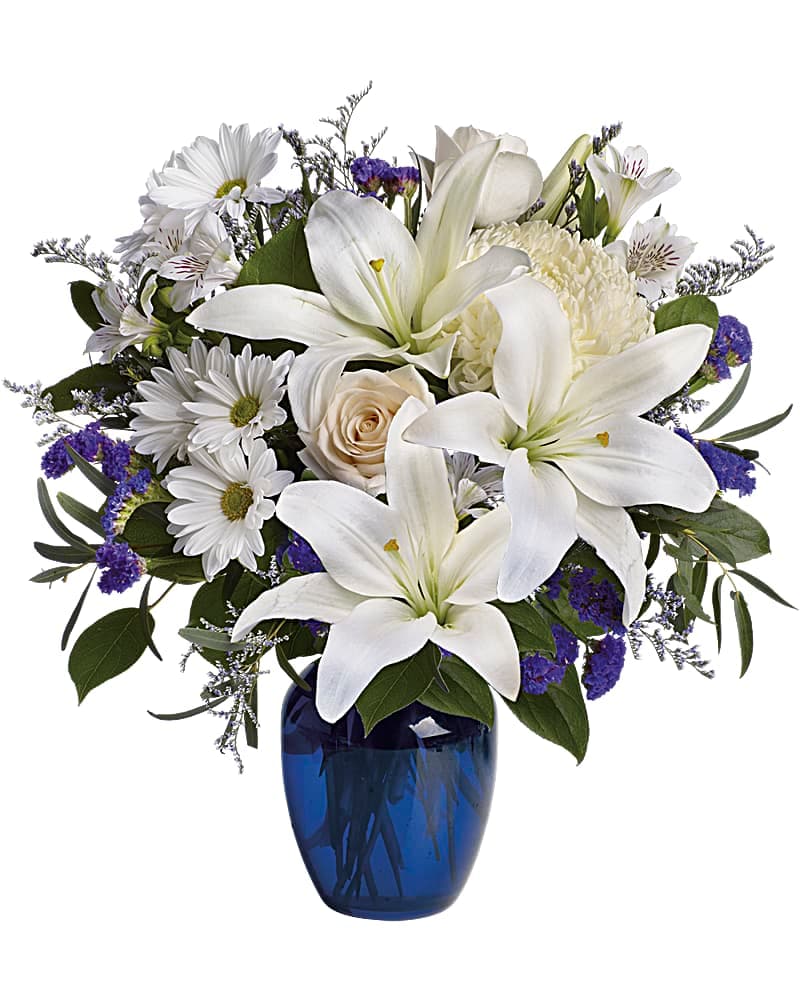
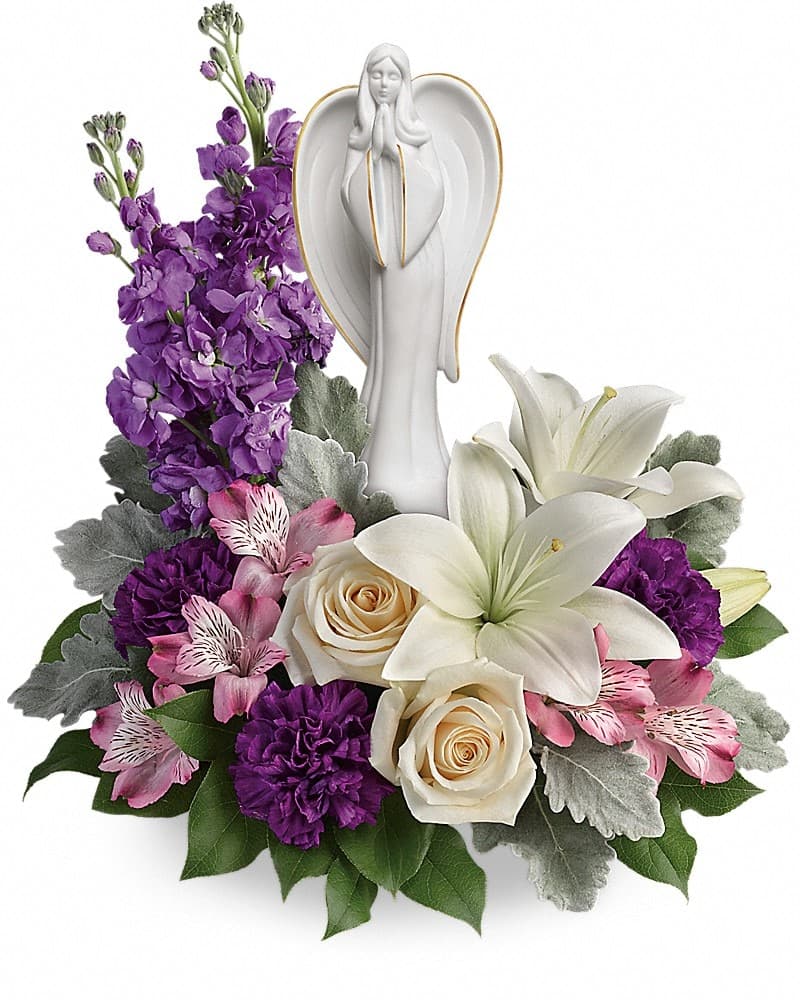
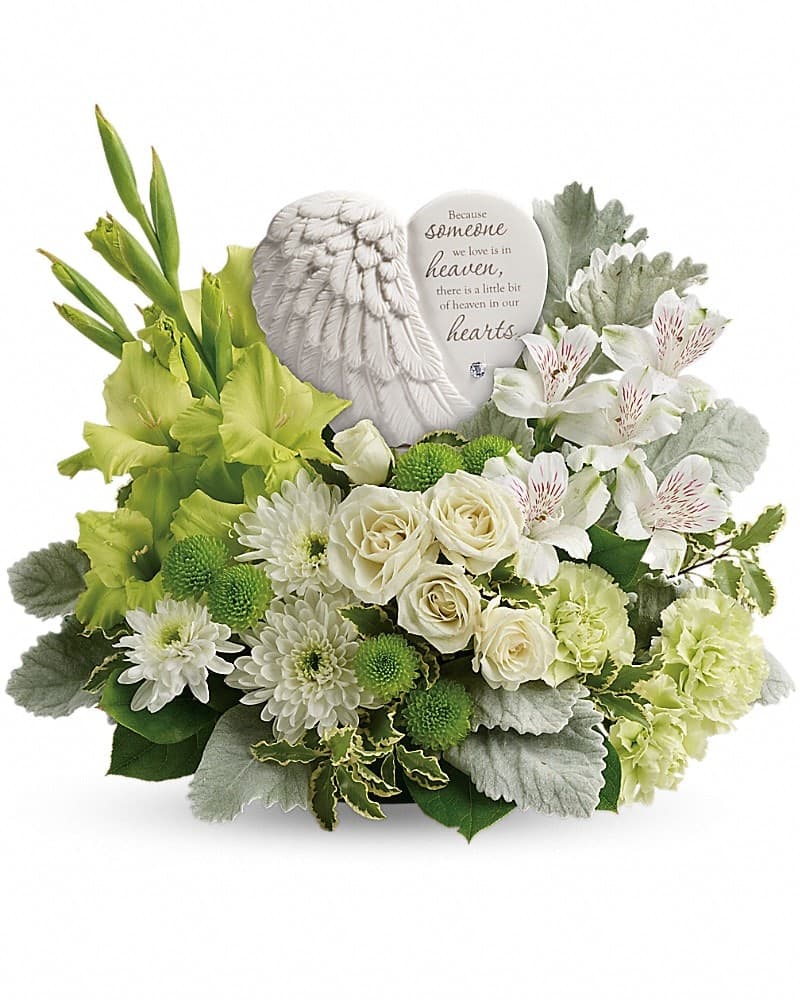
Dubuque's four established funeral homes sit in four different parts of the city and the drive between them matters when a driver is sequencing a morning. Behr Funeral Home is downtown on Main Street, a short run from the shop down Dodge Street and into the grid. Egelhof, Siegert & Casper works out of its Westview chapel on Kennedy Road, which is the closest of the four to Butt's own door. Hoffmann Schneider & Kitchen Funeral Home and Crematory is on Asbury Road on the west side. Leonard Funeral Home and Crematory is south on Rockdale Road, toward Key West. Each one wants sympathy pieces there before the visitation opens rather than during it, because a family standing in a receiving line should not be watching a delivery come through the door. Give us the deceased person's full name exactly as the funeral home has it — with four homes in one city and a county full of shared surnames, a name plus a chapel is what prevents an arrangement being set up at the wrong visitation. If the piece needs an easel, say so on the order; easels are stock items at the funeral homes but the studio sends its own for the larger standing work.
This is an archdiocesan city, and that shapes what a funeral looks like more than any other local fact. The Cathedral of St. Raphael on Bluff Street is the seat of the Archdiocese of Dubuque, so a funeral Mass here can be held in a cathedral rather than a parish church, with the formality that implies. Out in the county the Catholic geography is dense and old: the Basilica of St. Francis Xavier in Dyersville, twenty-five miles west on US 20, is one of a small handful of minor basilicas in the United States and is the kind of building a family will drive an hour back to be buried from; St. Boniface at New Vienna carries the same German farm-parish tradition; Holy Cross, Luxemburg, Farley, Epworth and Cascade each anchor their own congregations; and at St. Donatus, south on US 52, the Luxembourgish settlers left an outdoor Way of the Cross climbing the hill above the village. But Dubuque is not only Catholic, and assuming it is will get the arrangement wrong. Wartburg Theological Seminary trains Lutheran clergy here and the University of Dubuque runs a Presbyterian seminary a few streets away, and the Lutheran, Presbyterian, Episcopal and Congregational churches downtown and on the bluff hold their own services with their own expectations. When in doubt, ask the funeral home which church and what the family has asked for; they will tell you plainly.
Two things about burial in this county are genuinely particular to it. The first is New Melleray Abbey near Peosta, where the Trappist monks have made caskets by hand for decades and plant a tree for each one — a substantial number of Dubuque-area families are buried in one, and if that is the situation the flowers are being built to sit with plain wood rather than polished metal, which changes the palette a good designer will reach for. The second is Linwood Cemetery on Windsor Avenue, laid out in the 1850s and terraced into the bluff above the Mississippi. Its lanes are narrow and steep, the sections are not obvious to a stranger, and a graveside piece needs a section and lot number or the name of the funeral home directing the burial. Mount Calvary takes much of the city's Catholic burial, the religious orders here — the Sisters of Charity of the Blessed Virgin Mary at Mount Carmel on the bluff, the Sisters of the Presentation — keep their own ground, and every county parish has a churchyard. Winter is not a footnote: Iowa frost puts some burials off until the thaw, so a family may have a service in January and a committal in April, and flowers for both are two separate orders months apart.