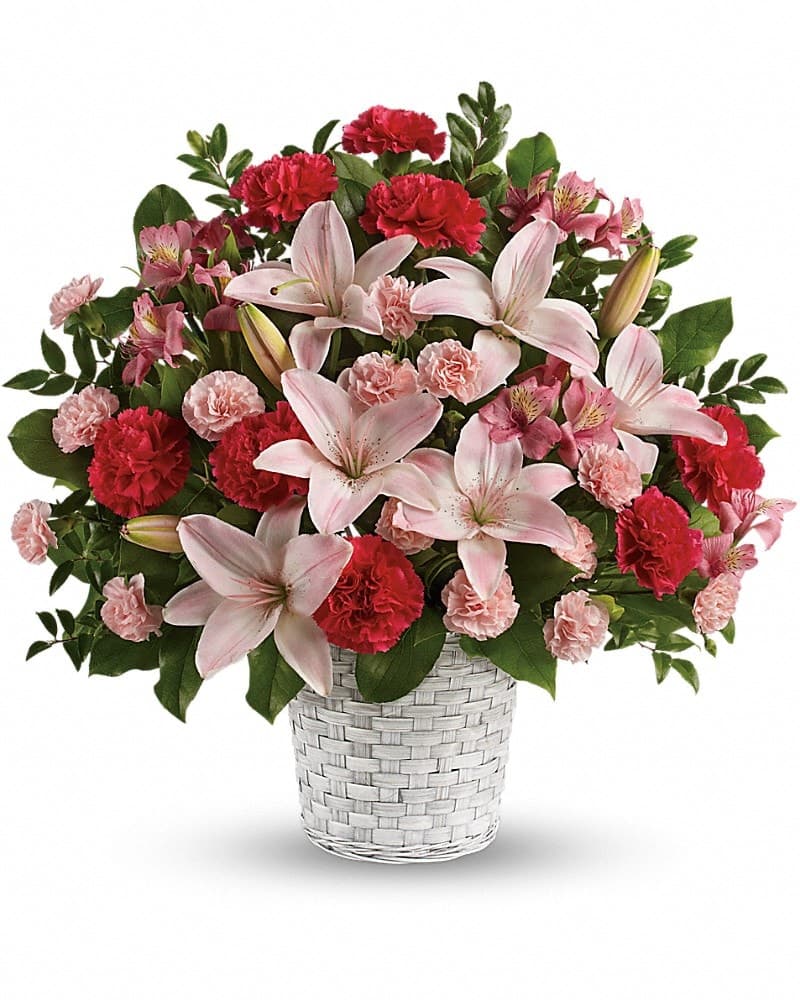
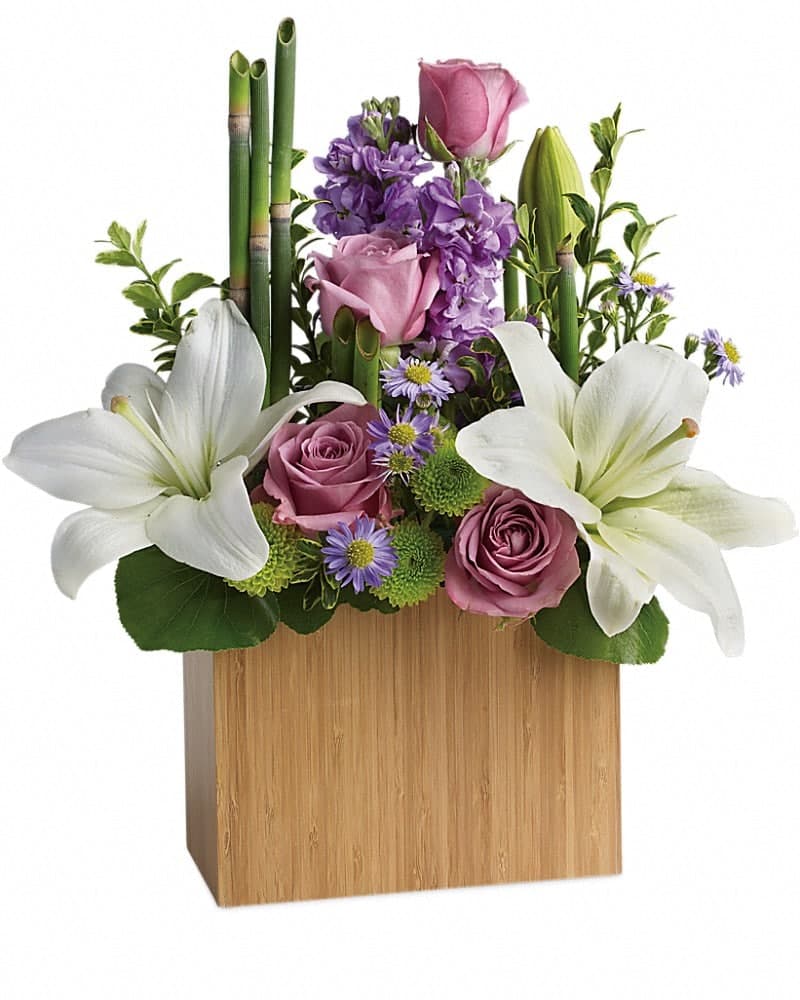
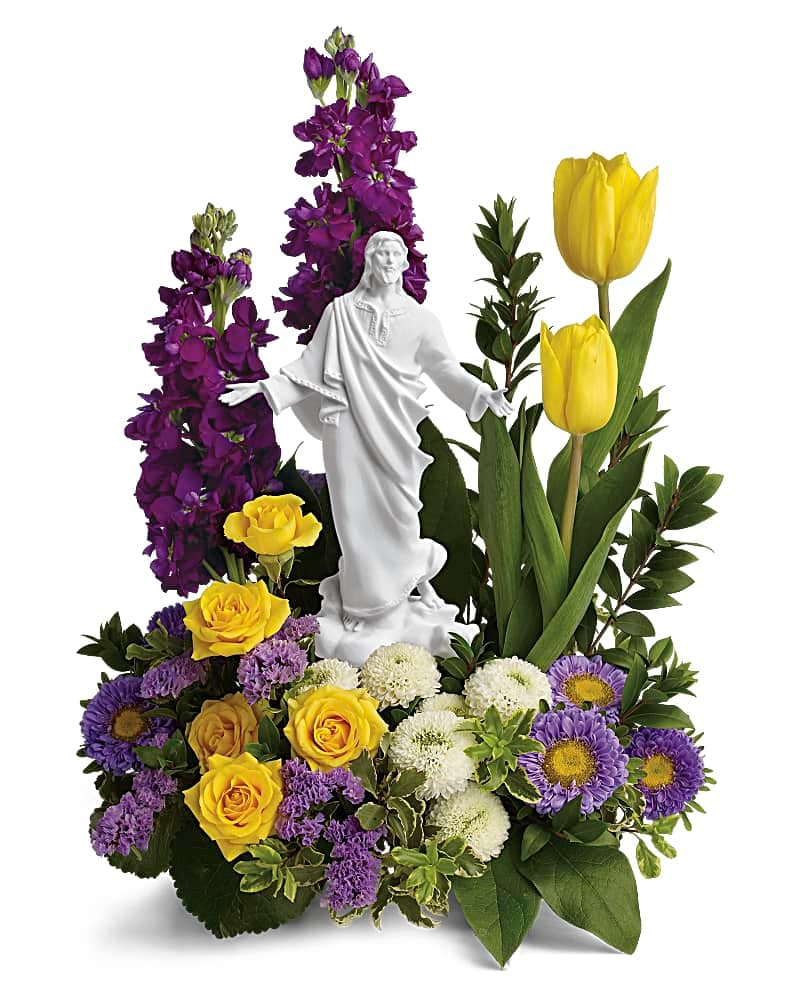
Waterbury is a parish city, and that is the most useful thing to understand before ordering sympathy flowers here. The brass mills pulled in Irish, French-Canadian, Italian, Lithuanian and Polish families in waves, each wave built its own church, and four generations later a funeral is still identified by the parish as often as by the funeral home. The Basilica of the Immaculate Conception on West Main Street at the Green — raised to minor basilica in 2008 and the largest Catholic church in the city — takes the biggest services. St. Anne's on South Main Street, the twin-towered French-Canadian shrine, carries the families whose great-grandparents came down from Quebec to work the mills. Waterbury's Lithuanian community, among the largest in New England, keeps its own parish and social club, and a Lithuanian funeral here arrives with its own hymns and its own expectation of substantial standing work. The Italian blocks of Town Plot and the East End — the community that built La Bella Vista at the Pontelandolfo Club, named for a town in Campania — run the full traditional vocabulary. Our Lady of Lourdes and Sacred Heart hold much of the South End and East End volume. In the North End, Mount Olive AME Zion and the Baptist congregations anchor a homegoing tradition in which a large easel piece and a generous casket arrangement are welcomed rather than discouraged. Roughly a third of the city is Hispanic, with Puerto Rican and Dominican families concentrated in the East End, the South End and downtown, which means Spanish-language services and a strong preference for white palettes and cross forms. Name the parish when you order. It changes what gets built, not only what gets written on the card.
Burial happens mostly on two Catholic grounds and a handful of hillsides. Calvary Cemetery and New St. Joseph Cemetery take the bulk of Waterbury's Catholic interments. Riverside Cemetery, off Riverside Street, is the older landscape ground where the brass families put up their monuments and mausolea in the second half of the nineteenth century — terraced, open and exposed, which argues for something low and heavy rather than tall and light, because a tall wire stand on that slope will be lying down by the time the family reaches the plot. Mount Olivet in Watertown, Grove Cemetery in Naugatuck and the town grounds in Cheshire, Southington, Wolcott and Prospect absorb the rest of the volume inside the radius. For a committal rather than a chapel visit, the arrangement needs clearing with the grounds office and matching to the hour of the service; a piece dropped at an entrance gate does not get to the graveside on its own, and several of these cemeteries limit what may remain at a plot afterward. Two timing realities are specific to this city. A great many Waterbury funerals now run as a single day — visitation at the chapel in the morning, a Mass of Christian Burial at the parish around ten or eleven, then the drive up to Calvary or New St. Joseph. On that schedule anything wanted for a nine o'clock visitation is assembled the previous afternoon, so ordering a day out is not early, it is simply correct. And the West Indian and Jamaican families of the North End frequently hold the date open until relatives can fly in, which is why a Waterbury service can move a week after the notice runs. Check the date with the funeral home; if it has shifted, the shop rebuilds rather than delivering into an empty room.