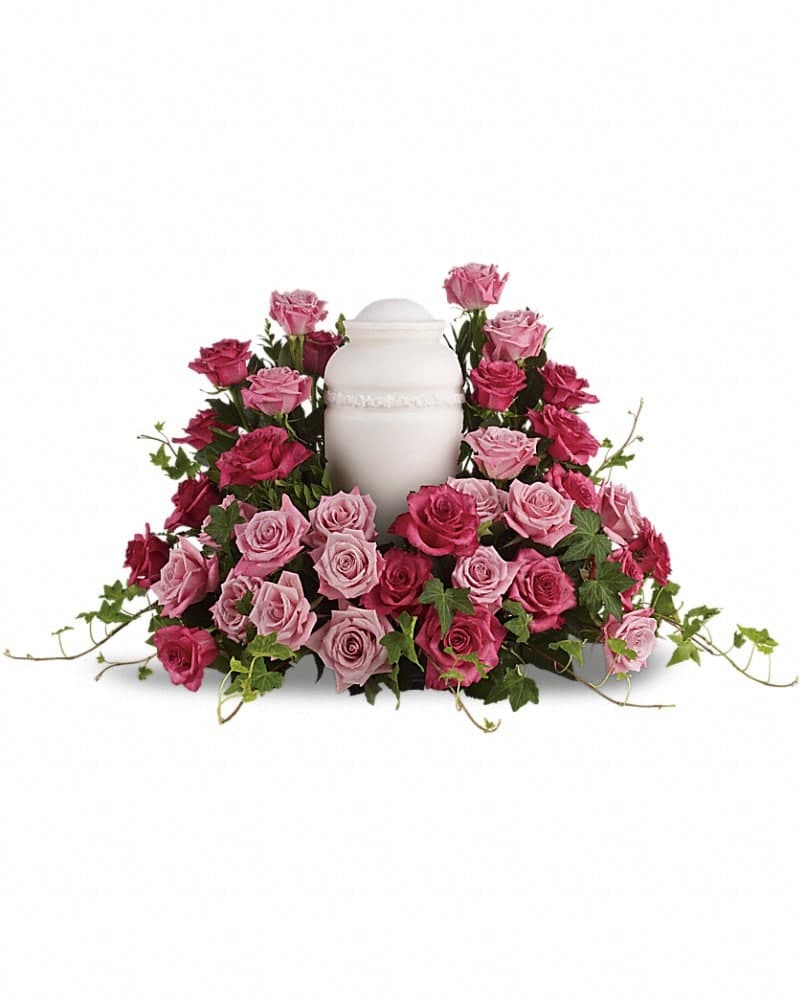
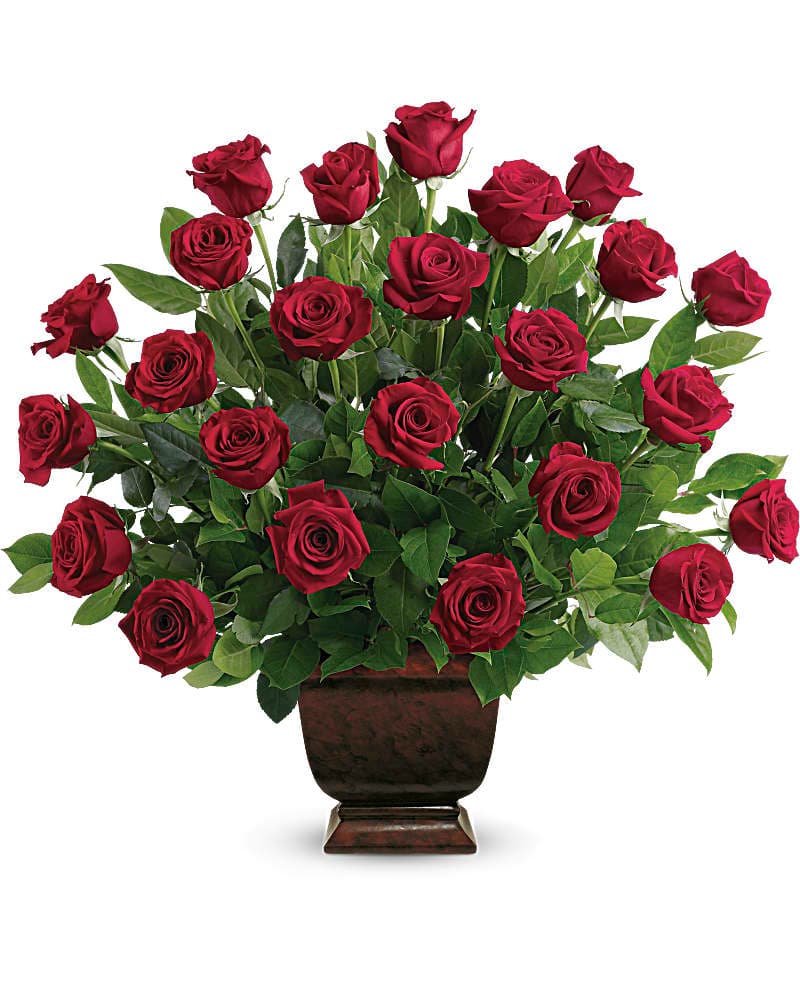
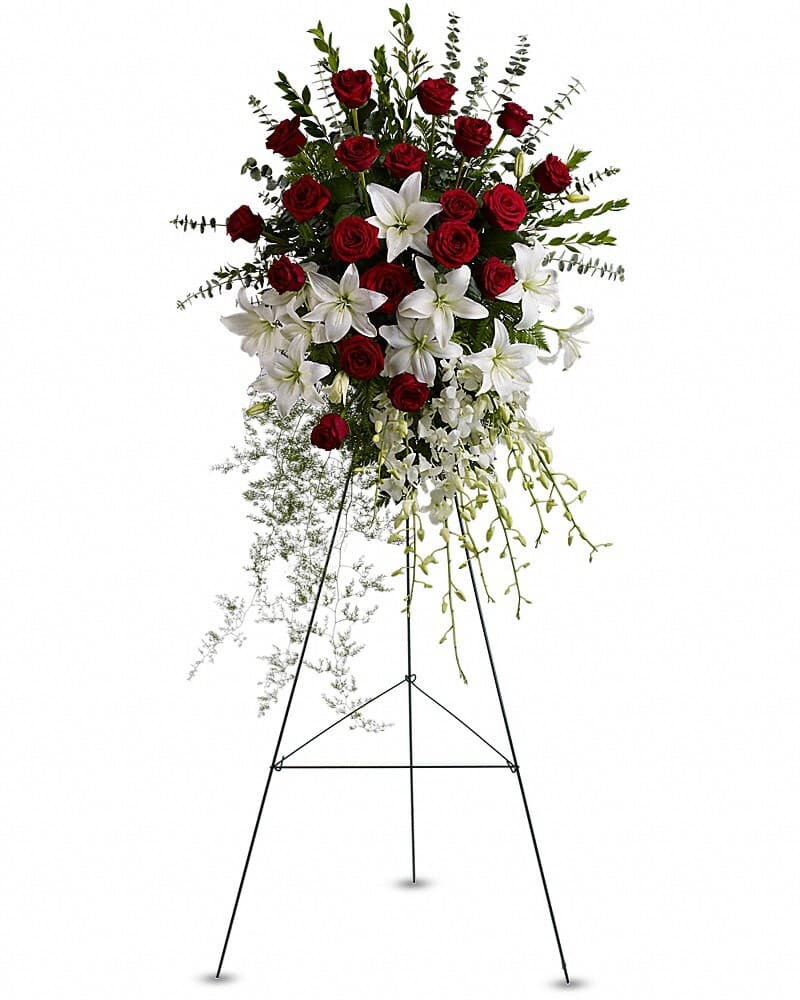
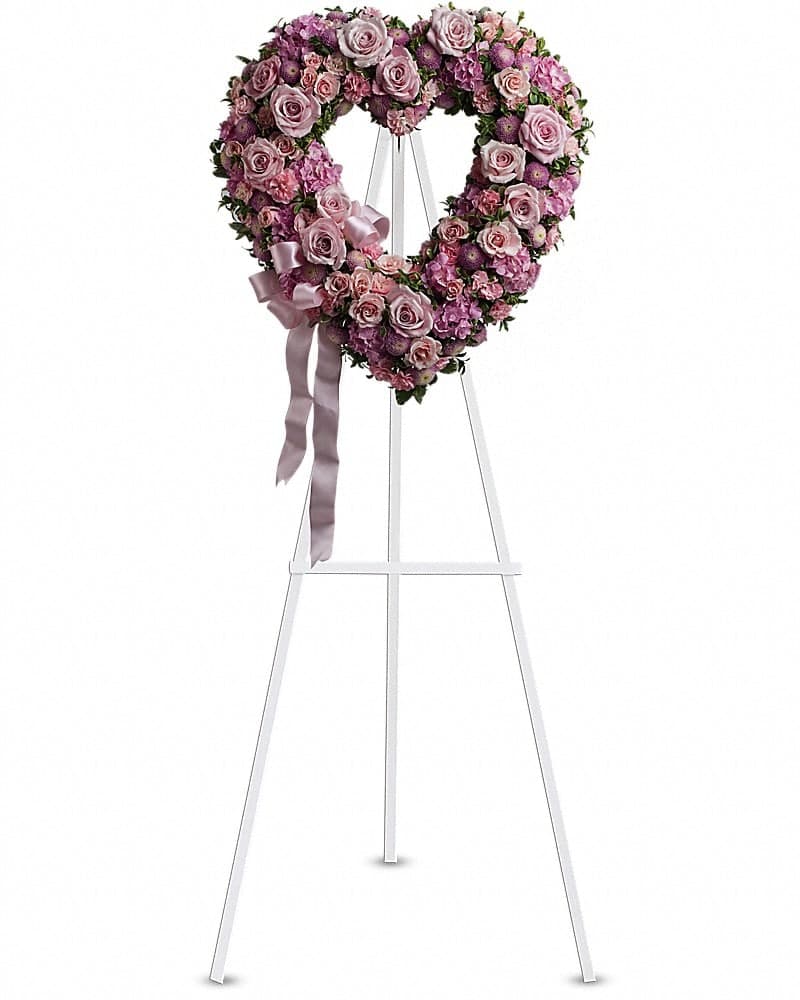
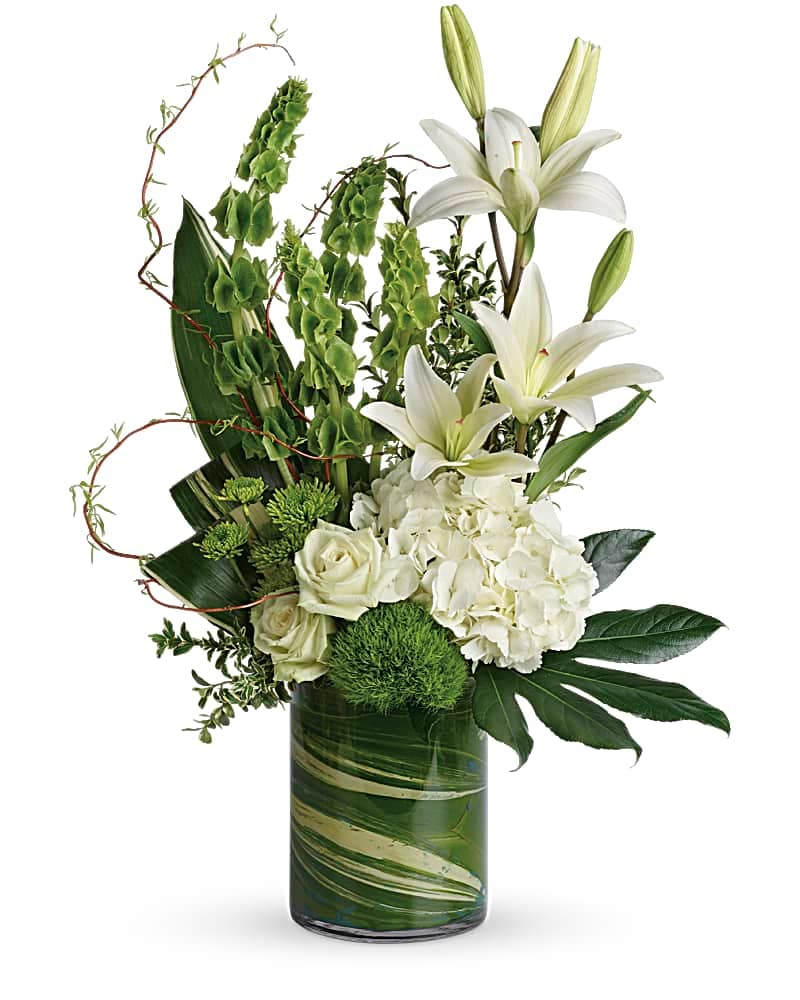
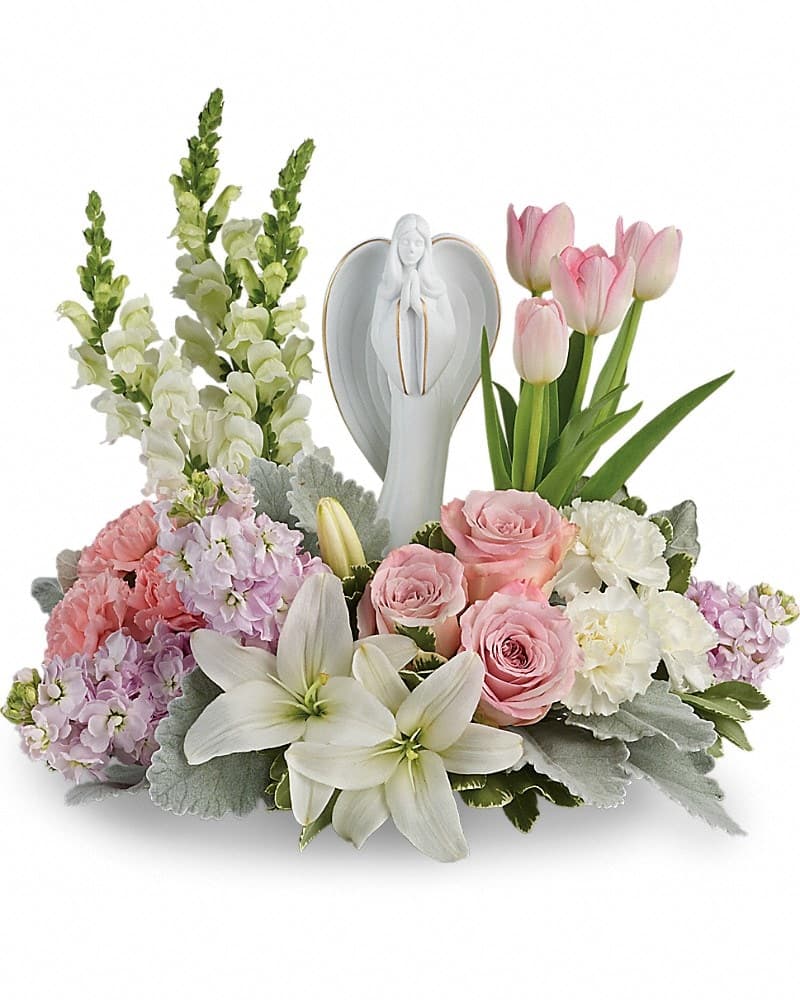
The most useful fact about sending sympathy flowers in Longmont is a fact about a map rather than about flowers. This town's funeral houses never scattered to the highway exits the way they have in most American cities of eighty thousand. They stayed downtown, inside the original colony grid, within a few hundred yards of one another. Ahlberg Funeral Chapel is on Terry Street. Carroll-Lewellen is also on Terry Street, a couple of blocks along. Howe Mortuary is on Coffman Street, one block east of Main. Longmont Florist works out of 614 Coffman — the same street as Howe, and a five-minute walk from the other two. So the hardest part of a sympathy send in most cities — a driver fighting across town against a fixed service hour — barely exists here. A piece going from Coffman to a Terry Street chapel is a walk. What that must not become is the assumption that a downtown service is therefore a same-day problem. Distance was never the risk. Design time is, and nobody wires a standing piece properly in ninety minutes on request.
Very few families in this county still bury in the old sense. Cremation is the overwhelming default across this part of Colorado, and that one preference rearranges the entire calendar around a death. Only a minority of the sympathy orders placed on this grid are aimed at a chapel service happening within the week. A great many are for a gathering four or five weeks out, held somewhere that is not a funeral home at all: the Callahan House on Terry Street, the city-owned Victorian a block from the chapels where Longmont families have held receptions for generations; a shelter or the lawn at Roosevelt Park; a hall at the Boulder County Fairgrounds on Hover Street; the Longmont Museum on Quail Road; a taproom on Boston Avenue; or somebody's back yard out in the 80503 country with Longs Peak doing the work that a stained-glass window does elsewhere. So think in two sends rather than one. The early one is domestic: something at the front door in the days immediately after, while the household is drowning in phone calls, forms and people who do not know what to say. That is the send that does the work, and if only one of them is going to happen it should be this one. The late one is public: a piece for the photograph table at the gathering itself, four or five weeks on, which is a different job at a different scale. If you can ask the family which they would rather have, ask. In this town they tend to answer honestly.
For traditional services, the religious geography is specific and worth knowing by name. St. John the Baptist Catholic Church on Collyer Street is Longmont's historic Catholic parish, in the downtown grid with the chapels, and it carries a Spanish-language Mass and a Latino congregation whose roots in this valley run back to the sugar-beet fields and the Great Western Sugar factory on the east side of town — the mill buildings are still standing out past the highway. That history matters on a sympathy page because it shapes what families expect: a rosary or velorio the evening before, a full Mass, often a large standing piece and a great many small ones, and around the first days of November, the Day of the Dead observances that the Longmont Museum has built into a fixture of the town's calendar, where marigolds specifically are the flower being asked for and nothing else substitutes. St. Stephen's Episcopal Church on South Bross Lane and the downtown Lutheran and Methodist congregations run smaller, more restrained services where a single well-built altar arrangement is the right scale. LifeBridge Christian Church on the Ute Highway, out toward the northeast edge, is the opposite problem — a large-auditorium memorial where one modest easel piece simply vanishes; ask for scale or send to the family instead. And southwest of town, off 63rd Street near Nelson Road, the Ryssby Chapel — the small 1880s stone church built by Swedish immigrant farmers, with its burial ground beside it — still hosts services, and is one of the more beautiful places in Boulder County to stand at a graveside.
Burials mostly land at Mountain View Cemetery, Longmont's municipal ground on the north side of town, or at Foothills Gardens of Memory, the flat memorial park out toward the county line, with some families going up to the small hillside grounds at Lyons or Hygiene. Two physical things about Longmont graveside work are worth building around. The first is exposure. Longmont's burial ground is open plain at the exact point where the mountains quit, and nothing stands between these cemeteries and the foothills but fields. The wind that pours down off the Divide on a bright January afternoon arrives without a cloud to announce it and without dropping below highway speed. Tall work on a folding stand does not survive that, and a family watching it go over will remember it. What holds is a low, dense, heavily wired build with ballast underneath, and nothing made of glass set anywhere near the turf. The second is the season people forget: March and April are the heaviest snow months on this stretch of the Front Range, and a wet upslope storm can close CO-66 and the Diagonal for a morning with almost no notice, which is a better reason than any other to order a service piece the day before rather than the day of. Longmont also carries a specific memory of water — the St. Vrain came out of its banks in September 2013 and rebuilt the shape of this town — and the creek-side parks where families now hold memorials are ground that was under water within living memory.