The first thing to establish before choosing a get-well arrangement in Longmont is where the patient physically is, because there is a real chance the answer is not Longmont. This town has two hospitals and both are community-sized by design. Longmont United Hospital sits on Mountain View Avenue at the north end, the older of the two, with the large multispecialty Longmont Clinic on the same stretch of West Mountain View beside it. UCHealth Longs Peak Hospital sits on East Ken Pratt Boulevard on the southeast side in 80504, a compact building that opened in 2017 with an emergency department, surgical services and a birth center. Between them they carry the ordinary business of eighty thousand people extremely well. What they do not carry is the top of the acuity scale, and so anything needing a major trauma center, a high-level newborn intensive care unit, a transplant service or complex cancer treatment gets moved out — fifteen miles down the Diagonal to Boulder Community Health's Foothills campus on Arapahoe Avenue, south to Good Samaritan in Lafayette, north to Medical Center of the Rockies in Loveland, or forty-odd miles southeast to the Aurora campuses, including the children's hospital there. Every one of those is inside the 60-mile radius this grid runs on. So the first question is not which bouquet. It is: which building.
If the patient is in Longmont, the logistics are as easy as hospital delivery gets anywhere. Longmont Florist works from 614 Coffman Street, one block east of Main in the old downtown grid; Longmont United is about seven minutes north up the grid, and Longs Peak is about twelve minutes southeast down Ken Pratt. Neither is a sprawling campus you can get lost in — Longs Peak in particular is a single compact building where the main entrance off Ken Pratt is simply the entrance, which is a genuine relief compared with the multi-tower medical centers down in Denver. What actually determines whether the flowers reach the patient is not the driving. It is two pieces of information: the name the patient was admitted under and the current unit. Room numbers are the least reliable thing you can give, because patients in a small hospital move — out of observation, into a surgical floor, back down again — often within the same day. Put the full admitted name in the order notes, add the unit if you know it, and the front desk will do the rest. If the patient is being discharged within a day, send to the house instead and skip the hospital entirely; the flowers will be there when they get home, which is the better moment anyway.
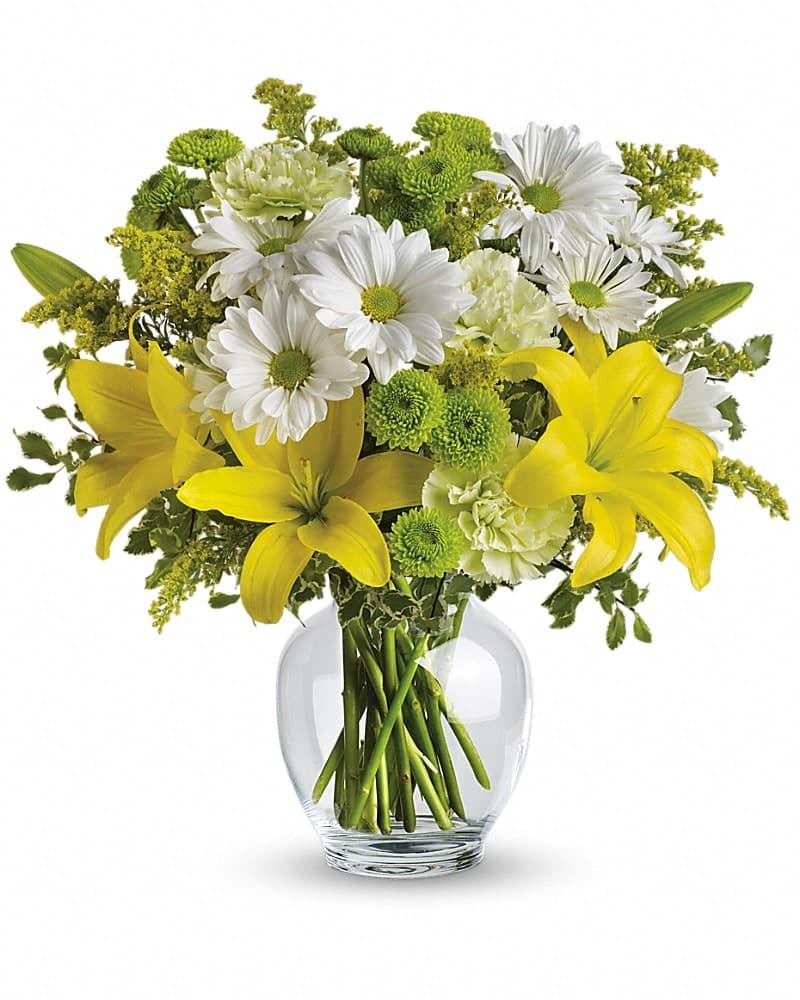
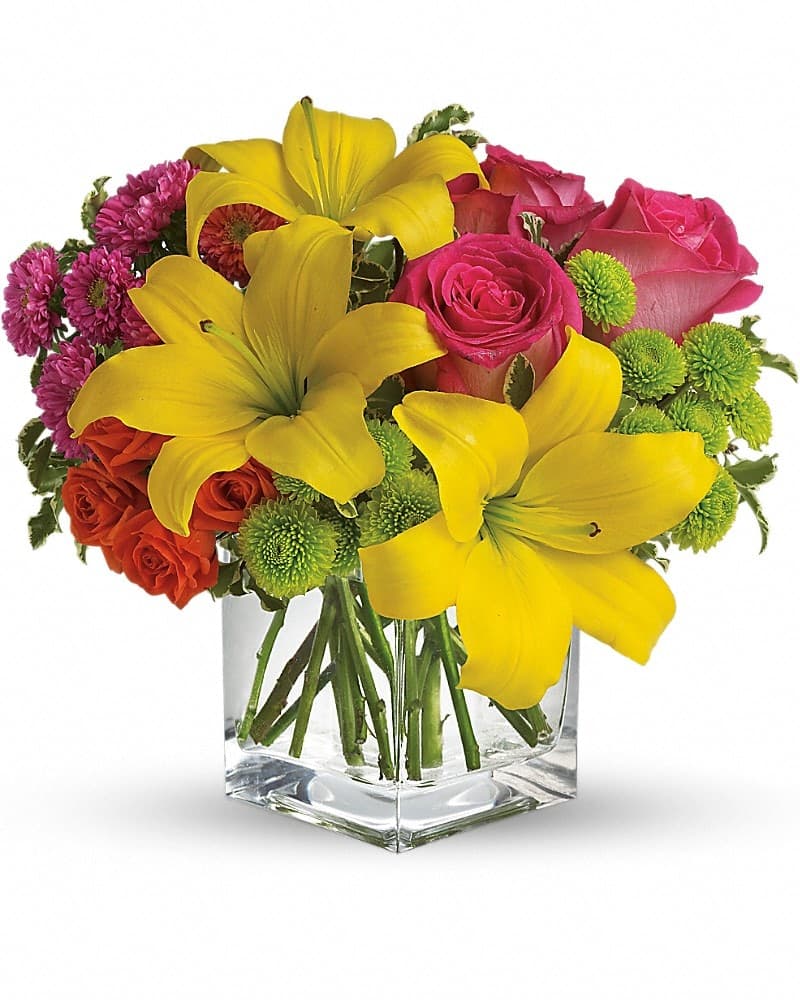
Ward rules are where a get-well send most often goes wrong, and the honest version is that they are not uniform, they change by unit, and the safest approach is to build for the strictest case. Lilies are the single biggest problem: their pollen is heavy, it stains everything it lands on, and on any unit caring for someone whose immune system is suppressed they are usually turned away at the desk. Ask for the arrangement to be built lily-free and low-pollen and you have solved most of it in one instruction. Strong fragrance is the second issue — someone recovering from anaesthesia or sitting through chemotherapy has a sense of smell that has turned hostile, and a heavily scented bouquet in a small room is genuinely unkind. Keep it scent-light. Size is the third and least discussed: a hospital tray table is small, it holds a water jug, a phone and a meal, and a large arrangement gets moved to the windowsill where the patient cannot see it. A compact, dense build in a low container is the right shape. And skip latex balloons entirely; hospitals run allergy policies on them and a mylar one is the only version that reliably gets past a desk.
Three situations come up often enough in Longmont to be worth calling out separately. The birth center at Longs Peak produces a steady flow of new-baby orders, and those are the most time-sensitive sends on this page — Colorado discharges are quick, a mother may be home in forty-eight hours, and a bouquet arriving on day three finds an empty room. Send the day you hear, or send to the house at the end of the week. Infusion and treatment appointments are the opposite problem: the patient is in a recliner in a shared bay for four hours and then drives themselves home, and nothing bulky is going in the passenger seat. For those, send to the house on the same day so it is waiting, and make it low-pollen and unscented because the bay is shared. Home recovery is the largest category of all and the most under-served. Longmont's Old Town Victorians and the newer Clover Basin and Nelson Road subdivisions are full of people convalescing in their own front rooms for weeks after a procedure, and week three is when the visitors stop coming. A plant delivered then does more than a bouquet delivered on day one, and it does not need anybody to change the water.