Naming the building is not enough here, and the reason is specific rather than general. Cabell Huntington is a teaching hospital for Marshall's Joan C. Edwards School of Medicine, with the medical school and the physician offices sitting on Medical Center Drive just off the boulevard; the Hoops Family Children's Hospital operates inside it; and the Edwards Comprehensive Cancer Center stands a short walk along the same boulevard. Those are four different front doors within a few hundred yards and they do not share a reception desk. St. Mary's carries its own internal geography — the regional heart institute, the cancer center, the nursing school on the campus — and an order that says only 'St. Mary's, fourth floor' will spend twenty minutes at an information desk before it moves. So the working order gives the campus, the unit name and the room number, in that order, plus the patient's full name as admitting has it. One more piece of Huntington specificity: the Hershel Woody Williams VA Medical Center on Spring Valley Drive out in the 25704 end of town, named for the Marine who came home from Iwo Jima with the Medal of Honor, runs on its own visiting and screening procedures and takes deliveries at the main entrance rather than at a ward. Give us a ward or clinic name there and a phone number for whoever is with him.
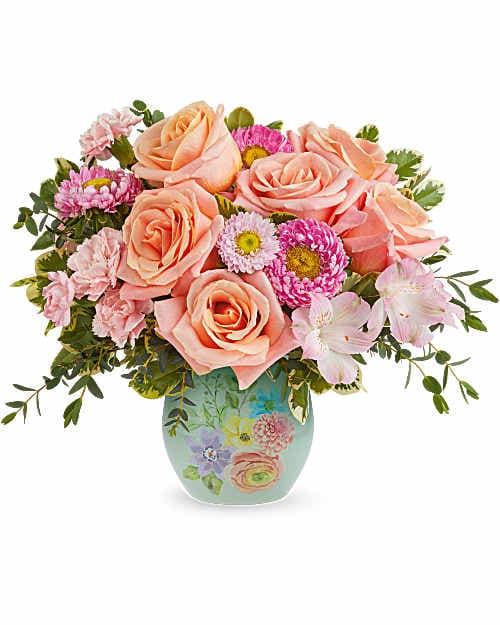
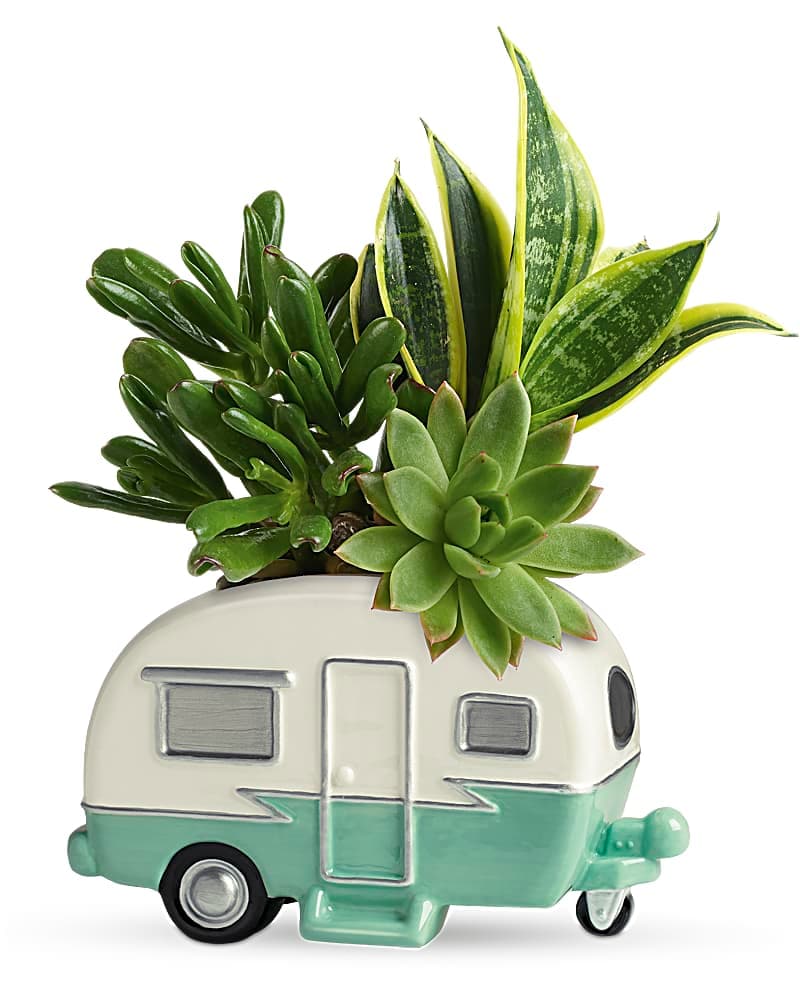
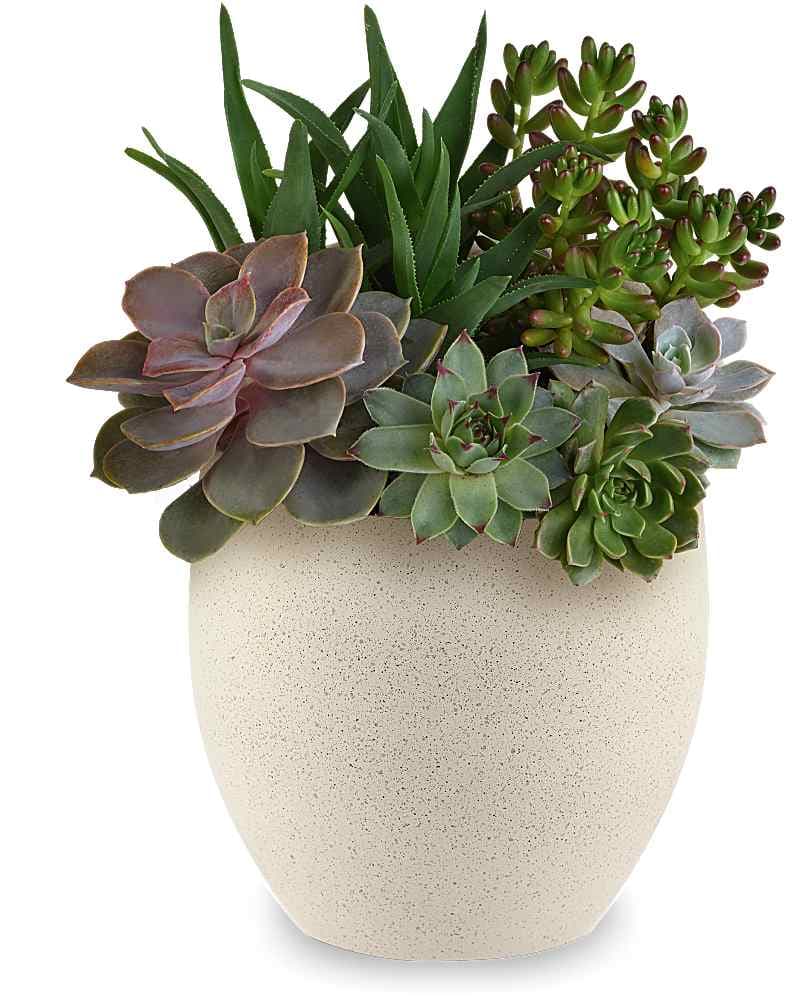
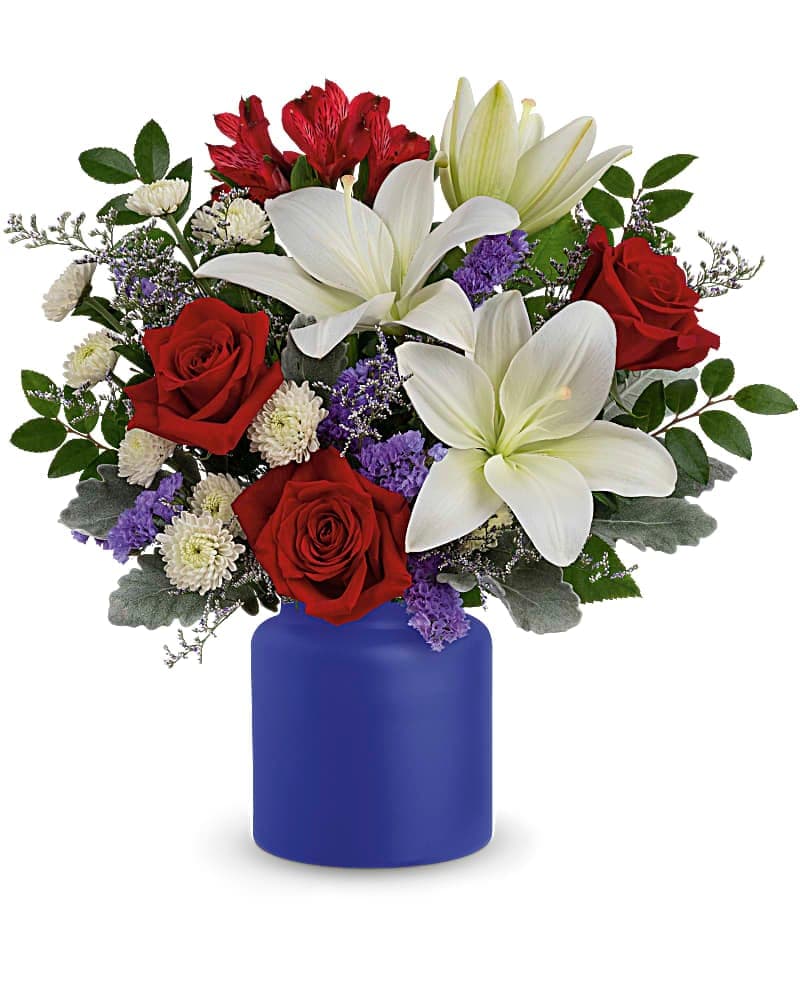
Whether a piece stays in the room is settled by furniture rather than by taste. The rolling table beside a hospital bed is already carrying a meal tray, a water jug, a phone and a call button, and a design with a footprint wider than a dinner plate or a profile taller than that jug ends up on the ledge under the window — which sits behind the visitor's chair, outside the patient's sight line from the pillow. So the brief is squat, broad and heavy-bottomed, in something a visitor can put down one-handed while holding a coffee and a coat. The objection to lilies is not squeamishness: open stamens shed rust-coloured pollen that goes straight onto gowns, sheets and the bed rail, staff cannot launder around it, and in a room with the door shut the smell has nowhere to go; if the piece travels home at discharge to a house with a cat, both the foliage and the vase water are toxic to it. Potted plants get turned back over the soil rather than the scent, which is why a plant is the right gift once somebody is standing in their own kitchen again. Fragrance earns its own line in this city, because plenty of rooms at these hospitals still hold two beds. Scent is the one part of a gift the other patient receives without being asked, and a man twelve hours out of anaesthesia has a stomach that disagrees with stargazers well before his opinion does. Typing 'unscented' into the notes costs nothing and settles the argument.
Four Huntington situations are better served by changing the address than by changing the bouquet. Critical care is the first: a closed unit will not take flowers through its doors at all, so the delivery aims at the waiting room instead — give us the name and mobile number of whoever is doing the sitting and the driver makes the hand-off downstairs. Better still in this market, send it to wherever that person is sleeping. A relative four nights into folding themselves onto a recliner and eating from the cafeteria at odd hours is who the gift actually helps, and because patients arrive here from ninety minutes away, that relative is frequently in a motel out Route 60 rather than at home. Second, treatment at the Edwards Comprehensive Cancer Center happens in a chair: people arrive, sit for several hours and drive themselves back out, so an arrangement sent to an infusion area is delivered to an empty seat. Put it at the house and date it for the day after, which is the harder day in any event. Third, the psychiatric and behavioural admissions — Mildred Mitchell-Bateman Hospital on Norway Avenue, River Park Hospital — operate under ligature and sharps precautions, which rules out glass, florist wire and trailing ribbon; what can be built instead is a soft-sided container with the stems seated in foam and nothing rigid anywhere in the structure. Fourth, paediatrics. The Hoops Family Children's Hospital covers this region, but the hardest cases still leave the Tri-State for Columbus, Cincinnati or Morgantown, and when a child goes out of state the delivery that means anything goes to the grandmother in Huntington who has the other two children and the school run.