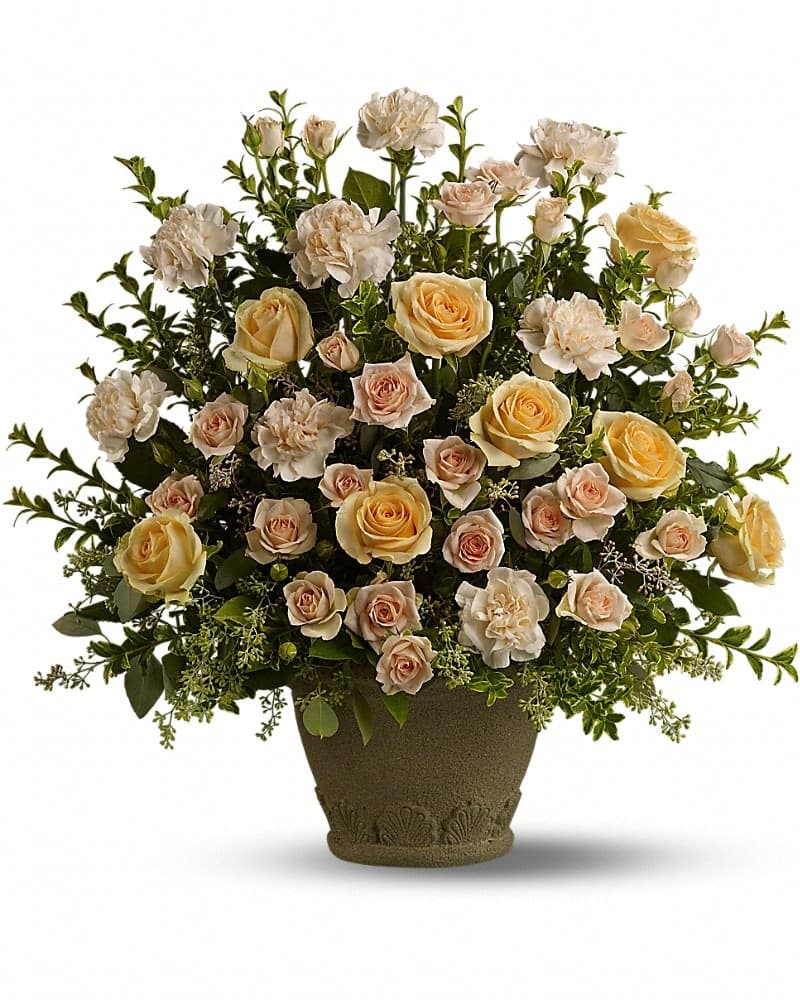
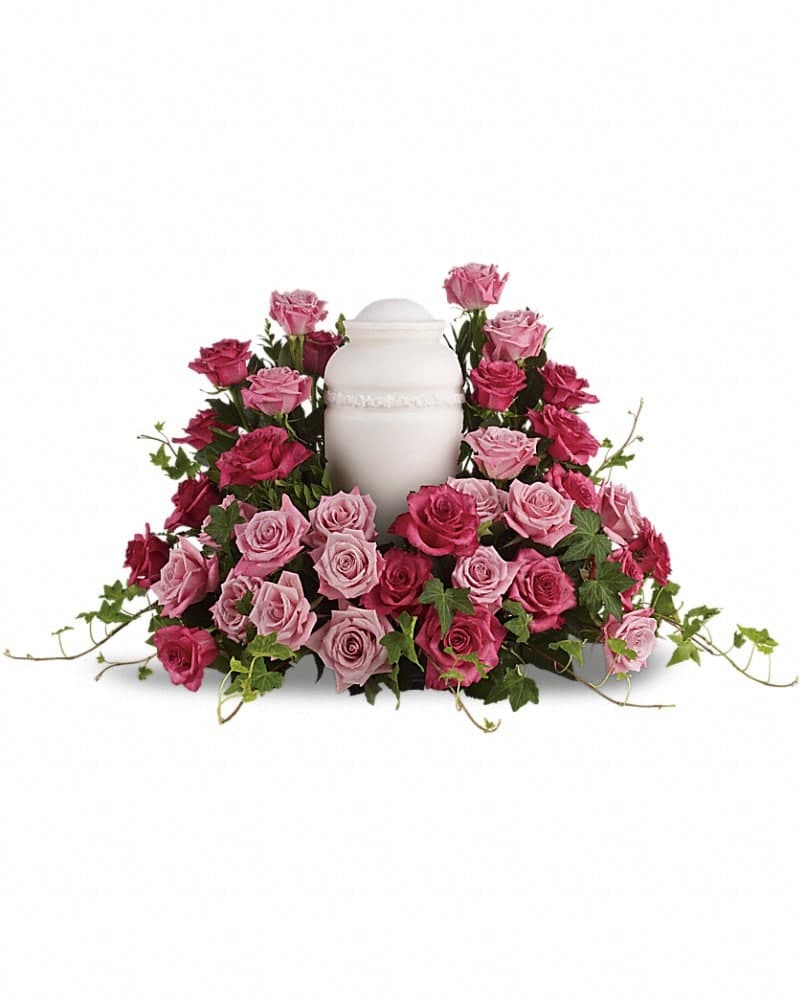
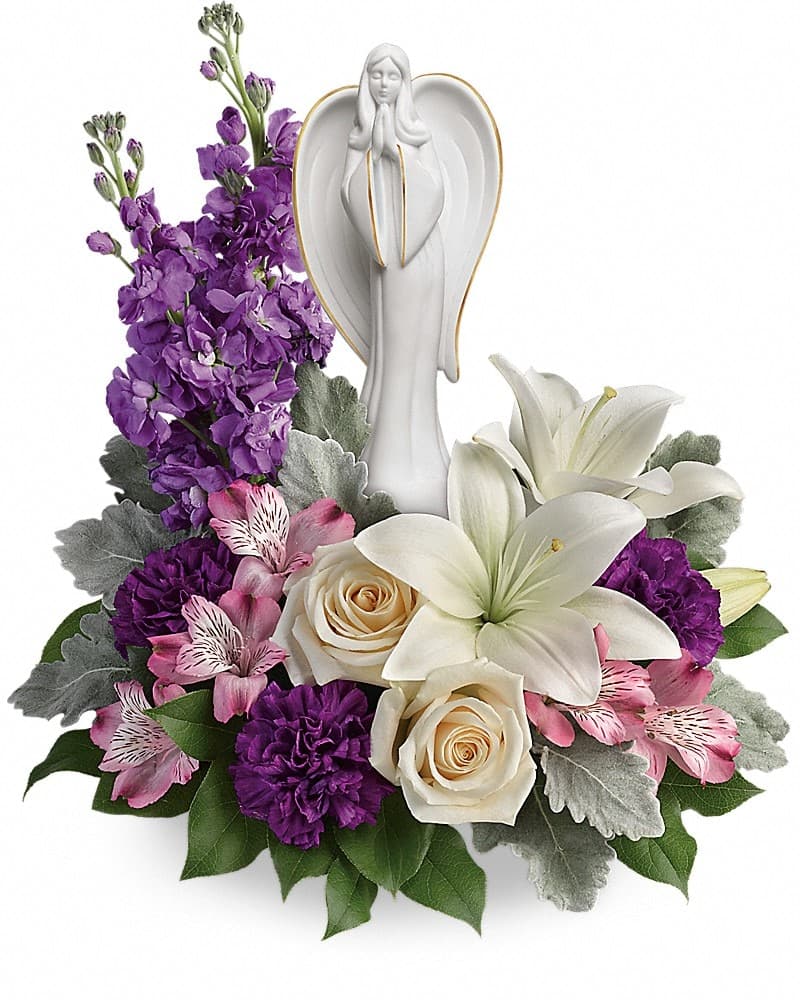
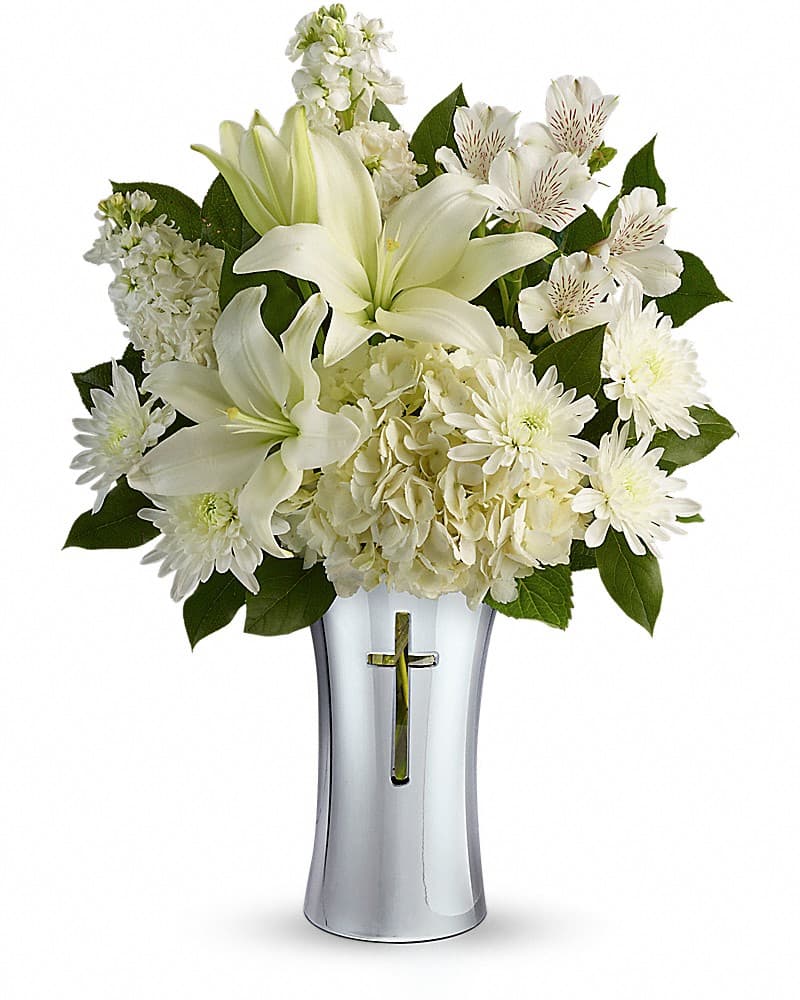
In most cities the first question is which funeral home. In Fort Wayne the first question is usually which McComb. D.O. McComb and Sons runs several separate Fort Wayne locations, each named for the park or neighborhood it serves — Lakeside Park on Lake Avenue, Foster Park on Fairfield Avenue, Maplewood Park on Maplecrest Road, Pine Valley Park on East Dupont Road and Covington Knolls on Covington Road — which means a family can hold a service six miles from where you assumed it would be. Getting that wrong costs a delivery, because a spray sent to the wrong chapel on the morning of a service does not get there in time to be moved. So before anything else, read the obituary line by line and write down the exact location name, the visitation times and the service time. The other chapels people send to here are Klaehn, Fahl and Melton on West Wayne Street downtown, Mungovan and Sons on South Calhoun, and the Divine Mercy chapel at the Catholic Cemetery on Lake Avenue. There are also chapels in New Haven, Huntertown, Grabill, Leo-Cedarville and Ossian that serve the ring townships.
Fort Wayne's religious geography shapes what is appropriate, and it is more varied than the size of the city suggests. This is a Catholic diocesan seat — the Cathedral of the Immaculate Conception stands downtown at Calhoun and Lewis, and the parish network runs from Saint Vincent de Paul on the north side to Saint Charles Borromeo on Trier Road on the east — and Catholic services here are a full vigil, funeral Mass and committal, so flowers at the funeral home, the church and the graveside are all normal. It is also one of the most Lutheran cities in the country, with Concordia Theological Seminary on North Clinton Street and a dense Missouri Synod parish and school network; Lutheran services tend toward restraint, and a simple arrangement reads better than a large one. Fort Wayne holds the largest Burmese population in the United States, with Chin and Karen congregations concentrated on the southeast side, and those communities keep their own funeral customs around long, well-attended gatherings. The AME and Baptist congregations of the southeast side follow a homegoing pattern where standing pieces and family sprays are expected.
The 60-mile radius on this rail reaches well beyond Allen County, and rural northeast Indiana has conventions of its own. New Haven, Woodburn, Monroeville, Churubusco, Columbia City, Auburn, Garrett, Kendallville, Huntington, Bluffton, Decatur, Berne, Wabash, Angola and LaGrange are all in range, along with Van Wert and Defiance across the Ohio line — but order those in the morning, because the far ring is an hour out and an hour back from either shop. One genuine caution: Adams County around Berne and Monroe, and LaGrange County around Shipshewana, hold large Old Order Amish and Swiss Mennonite communities, and plain-community funerals generally do not involve florist flowers at all. Sending a spray to an Amish family, however kindly meant, can land as an intrusion rather than a comfort. If you are not sure whether a family is plain, ask whoever told you about the death, and consider a note or food instead. A shorter list of correct gestures beats a longer list of wrong ones.