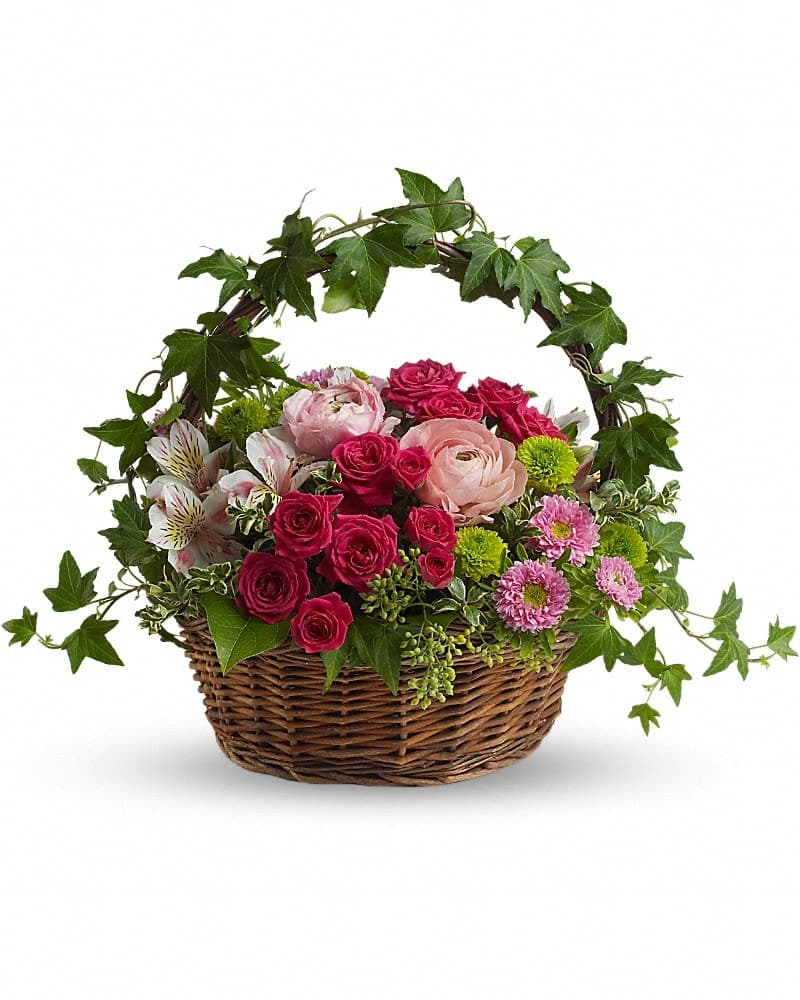
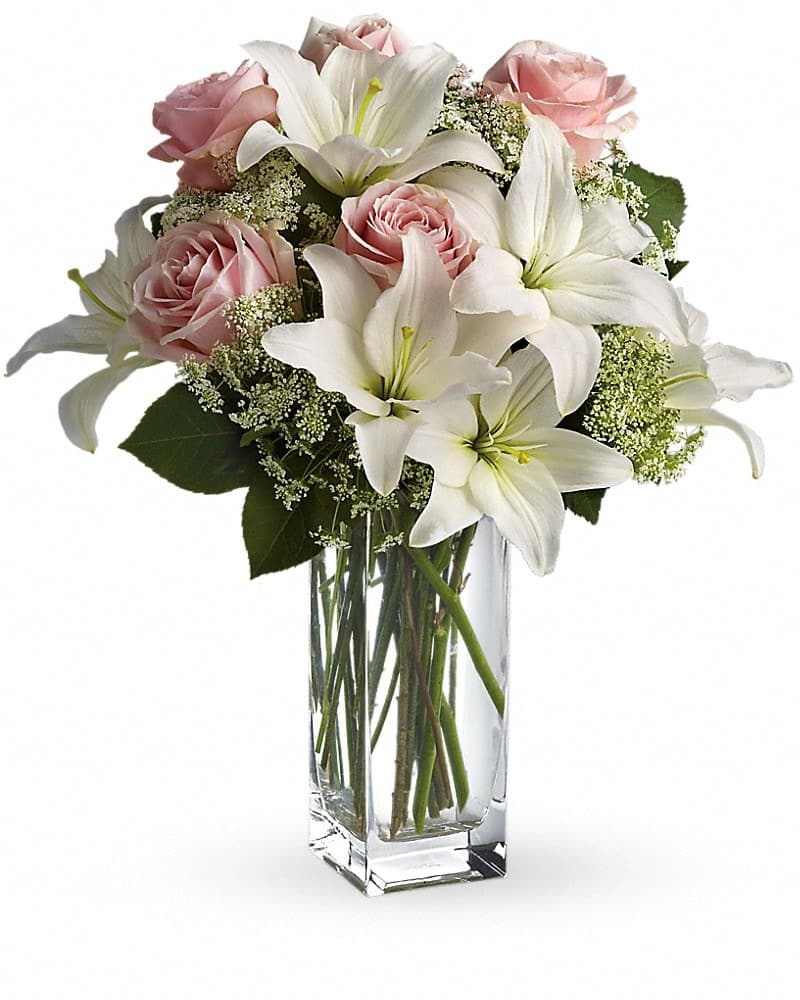
The single most useful thing to understand about sending sympathy flowers to Anchorage is that the service is often not in Anchorage. This city is the hub of a state where most communities have no road connection to anywhere, and a death in a village on the Kuskokwim, the Yukon, the Bering coast or the North Slope frequently routes through Anchorage — the hospital, the medical examiner, the funeral arrangements, the family members who flew in — before the person goes home by air for burial. That produces a pattern you will not meet in the Lower 48. There may be two services: one here, in an Anchorage chapel or church, for the relatives and coworkers and classmates who are in the city; and one in the home village, days or weeks later, for everyone else. Flowers cannot practically follow a casket onto a Bush flight on a small aircraft, and nobody should promise you otherwise. What works is sending to the Anchorage half — the chapel service here, or the house or apartment where family are gathered — and that is usually where the flowers do the most good anyway, because the people in that room are the ones on hold with airlines at eleven at night.
The Anchorage places themselves are few and easy to name. Anchorage Memorial Park Cemetery occupies the block at 6th Avenue and Cordova Street, a few minutes from downtown — the city's historic municipal cemetery, dating to the earliest years of the town, and still the graveside address most old Anchorage families know by heart. Angelus Memorial Park sits off Tudor Road on Juneau Street, on the east side of town, which puts it within a couple of miles of Alaska Flower Shop at 3561 E Tudor Rd Unit 6 — the shortest graveside approach on this grid. Fort Richardson National Cemetery is on Joint Base Elmendorf-Richardson, one of only two national cemeteries in Alaska, and it carries the full weight of military honors; because it is inside a controlled-access installation, a committal there needs to be coordinated and timed rather than simply driven to. For services rather than interments, the recurring addresses are Holy Family Cathedral at 811 W 5th Avenue downtown, the seat of the Archdiocese of Anchorage-Juneau; Our Lady of Guadalupe Co-Cathedral on Wisconsin Street in the western half of the bowl; St. Innocent Russian Orthodox Cathedral on Turpin Street, which matters more here than its size suggests; Anchorage Baptist Temple on East DeBarr Road, a few blocks from Flowers Byjune at 6311 Debarr Rd., Ste Q; ChangePoint Alaska; and Congregation Beth Sholom.
Anchorage is one of the most culturally layered cities in the United States for its size, and sympathy work here has to be literate about it rather than generic. Russian Orthodoxy is not a curiosity in Alaska but a two-century-old tradition carried deeply in Yup'ik, Unangax̂ and Sugpiaq communities, and Orthodox observance commonly includes memorial prayers at the fortieth day as well as the funeral itself — which means a family may welcome flowers weeks after the death, at a point when everyone else has stopped sending anything. Alaska Native funeral custom is not one custom; Iñupiaq, Yup'ik, Cup'ik, Athabascan, Unangax̂, Sugpiaq, Tlingit, Haida and Tsimshian traditions differ from each other substantially, and in many Athabascan communities a potlatch follows, sometimes a year later. Anchorage also holds Alaska's largest Filipino community, where a Catholic novena of nine evenings of prayer and a fortieth-day mass are common, so a sympathy arrangement sent to the house on the third evening lands in the middle of a gathering rather than an empty living room. The city's Samoan and Tongan congregations hold large, church-centered, multi-day observances. Korean, Hmong, Thai, Ukrainian and Latin American communities all have established congregations here. Mountain View, a few minutes from the DeBarr shop, has been identified repeatedly as one of the most ethnically diverse neighborhoods in the country. The honest instruction for a sender is short: ask the family what the service is, and put it in the order notes. The studios build to what they are told.