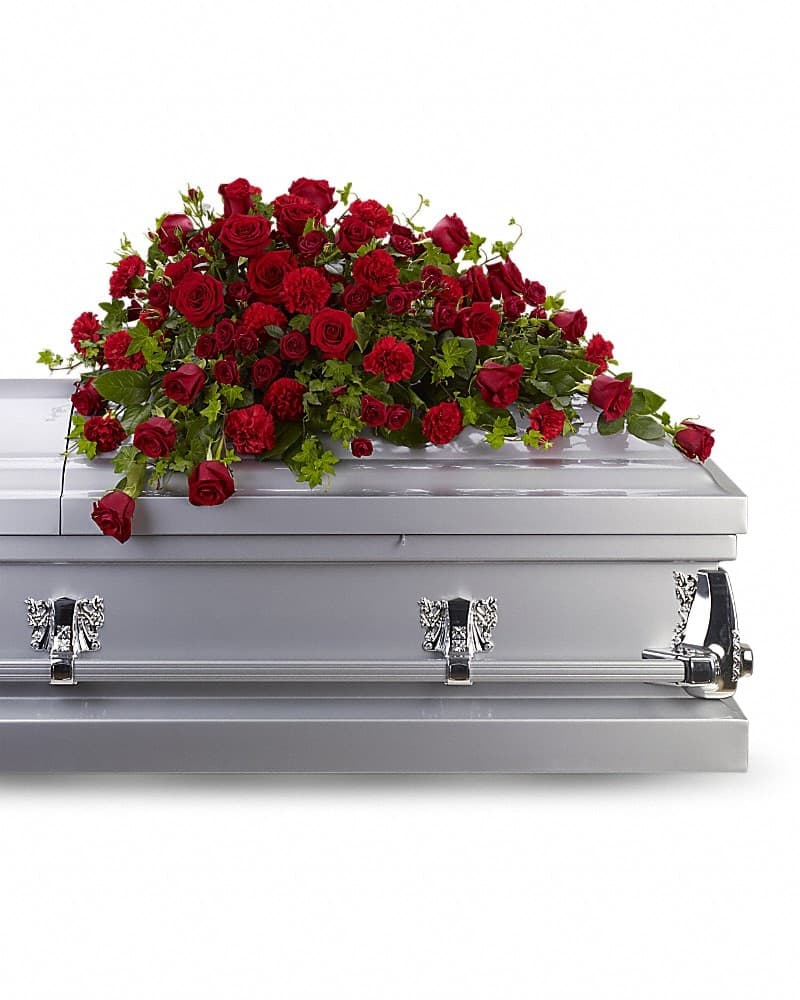
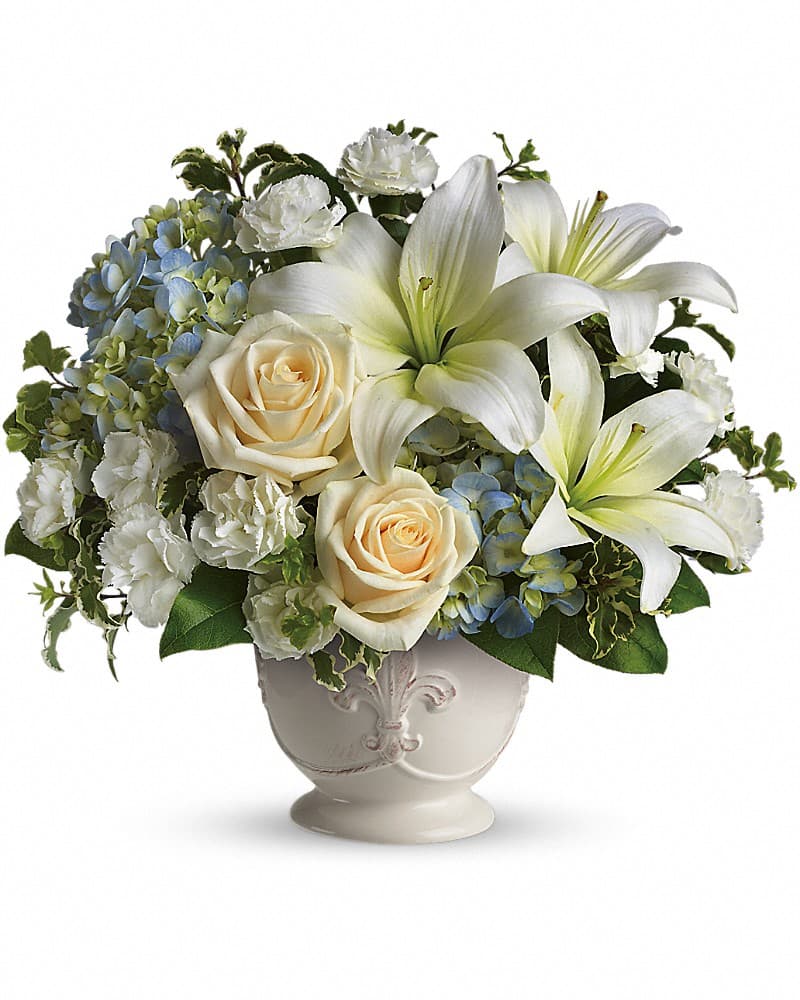
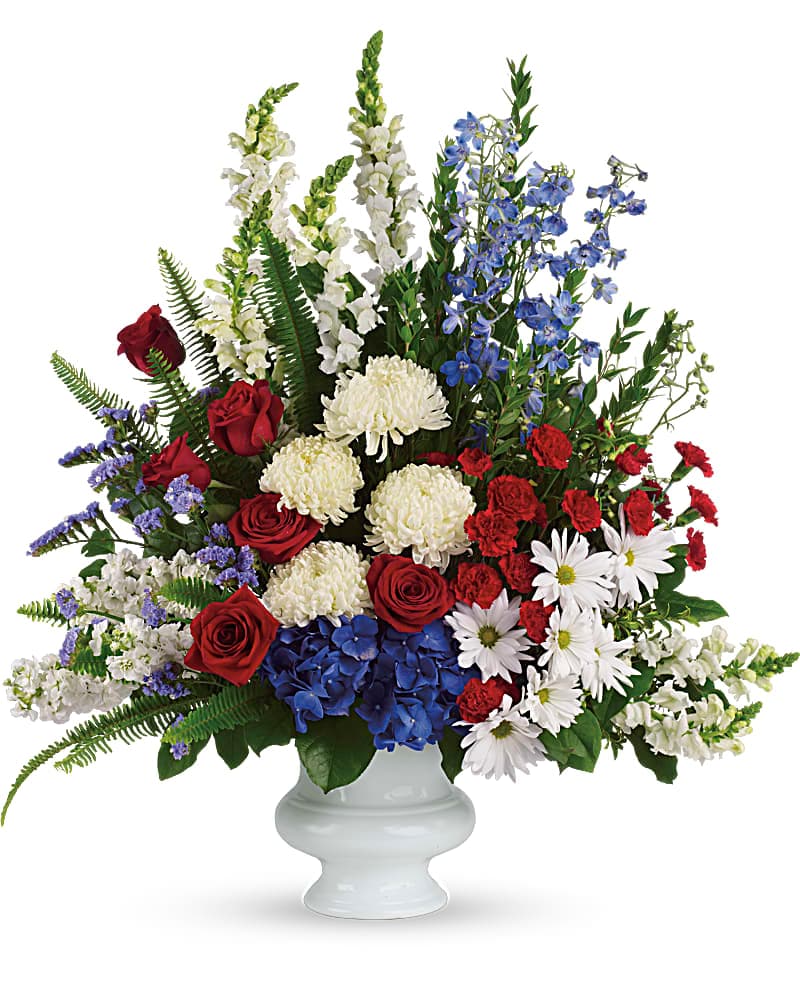
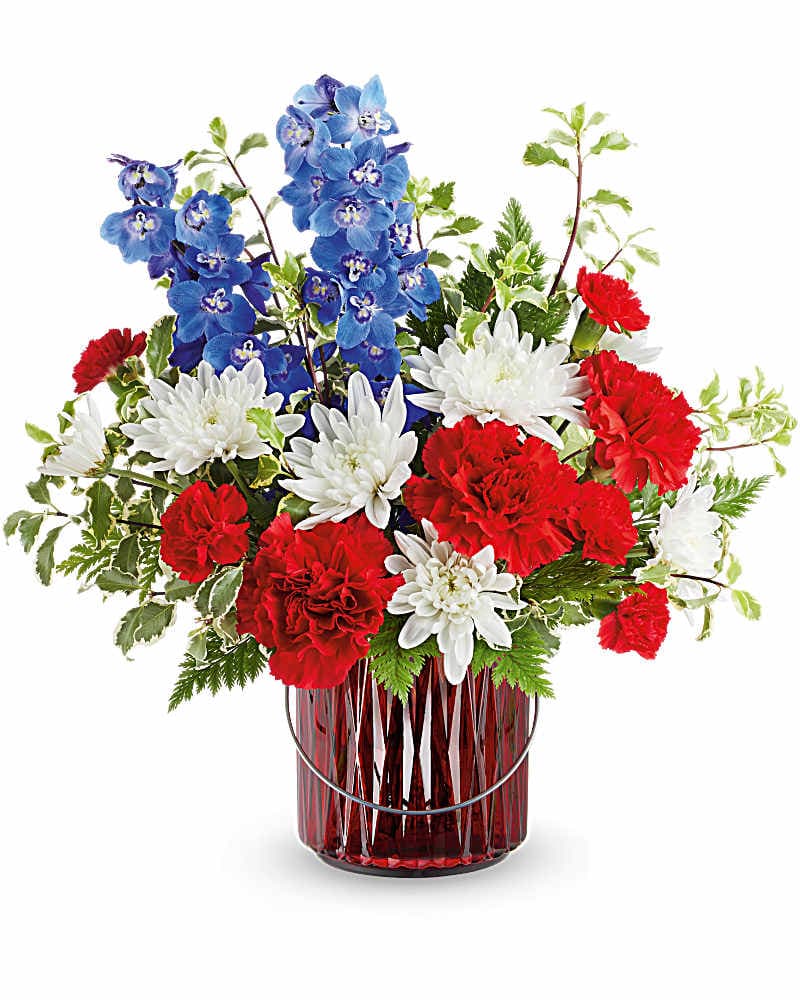
Almost every sympathy order placed from Islandia ends up travelling one of two ways. North and east, to a chapel in Lake Ronkonkoma, Hauppauge, Smithtown or Patchogue where the wake will be held. Or west, down Sunrise Highway toward Wellwood Avenue, the stretch running between Farmingdale and West Babylon that is the burial ground for this half of Long Island and holds more cemeteries in four miles than most counties hold at all: St. Charles Cemetery, the Diocese of Rockville Centre's main Catholic burial ground for Suffolk; Pinelawn Memorial Park and Arboretum; Long Island National Cemetery; and New Montefiore, Wellwood and Beth Moses among the Jewish cemeteries on the same road. Knowing which of the two directions your flowers are going is the first decision, and it is not interchangeable — one of them takes a delivery on a schedule, and the other, for reasons below, mostly does not.
Then the part almost nobody is told. Suffolk County has one of the largest veteran populations in New York, and that means a real share of these services end at Long Island National Cemetery on Wellwood Avenue or at Calverton National Cemetery, thirty-five miles east, one of the busiest national cemeteries in the country. At both, the VA's practice is a committal service held in a shelter rather than at the open grave, with the interment completed afterward and the family not present for it. A van arriving at a scheduled shelter time with a vase has nowhere to put it and nobody to hand it to. The order that works is the funeral home, the day of the wake — the family sees it, the director moves what is appropriate, and the cemetery handles the grave on its own terms. Anything left at the graveside afterward is the cemetery's decision rather than ours: ring its office, ask which containers that section permits and in which weeks, and book around the answer you get. A florist guessing on your behalf is a wasted trip and an empty plot.