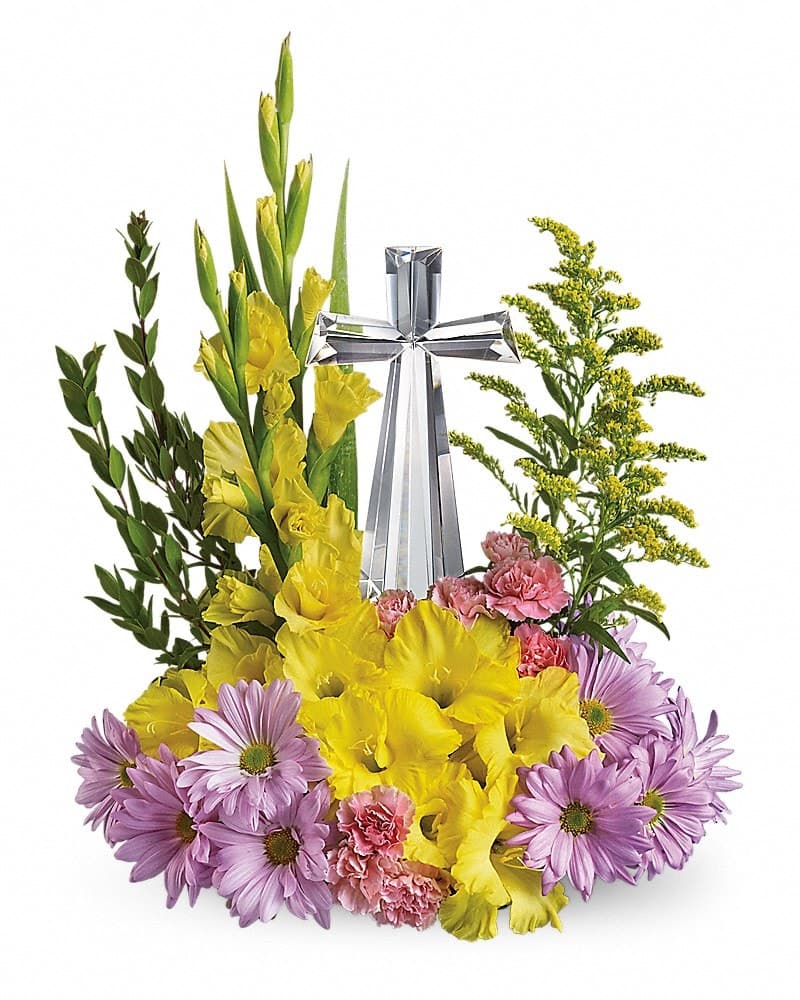
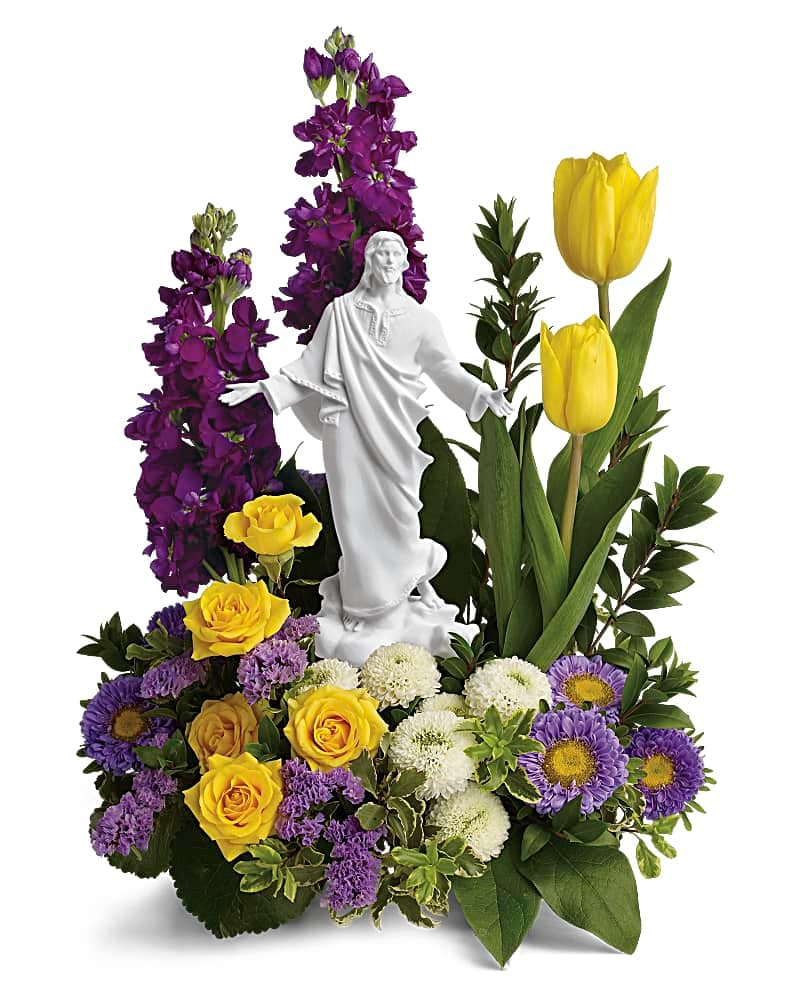
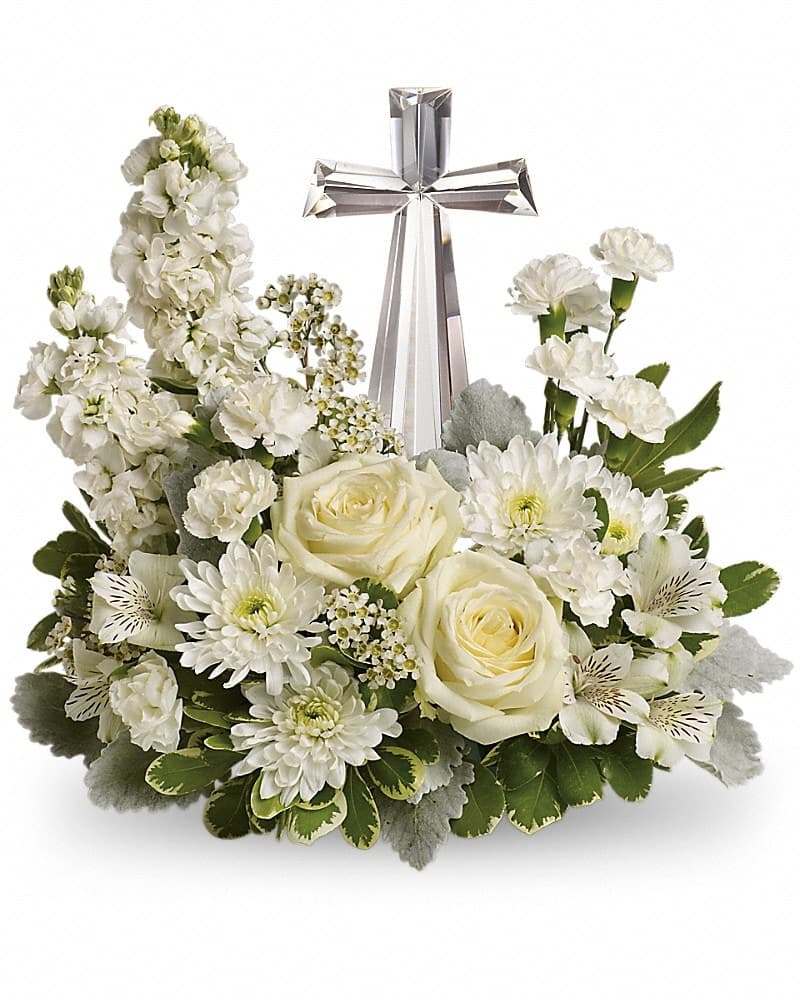
Before anything else about flowers, one fact shapes almost every sympathy order placed in Fort Collins: the service is often not for weeks, and it is often not in a chapel. Colorado has one of the highest cremation rates in the country, and Larimer County follows the state hard. What that produces here is a gathering rather than a funeral — a celebration of life held on a Saturday three or four weeks after the death, in a taproom on Linden Street, a shelter at City Park or Rolland Moore, the community room of a church the family does not otherwise attend, a back room at the Lincoln Center on West Magnolia, or a ranch up the Big Thompson or the Poudre. That changes the timing question completely. In a city where a funeral Mass happens Tuesday morning, flowers are a 48-hour problem. Here they are usually two separate sends: something to the house in the first week, when the family is home doing paperwork and the casseroles have stopped, and something to the venue on the morning of the gathering, weeks later, when there is a table with photographs on it and nothing else. If you only get one of those right, make it the first one. The week after a death in Fort Collins is unusually quiet, because half the people who would otherwise turn up live somewhere else — this is a town people move to, and the grandparents, siblings and old friends are in Nebraska, Texas or California.
When the service is traditional, the geography is small and knowable. Bohlender Funeral Chapel at 121 West Olive Street is a block off College Avenue in Old Town and is the name most Fort Collins families reach for first; the thing to know about it is parking and one-way streets, so a delivery wants to arrive well before guests start circling for a space. Goes Funeral Care on Canal Drive covers the northeast side of town. Allnutt's Fort Collins chapel on West Drake Road sits about a mile from Audrarose Floral, the shortest sympathy run anywhere on this grid. Burials divide along an old east-west line: Grandview Cemetery at 1900 West Mountain Avenue, the city's ground since the 1880s, with its long tree-lined drives at the west end of town, and Roselawn Cemetery at 2718 East Mulberry Street on the east side, which holds much of the city's Catholic history. Resthaven Memory Gardens at 8426 South College Avenue is the flat memorial park on US 287 between here and Loveland. Note the straight line on the north side of town: a funeral Mass at St. Joseph Catholic Church at 300 West Mountain Avenue and a burial at Grandview are the same street, a mile and a half apart, which means one driver can serve both ends of a morning without recrossing College. St. Elizabeth Ann Seton on South Lemay takes the south-side Catholic services, Timberline Church on South Timberline Road and the other large south-and-east congregations hold memorials in auditoriums where a single small easel piece disappears, and Congregation Har Shalom on West Drake Road anchors a community where flowers customarily go to the shiva home rather than to the service, and where the family's request is frequently a donation instead. Ask which it is. Down in Loveland, Kibbey-Fishburn and Viegut both sit on North Lincoln Avenue, a few blocks from Rowe's Flowers on Cleveland. Greeley's services route through Linn Grove Cemetery and the chapels around it, a half-hour east on US 34.
Two physical facts about this place change how a sympathy piece should be built, and both of them are about air. The first is wind. Fort Collins sits where the plains stop at the Front Range, at the mouth of the Poudre Canyon, and a downslope chinook can come through at highway speed on a clear February afternoon with no storm anywhere in sight. Grandview is at the exposed west end of Mountain Avenue; Resthaven is an open memorial park with nothing upwind of it; the small county grounds east of I-25 and the pioneer ground up at Bingham Hill above Laporte have no shelter at all. A tall easel spray on a wire stand will be face-down in the grass before the family reaches their cars. Ask for low, dense and wired, with weight in the base, and skip glass at any graveside. The second is dryness. At five thousand feet with winter humidity in the single digits, a warm chapel pulls the life out of open blooms within hours. Soft, fully open flowers will look tired by the time the second family arrives. Carnation, chrysanthemum, alstroemeria, lisianthus, stock and spray rose hold a room for the whole morning and still travel home in a car afterwards, which matters, because someone always takes the flowers home. Summer has its own version: a July graveside at eleven in the morning with no shade is brutal on anything delicate, and hail is a real possibility any afternoon between May and September.