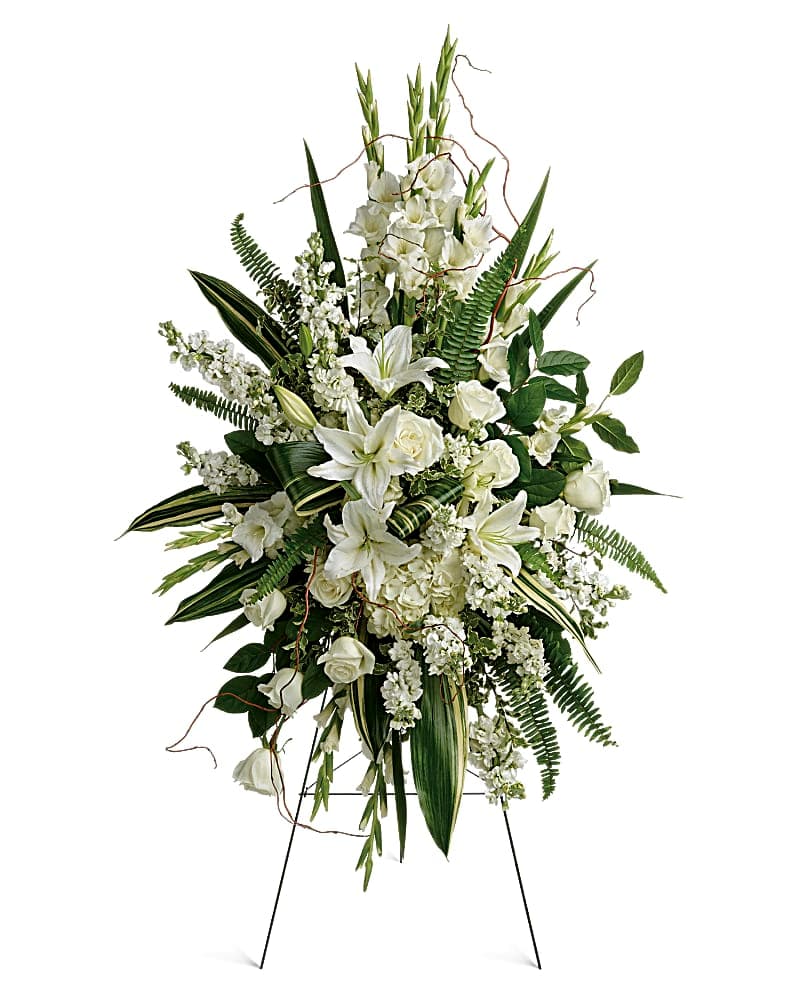
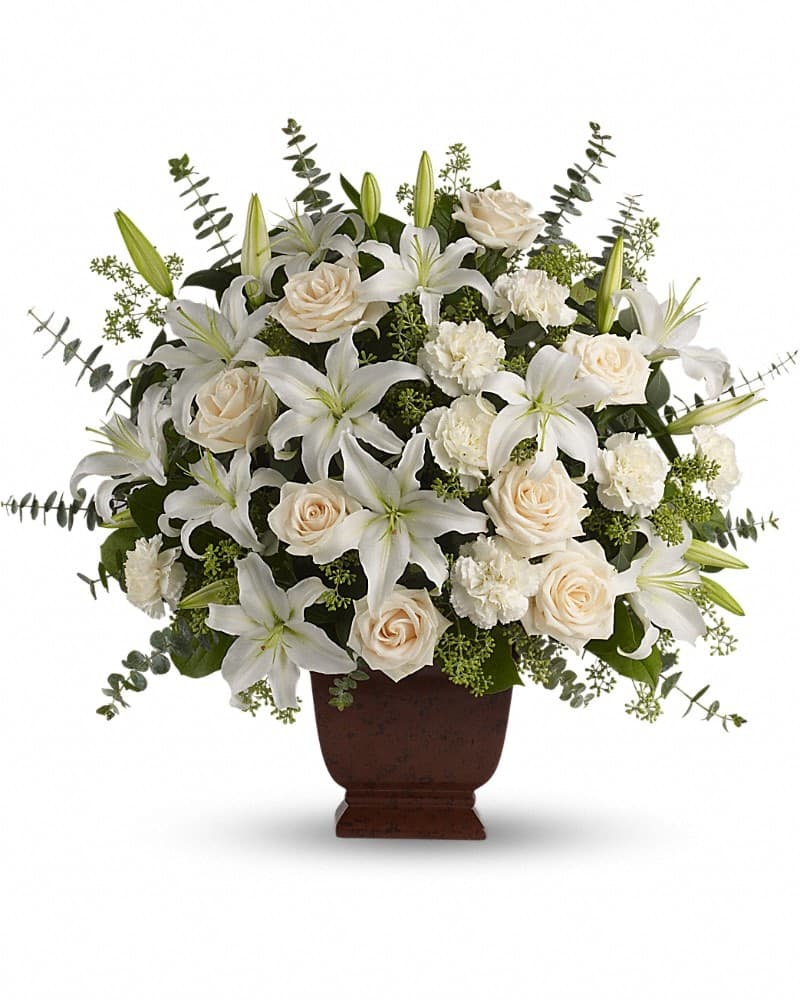
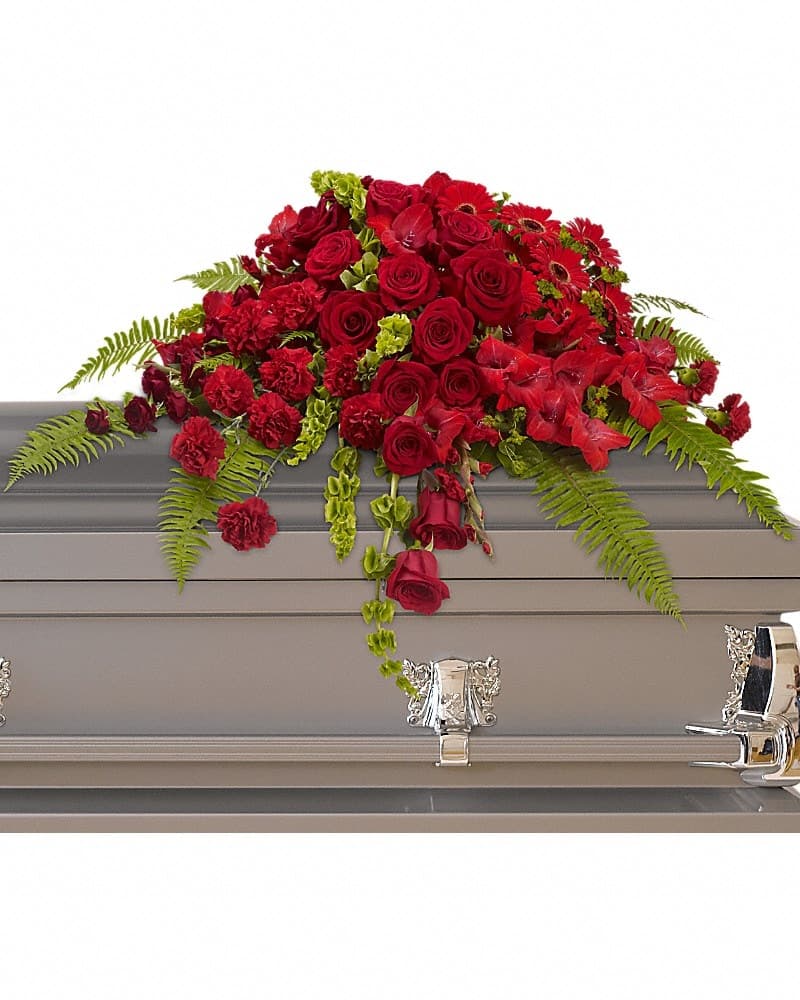
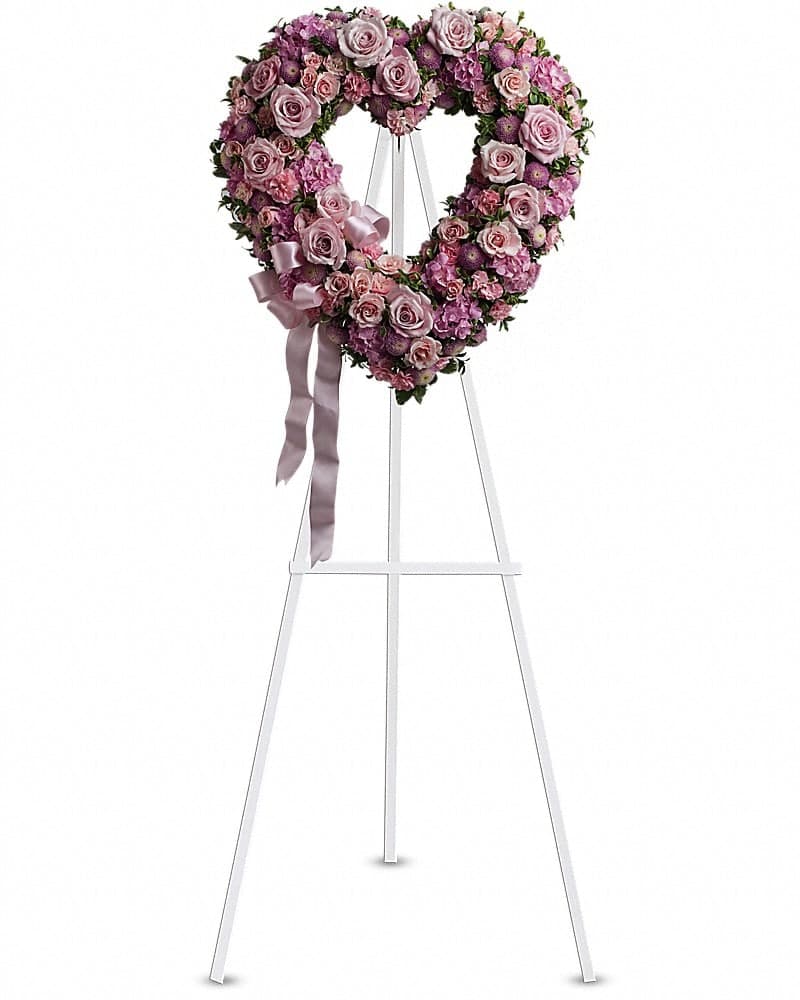
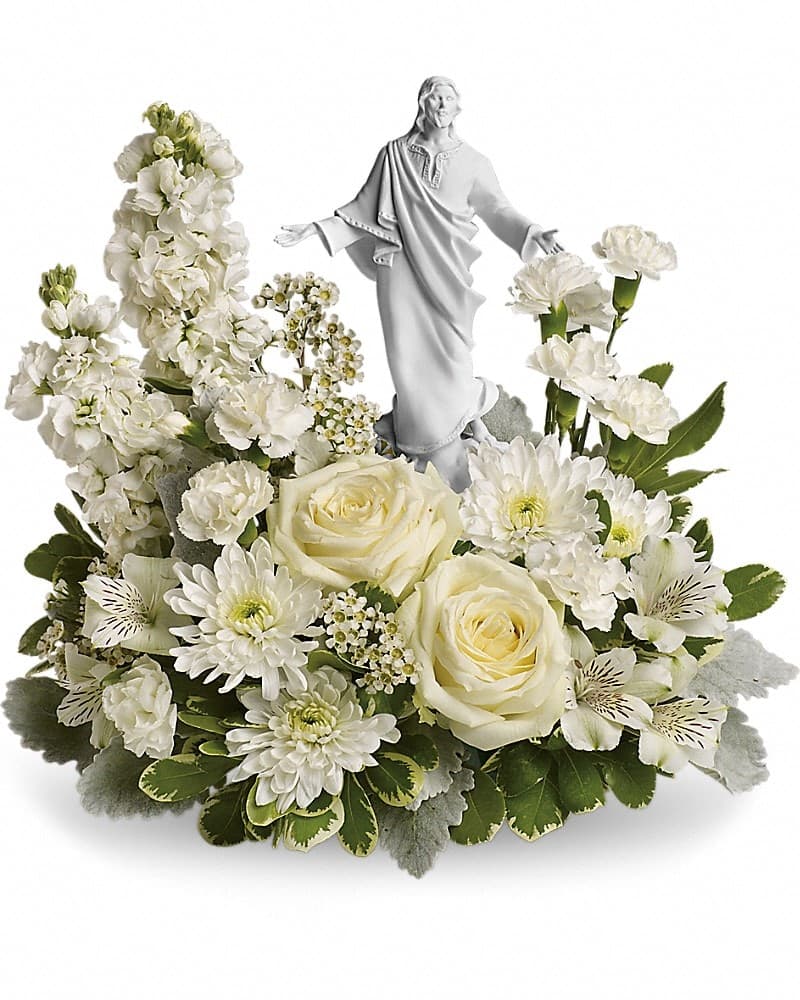
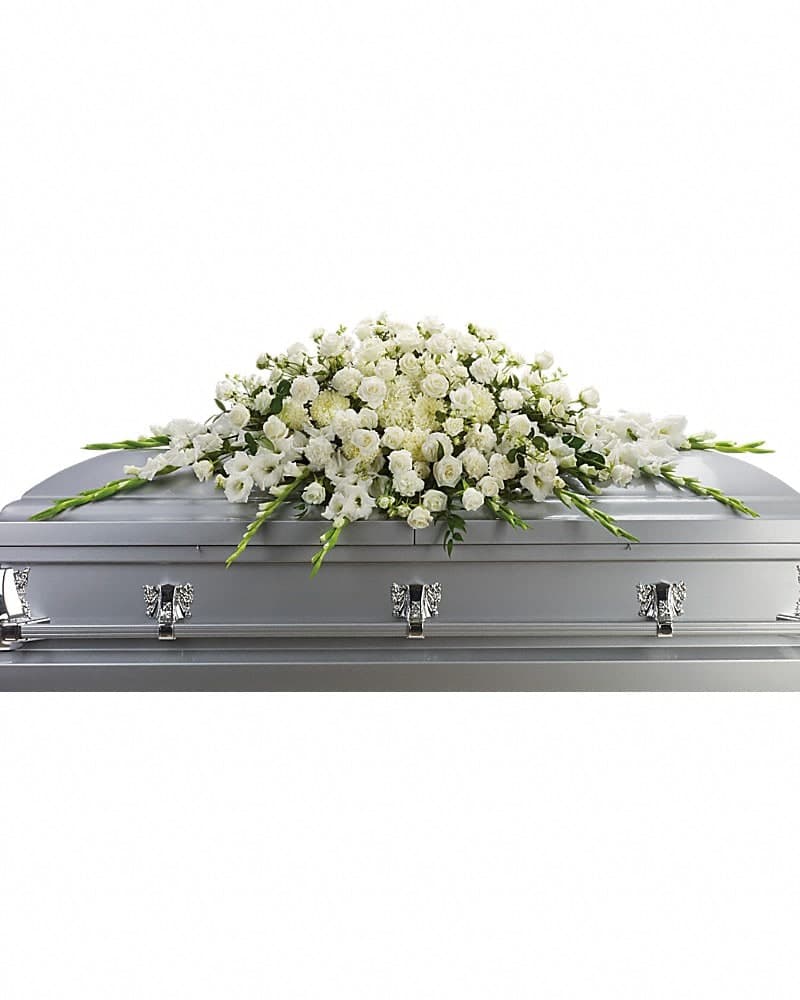
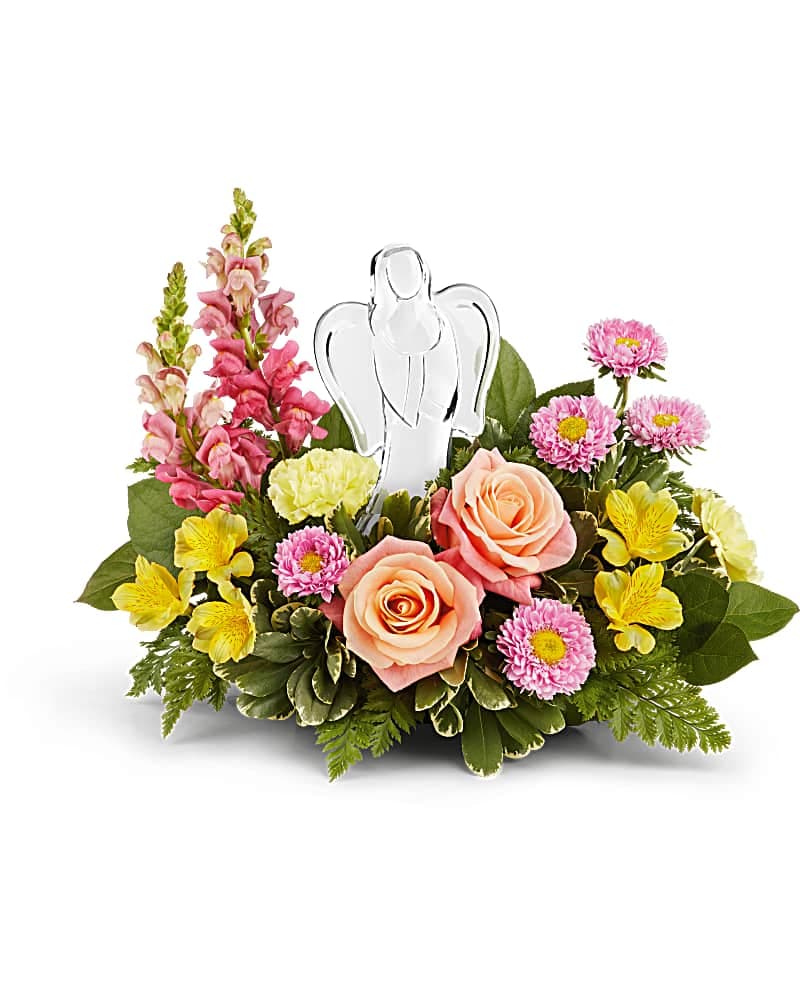
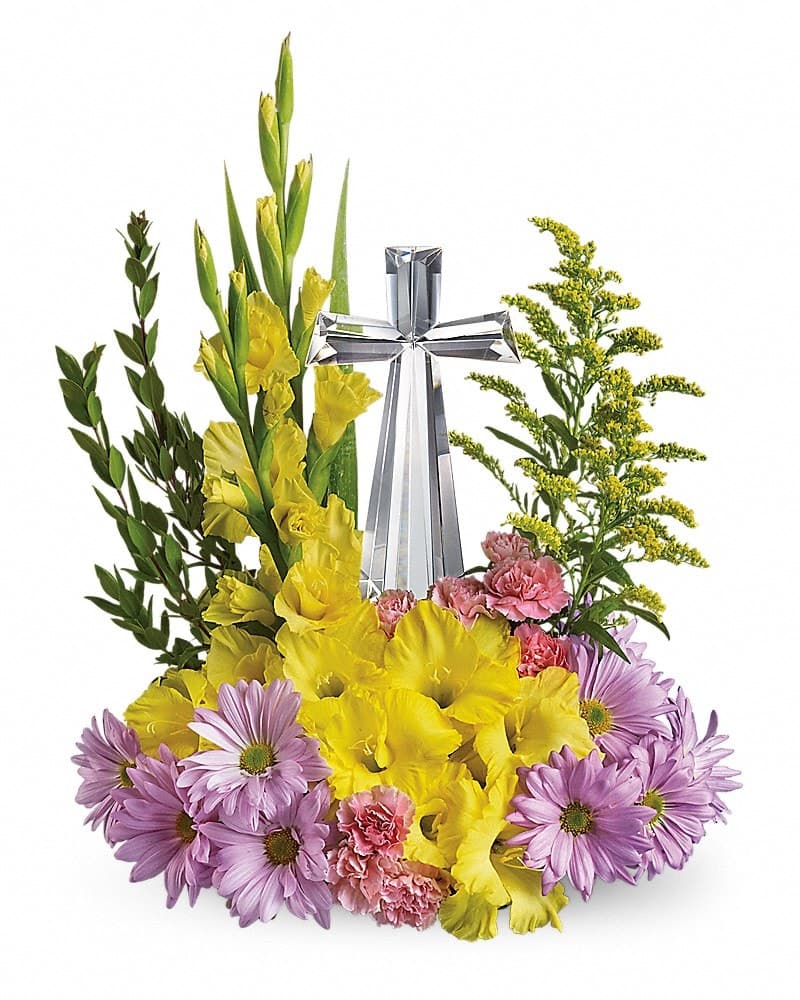
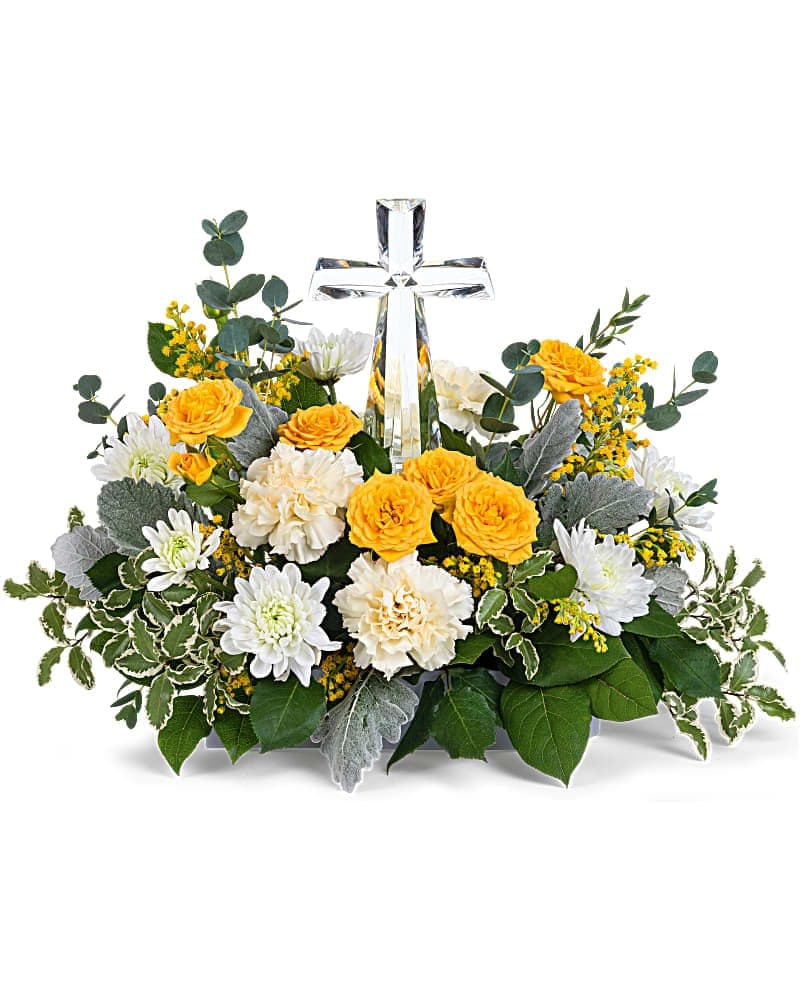
Columbus has an unusual complication that no other Indiana city of its size shares: a meaningful number of its funerals are held in nationally significant modern buildings, and the geometry of those sanctuaries changes where a floral piece can physically go. First Christian Church on Fifth Street, Eliel Saarinen's 1942 building and one of the first contemporary church buildings in the country, has a long, plain-walled sanctuary where scale reads differently than it does in a traditional nave. North Christian Church on the north side, Eero Saarinen's hexagonal 1964 building under its slender spire, seats the congregation in the round around a central table — an easel piece positioned as though for a rectangular aisle is simply in the wrong place there. St. Peter's Lutheran Church downtown, with the copper spire Gunnar Birkerts added, and St. Bartholomew Catholic Church, the county's Catholic parish, each have their own conventions about what sits in the chancel and what waits in the narthex. None of this is a reason to send less. It is a reason to let the funeral director or the church office place the piece rather than instructing the driver yourself, and to tell the shop which building the service is in so the design is built to a scale that fits it.
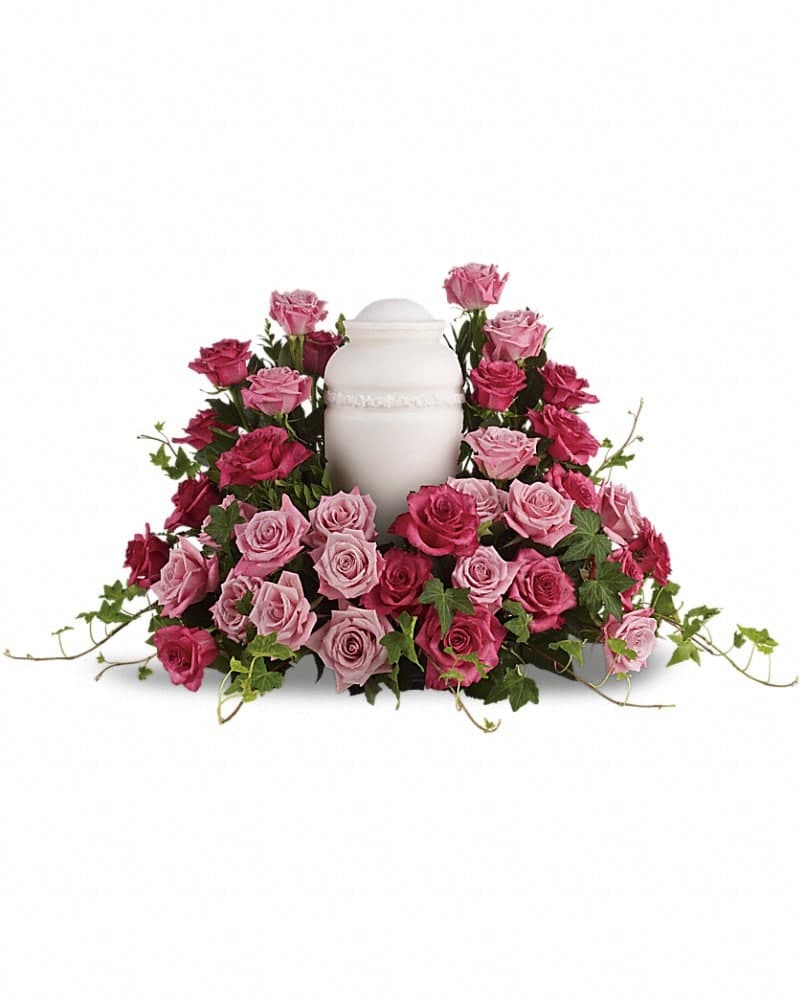
Burial in Bartholomew County is concentrated at Garland Brook Cemetery, Columbus's principal burying ground, which is where most graveside services on this grid end up. Beyond it, the county's older cemeteries follow the small settlements: Clifford, Elizabethtown, Azalia, Petersville, Hartsville, Grammer, Newbern, Waymansville, Jonesville, Ogilville, Walesboro and Taylorsville all have burying grounds that predate most of the city, and several of them are reached by county road rather than by street address. Graveside flowers need to be at the cemetery before the procession, not after it, which in practice means ordering the day before for a morning committal. Hope, the Bartholomew County town Moravians founded in 1830, holds services at Hope Moravian Church on its town square and buries its own; a Hope service is a twenty-minute run northeast on State Road 9 and should be ordered early. Military services turn up more often here than the population would suggest, partly because Camp Atterbury, the Indiana National Guard training center, sits just north of the county line near Edinburgh, and the state veterans cemetery at Madison is inside the widened 60-mile radius to the southeast.
Deaths that happen in Columbus mostly happen in two places, and both take sympathy deliveries. Columbus Regional Hospital on East 17th Street — Robert A. M. Stern's 1992 building, and the only hospital in Bartholomew County — handles palliative and intensive care, and a family keeping vigil there is often the right recipient rather than the chapel. Ask the unit before sending: intensive care generally will not take flowers into the room, and the working alternative is a handoff to a family member at the lobby or a delivery to the house. Our Hospice of South Central Indiana, the Columbus Regional Health-affiliated hospice, serves this county and the ones around it, and for a hospice family a plant is frequently the better gift than cut stems because it does not need to be dealt with in a week when nobody has the attention for it. Inside the 60-mile radius the same logic applies at Schneck Medical Center in Seymour, Johnson Memorial Health in Franklin, Decatur County Memorial Hospital in Greensburg, Major Health Partners in Shelbyville and the Indianapolis hospitals up I-65 where a serious case from Columbus is often transferred.