A Bonita Springs funeral is arranged across a border. The city is the southern edge of Lee County and the Collier County line runs just below it, which means two separate sets of institutions are in play for the same family and the choice often has nothing to do with distance. In town, Shikany's Bonita Funeral Home on Tamiami Trail is the name most Bonita families have used for decades. A few miles south, the Naples funeral homes handle a large share of Bonita services because so many residents' doctors, churches and children live on the Collier side — the Fuller chapels in Naples and Hodges Funeral Chapel at Naples Memorial Gardens off 111th Avenue North are the ones that come up most. North, up Interstate 75 or Tamiami Trail toward Fort Myers, are the large Lee County burial grounds. If you are sending from out of state, do not guess: the funeral home's name and the service time on the notice are the two facts that determine everything, and a bouquet sent to the right city and the wrong chapel is as lost as one sent to the wrong state. Ask the family, or read the obituary twice.
A great many services here are held in a church rather than a funeral chapel, and a church runs a stricter clock. St. Leo the Great Catholic Church on Beaumont Road is the parish where a large Bonita funeral Mass most often happens. First Presbyterian Church of Bonita Springs and St. Mary's Episcopal sit on the Bonita Beach Road corridor, and the Methodist congregation has its own long history in the old part of town. South of the county line the Naples parishes — St. John the Evangelist and the downtown parish near Ninth Avenue among them — take Bonita families regularly. Bonita has a substantial Hispanic community concentrated on the east side around Old 41, and a funeral Mass in that community may be scheduled outside the parish's usual weekend rhythm, so confirm the hour with the parish office rather than with a calendar. For the Jewish families in the Bonita and Estero corridor, who are served by the Naples congregations and the local Chabad center, the customary gesture is a donation rather than flowers, with a plant sent to the house during the week of mourning as the appropriate exception. In every one of these buildings the rule is the same and it is not obvious from the outside: arrangements need to be there before the doors open, not at the hour printed on the notice.
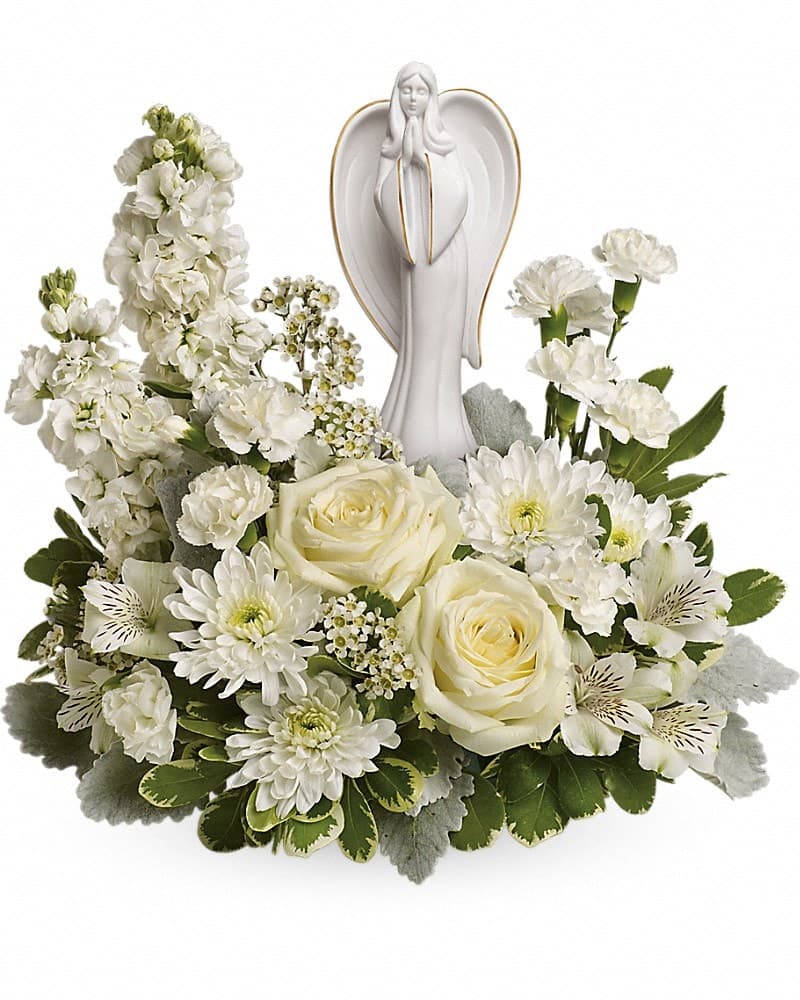
Then the part that is genuinely different about sympathy work on this coast — the weather does the editing, and it is not a small effect. A committal at a Naples or Lee County memorial park in July happens in open sun in the low nineties with humidity that makes it feel worse, and a piece designed for a chapel in Michigan will not survive the walk from the hearse to the tent. Hydrangea goes first and it goes visibly. Garden roses blow open and drop. Lilies opening in that heat will scent a small foyer within the hour, which matters in a room where people are standing shoulder to shoulder. What holds is the tropical end of the cooler: anthurium, dendrobium and cymbidium orchids, carnation, chrysanthemum, gladiolus, ginger and heliconia, and the leatherleaf and tropical foliage that does not curl. That is why so much local sympathy work looks the way it does, and it is also why services in the wet half of the year are scheduled in the morning — from June into September the afternoon thunderstorm is nearly a daily event, and an outdoor graveside at three o'clock is a gamble. If the committal is outdoors, write that on the order and let the shop build to it.