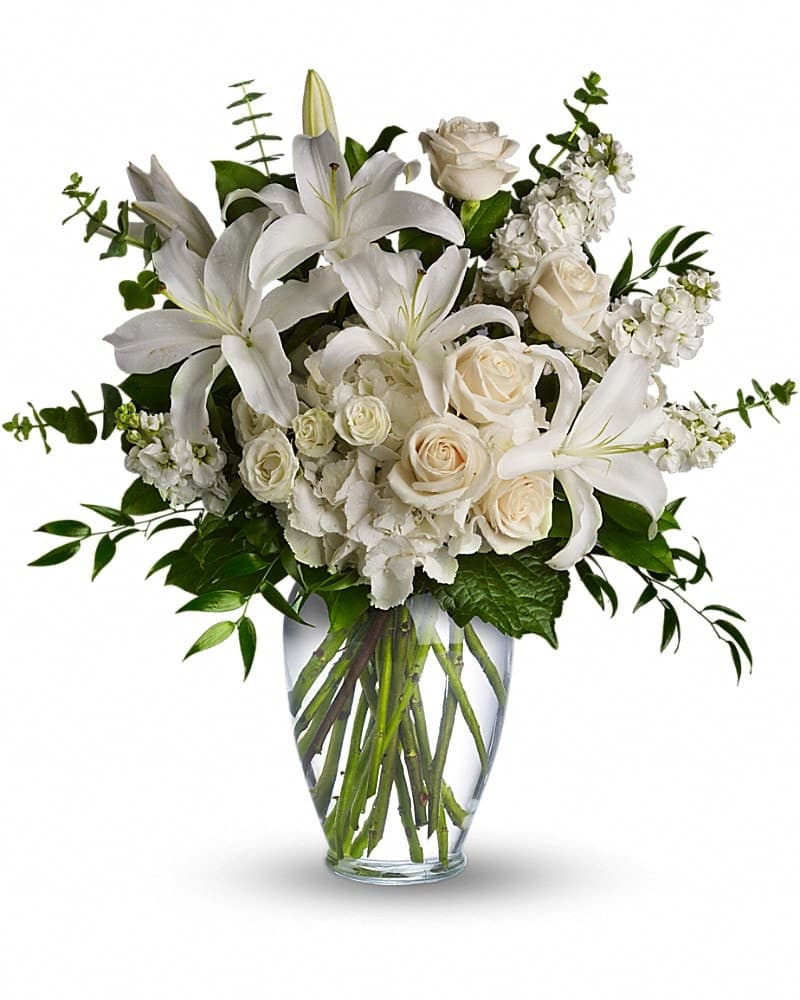
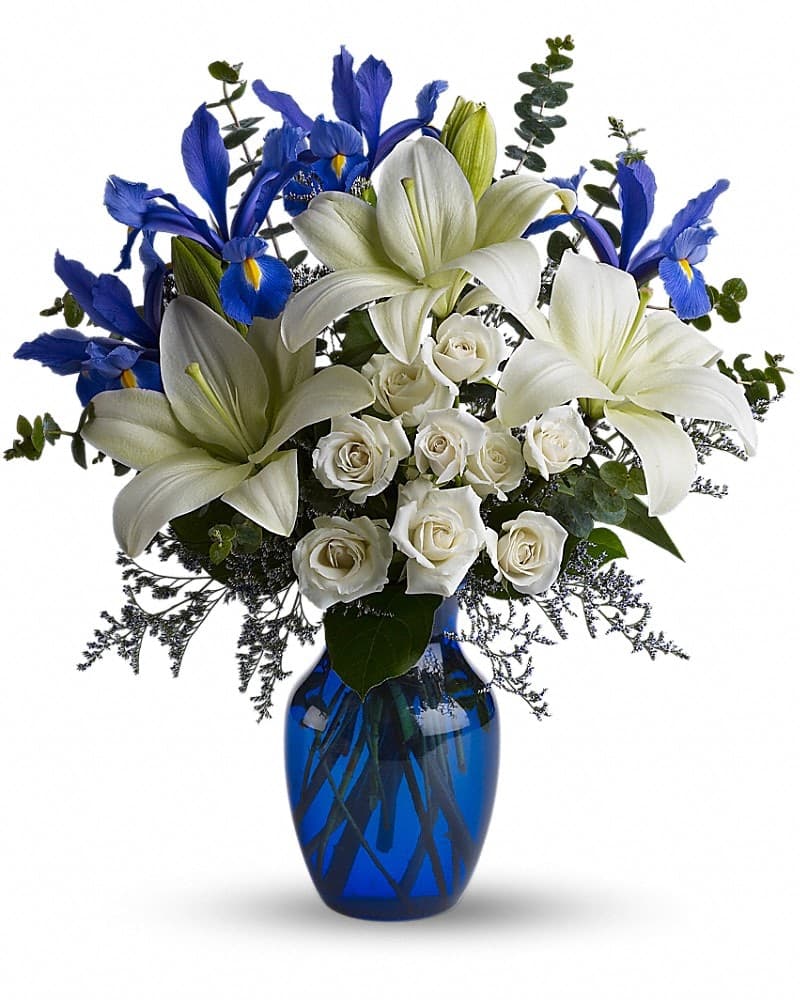
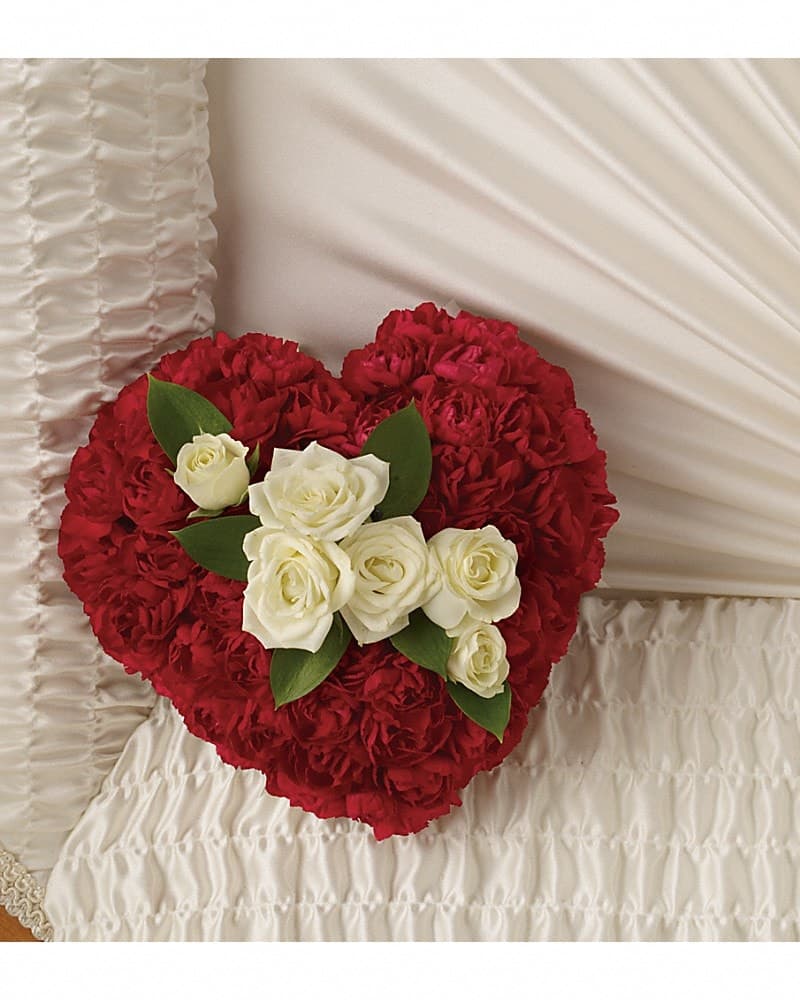
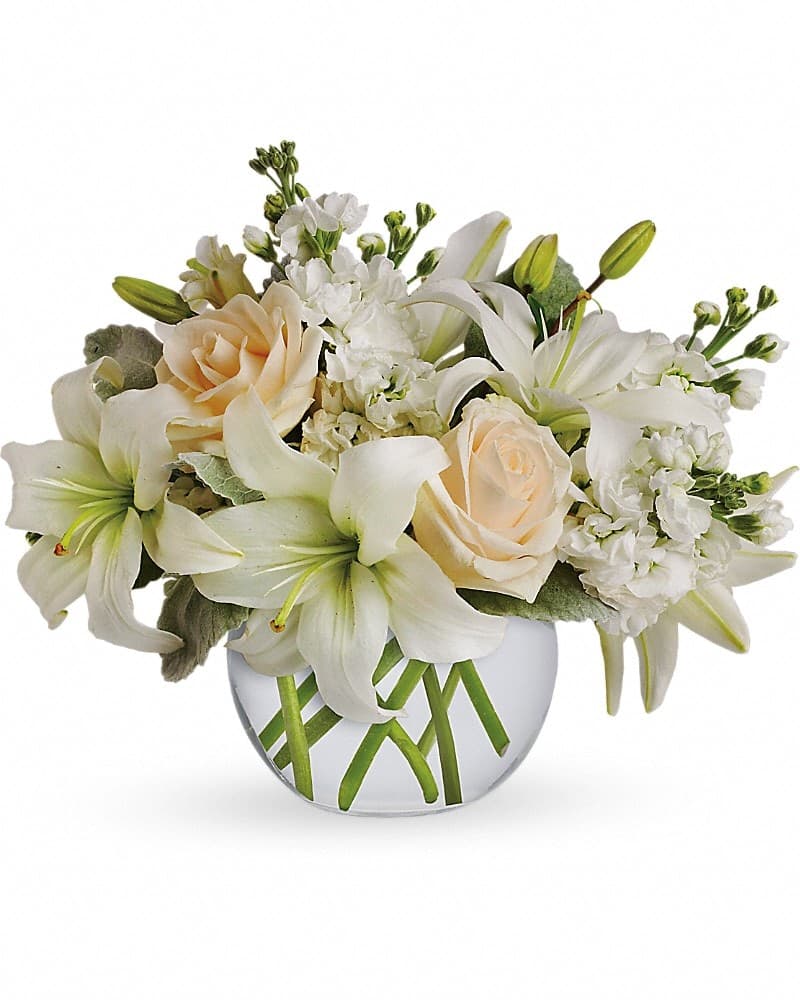
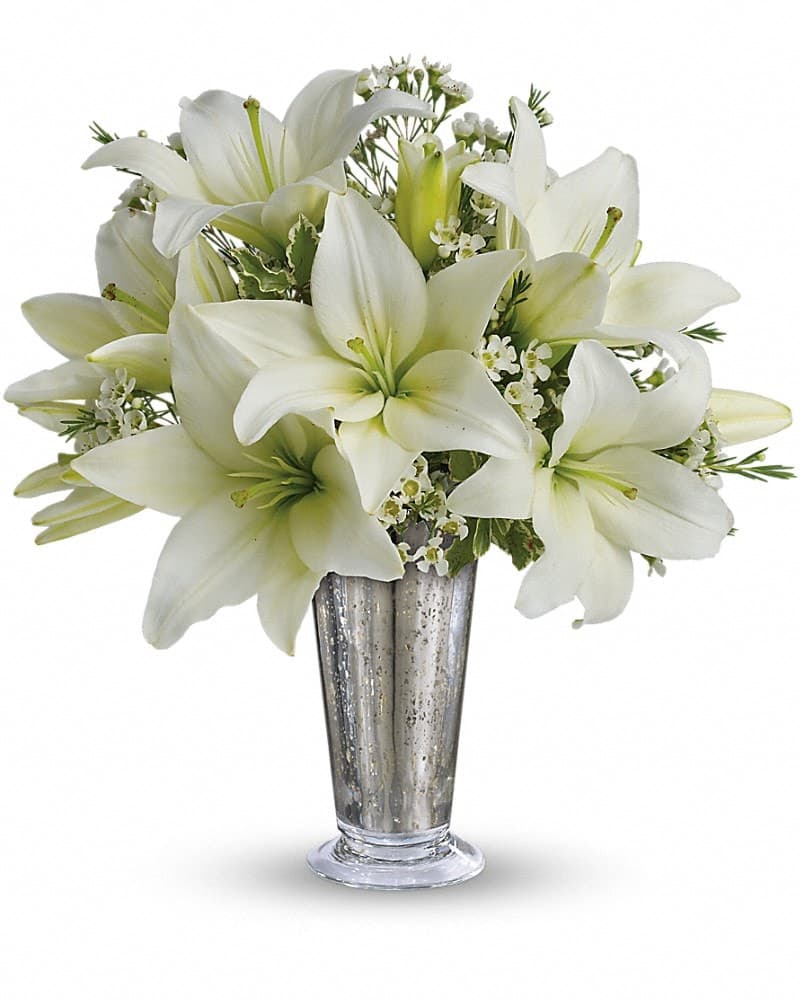
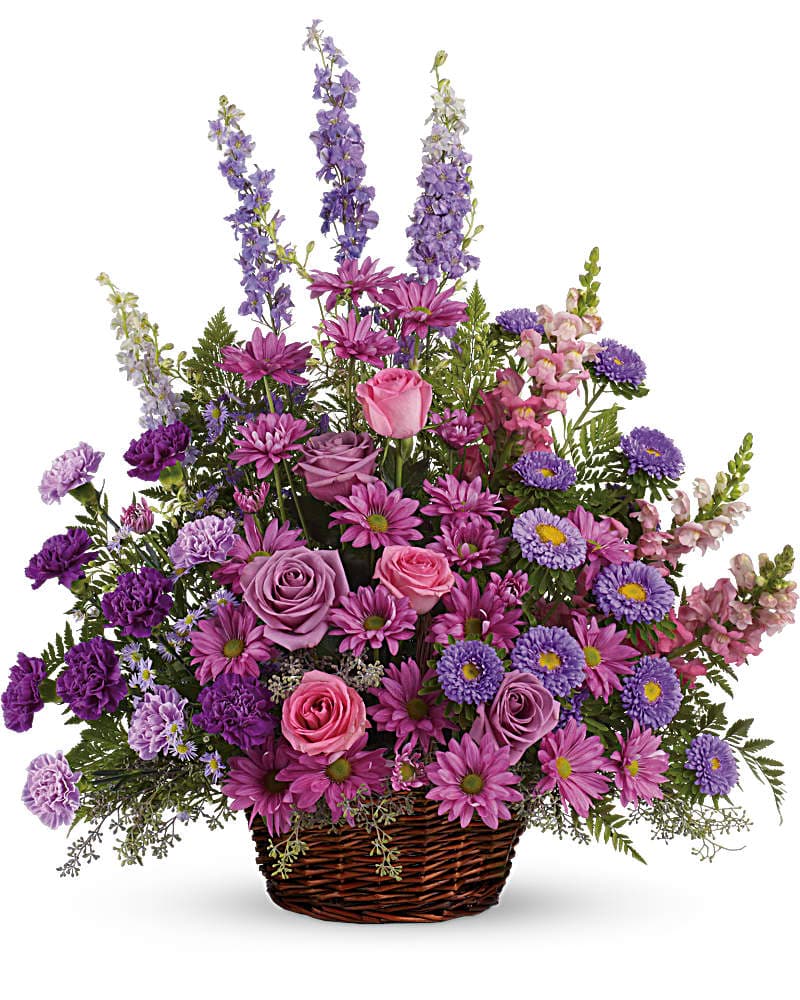
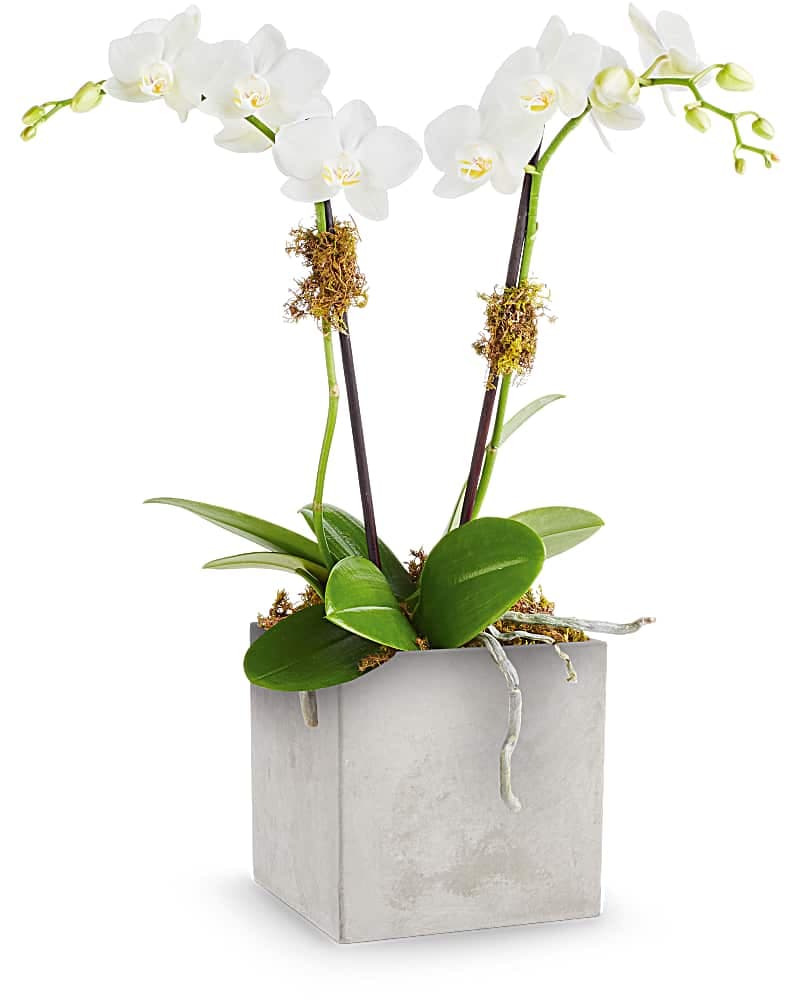
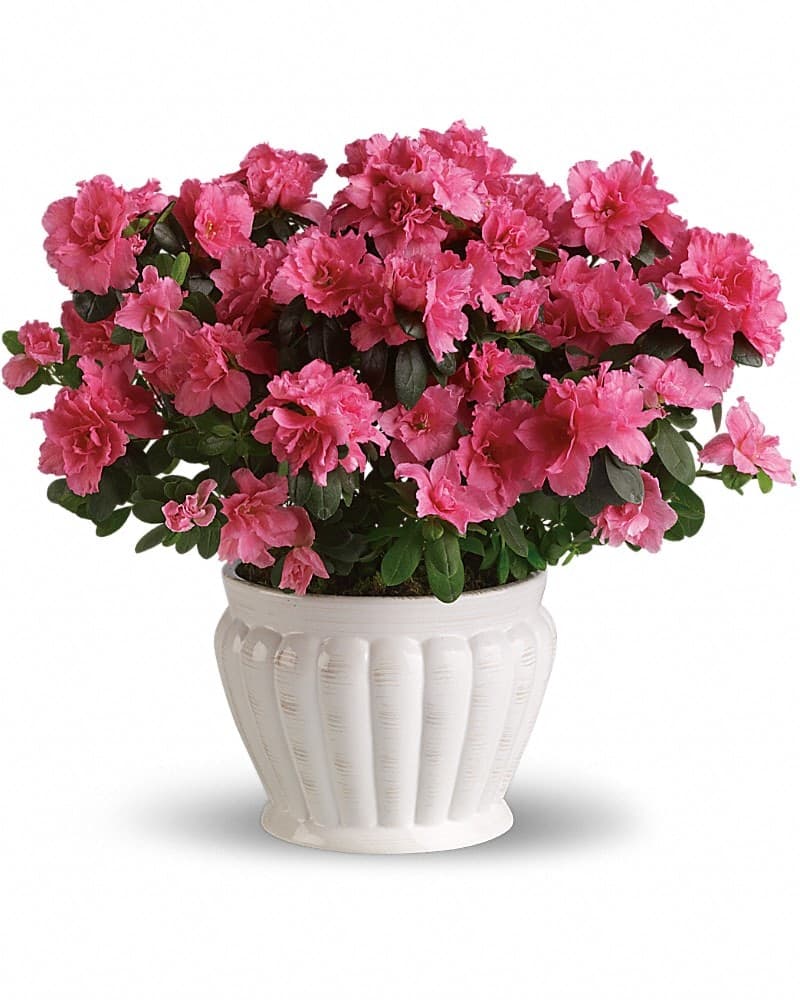
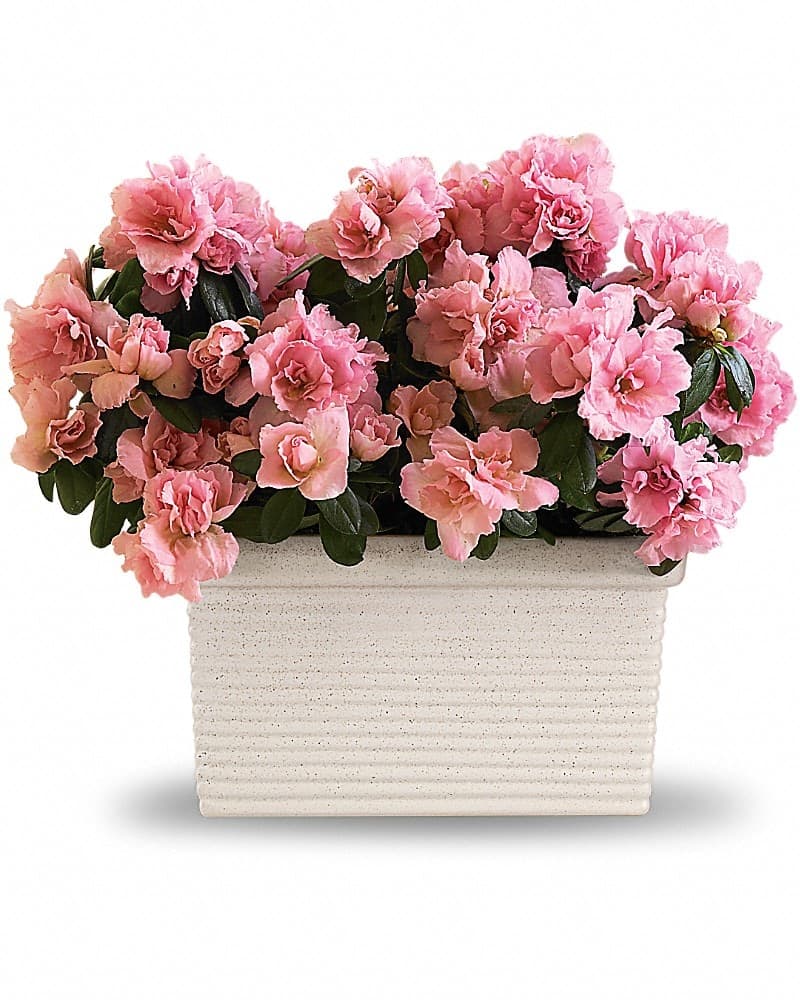
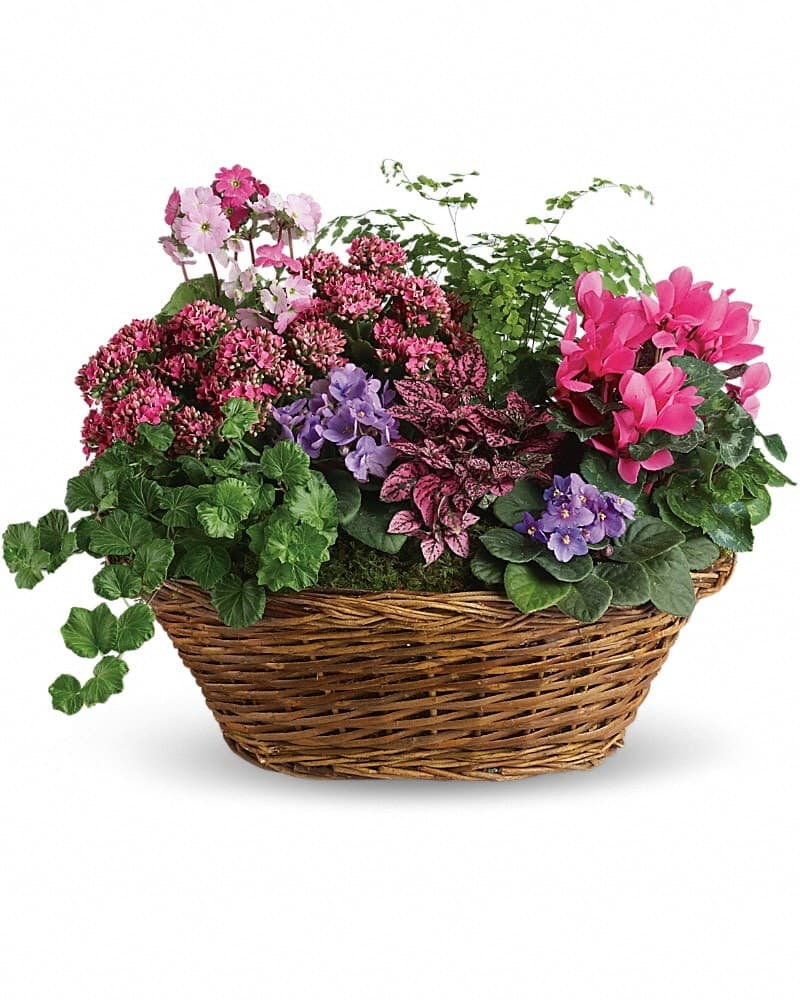
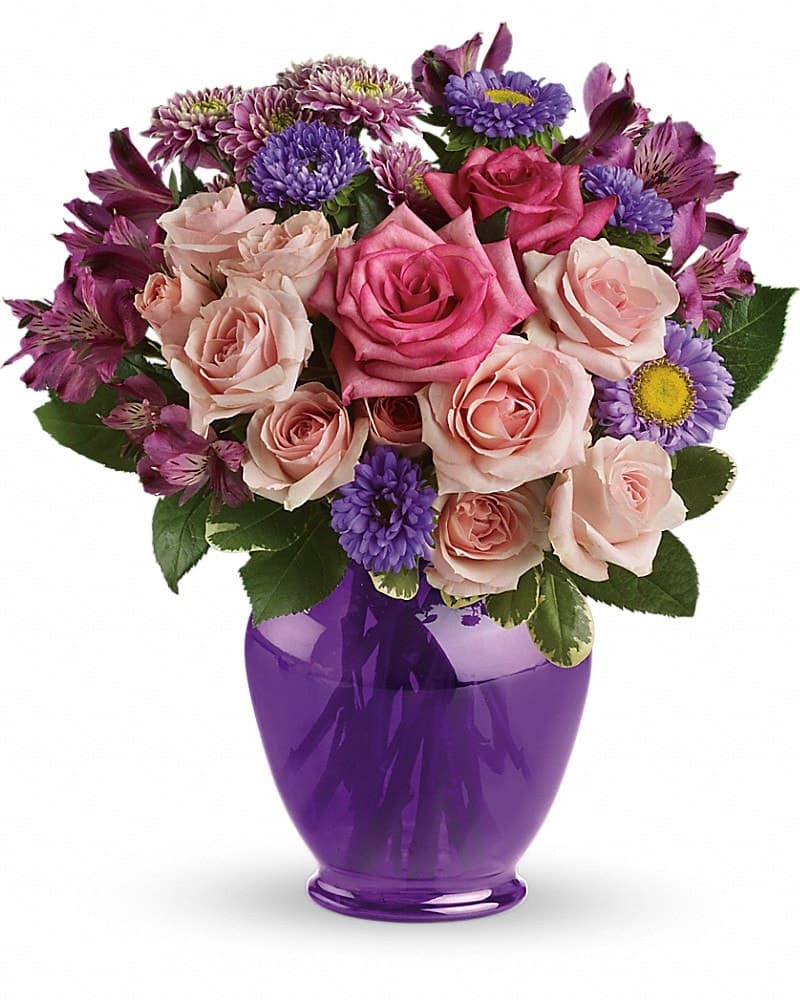
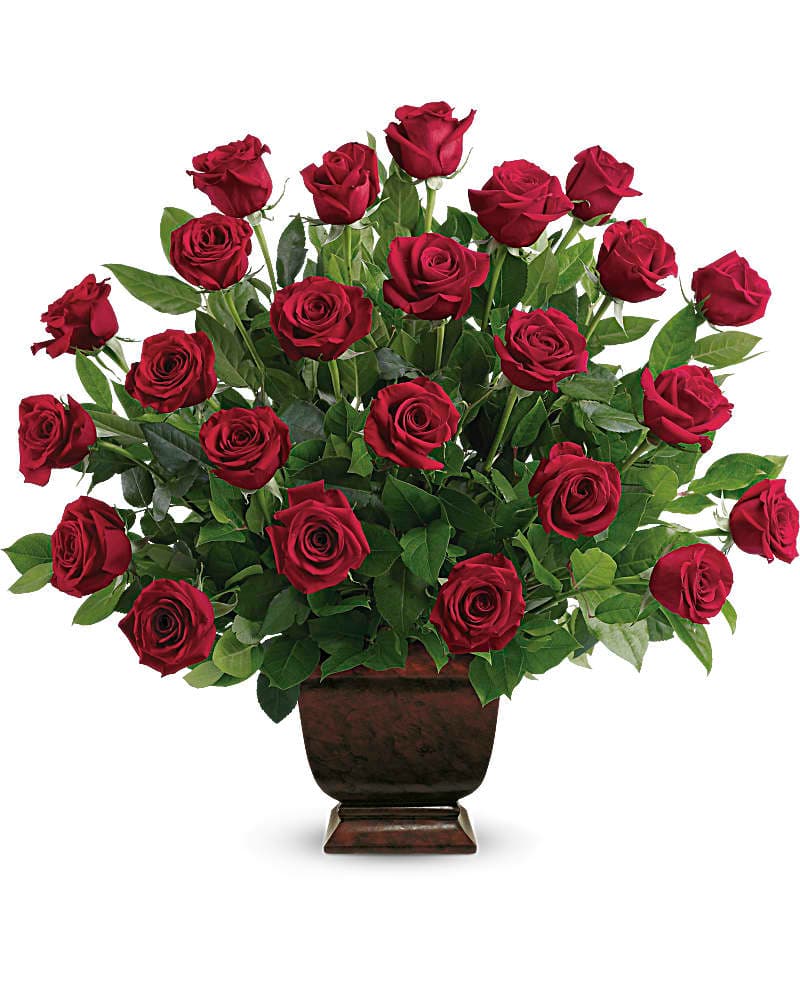
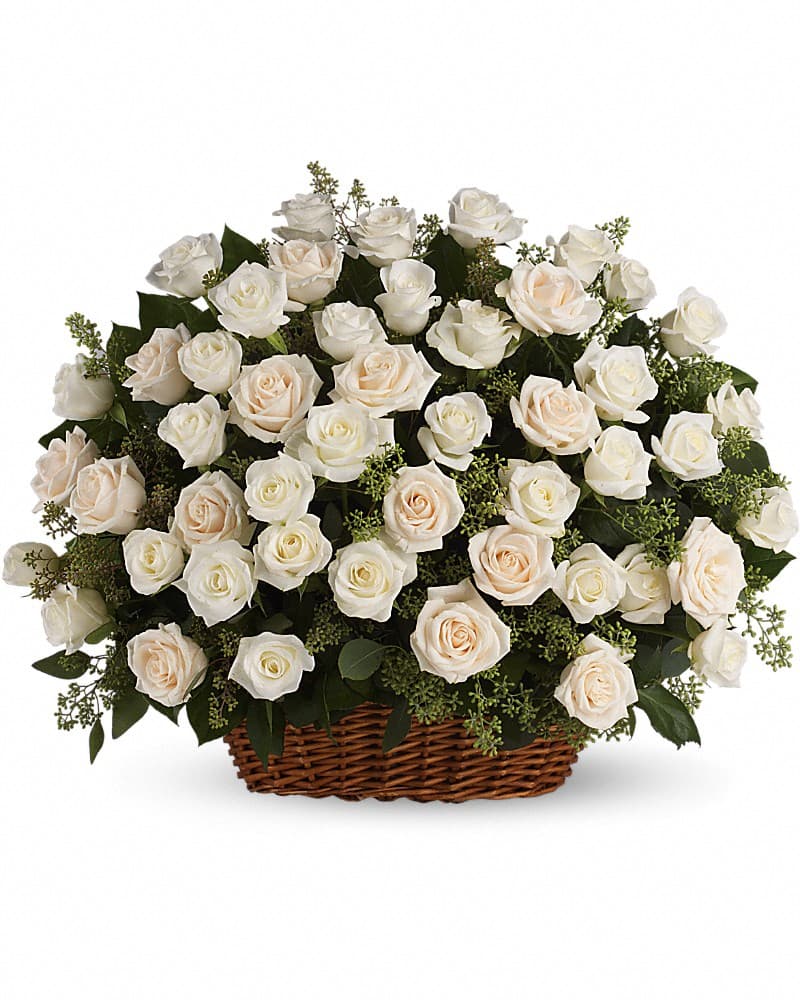
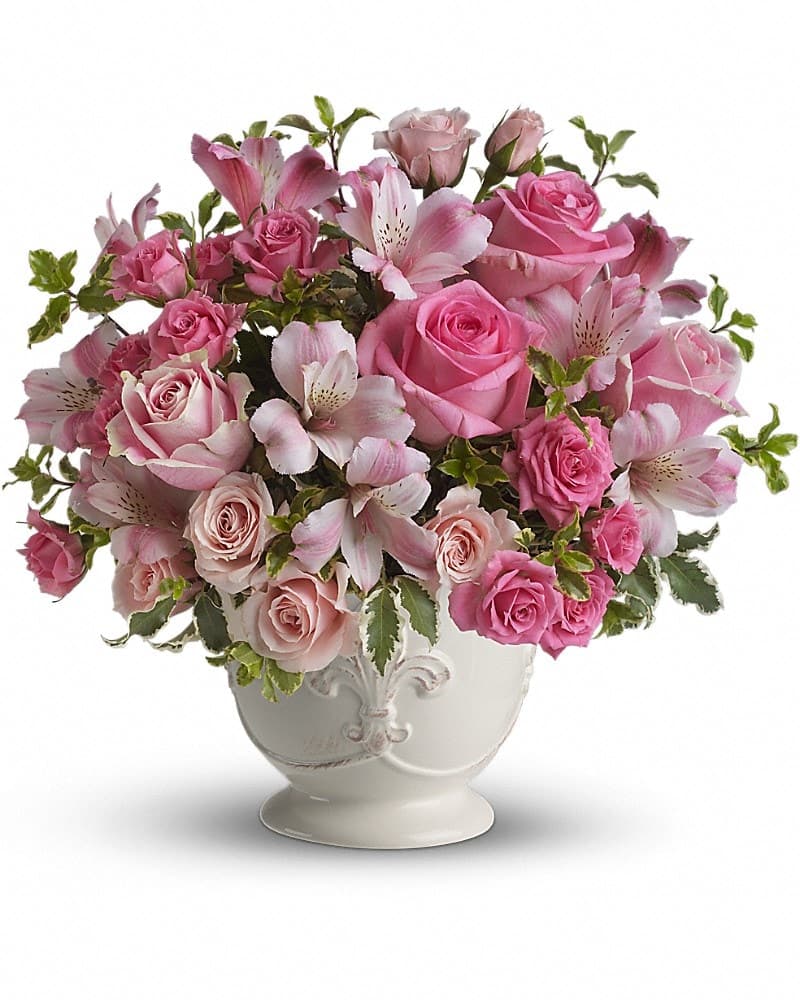
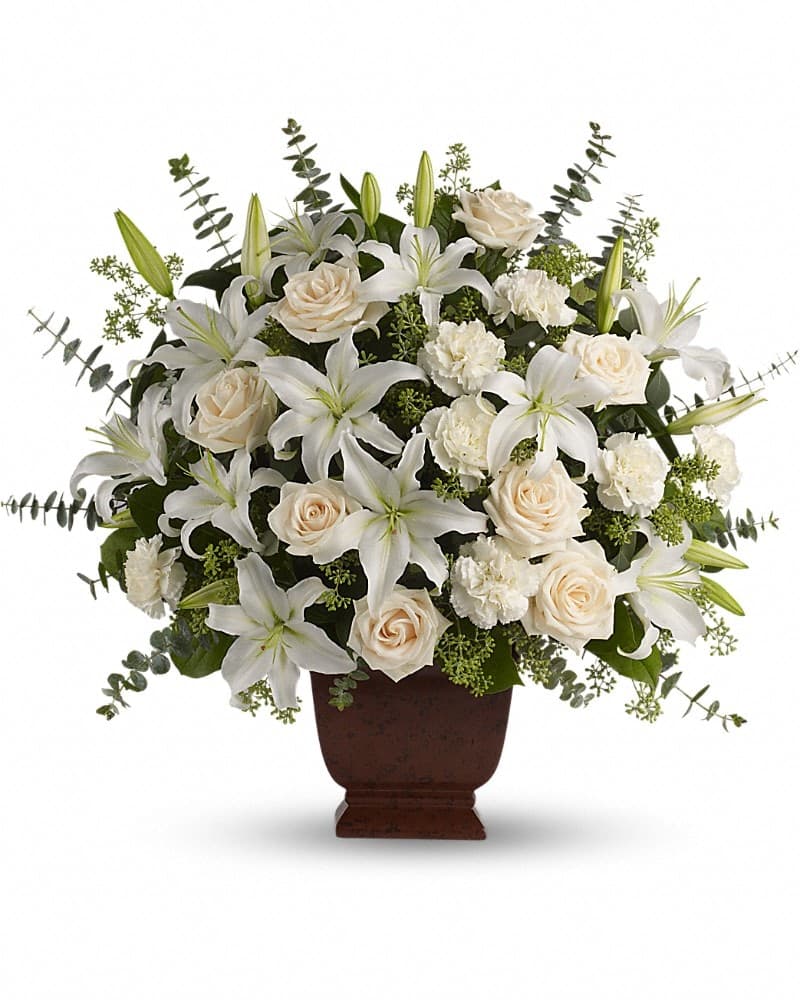
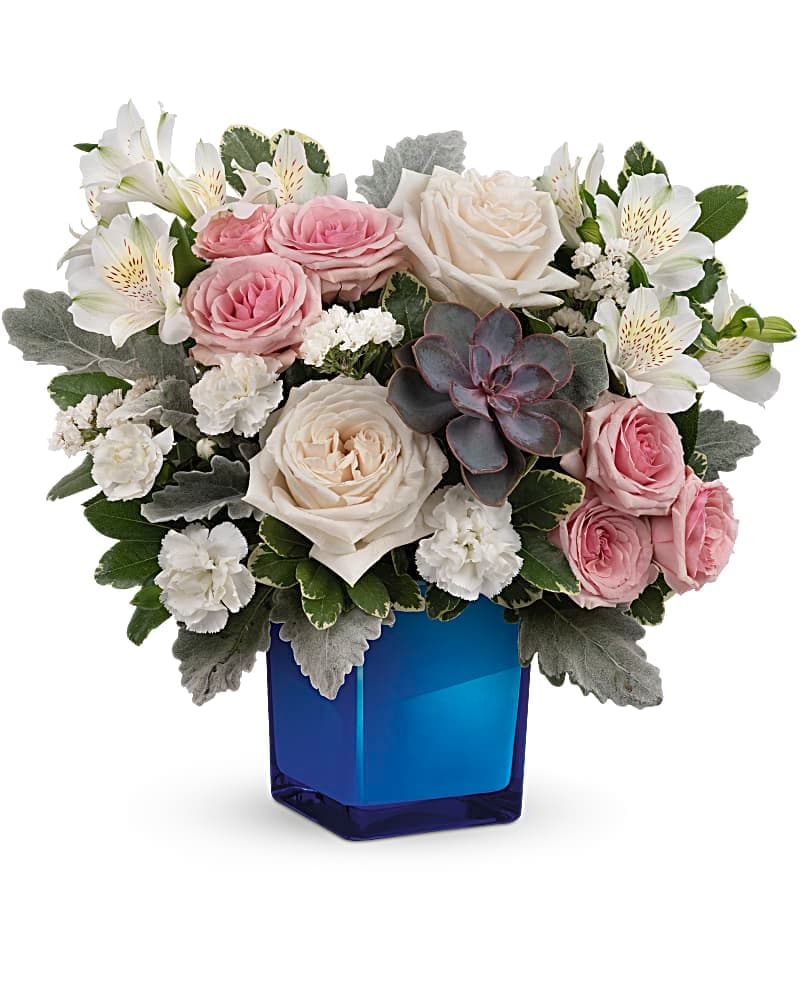
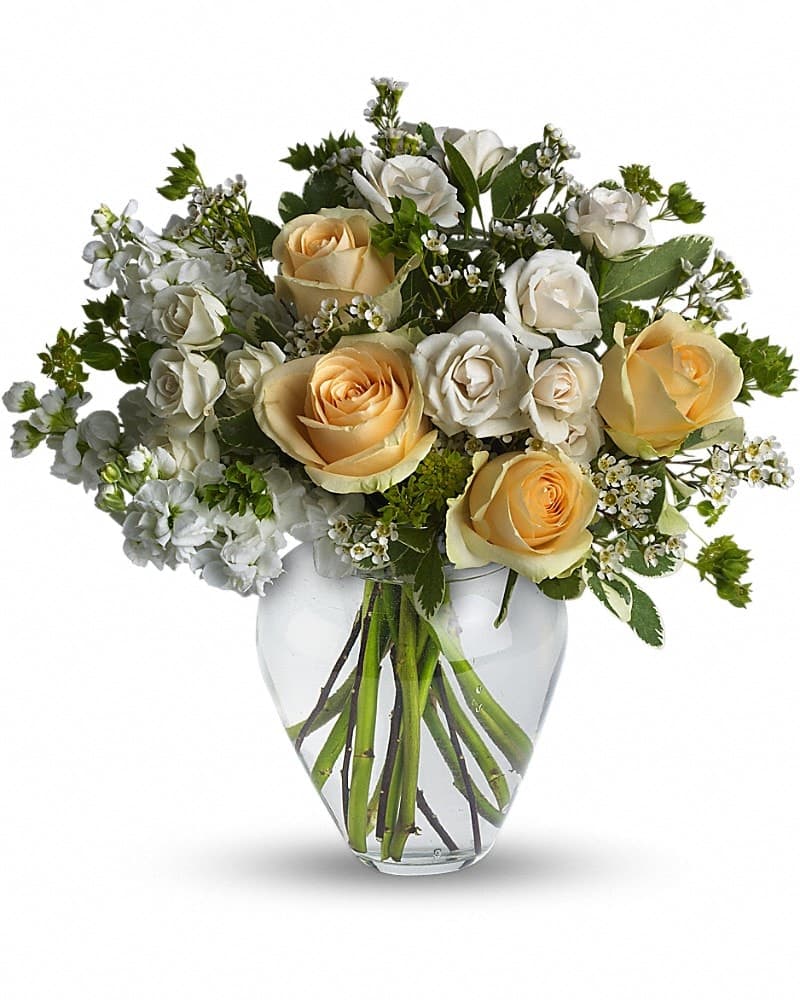
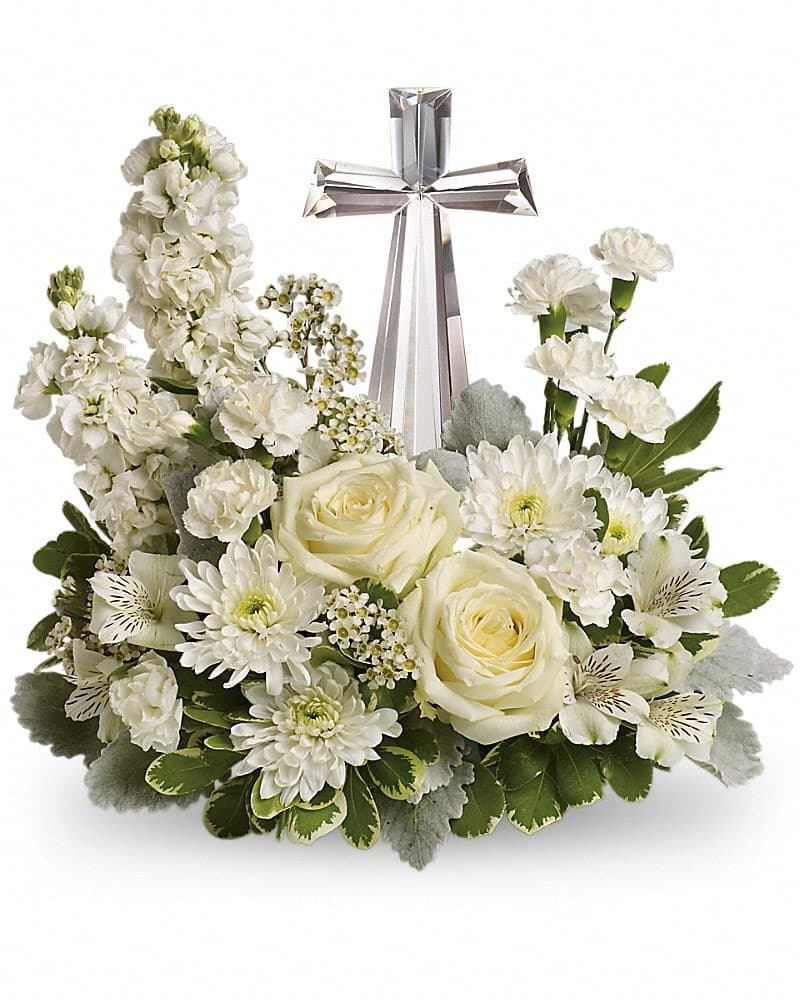
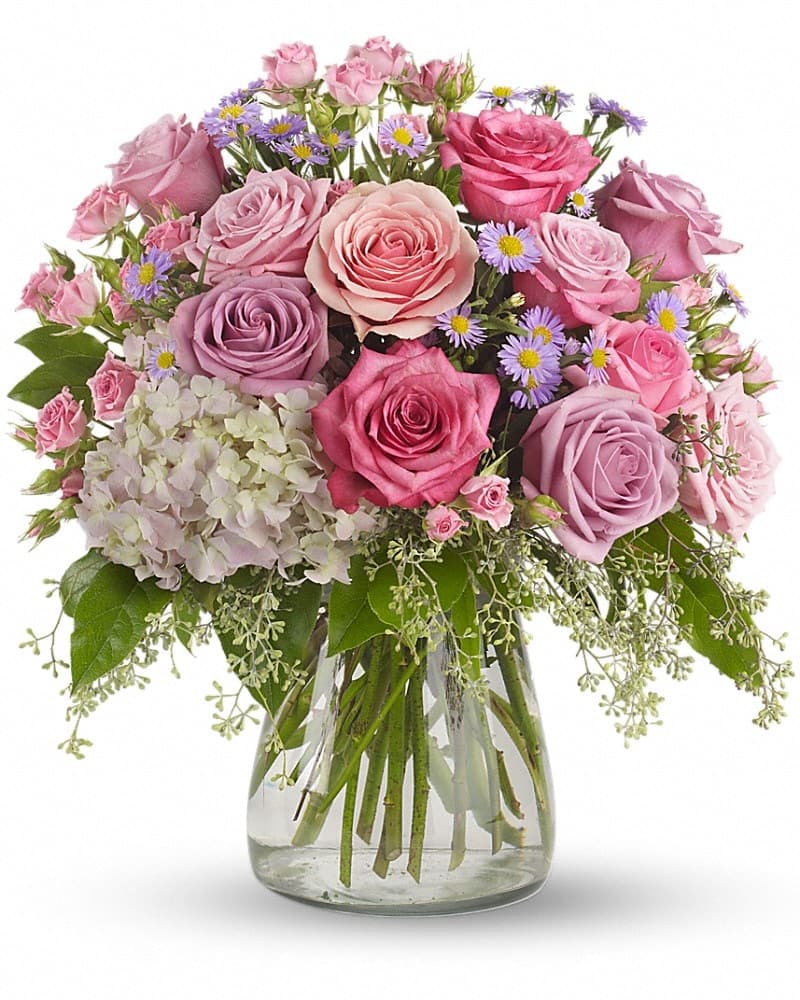
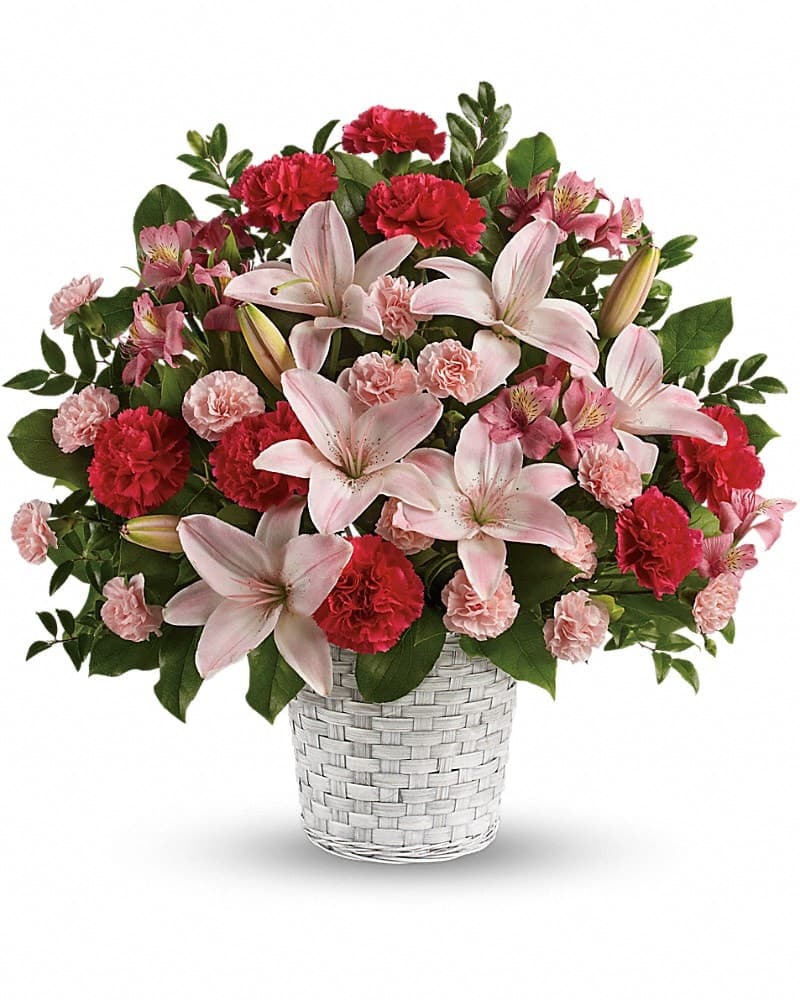
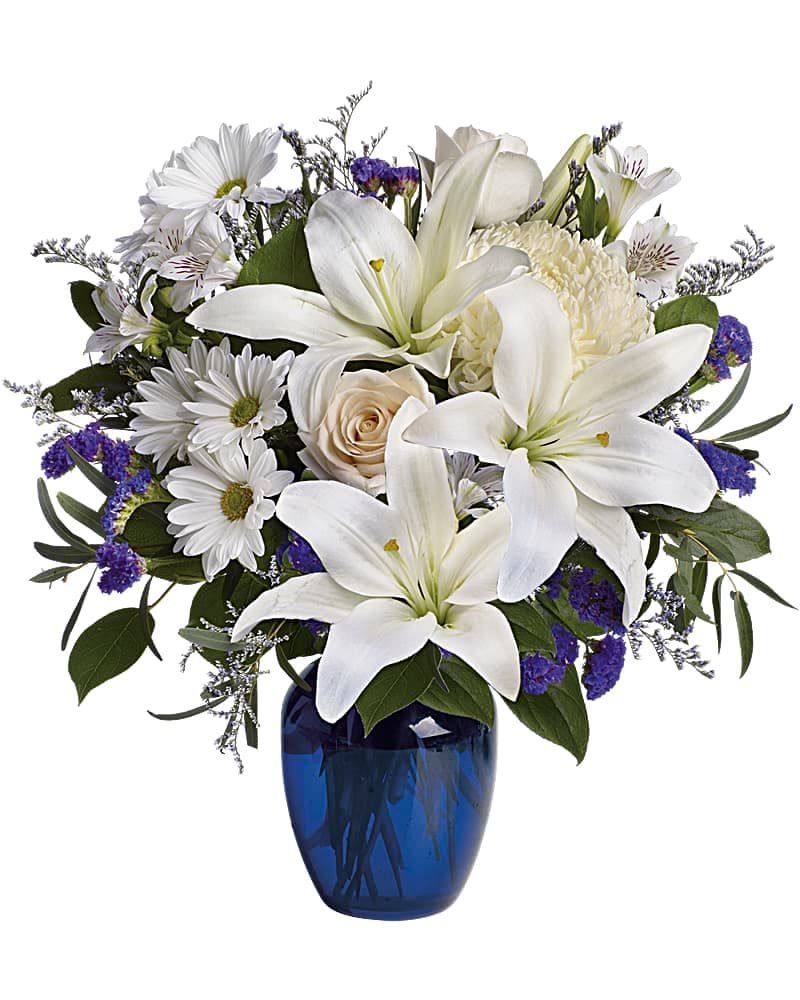
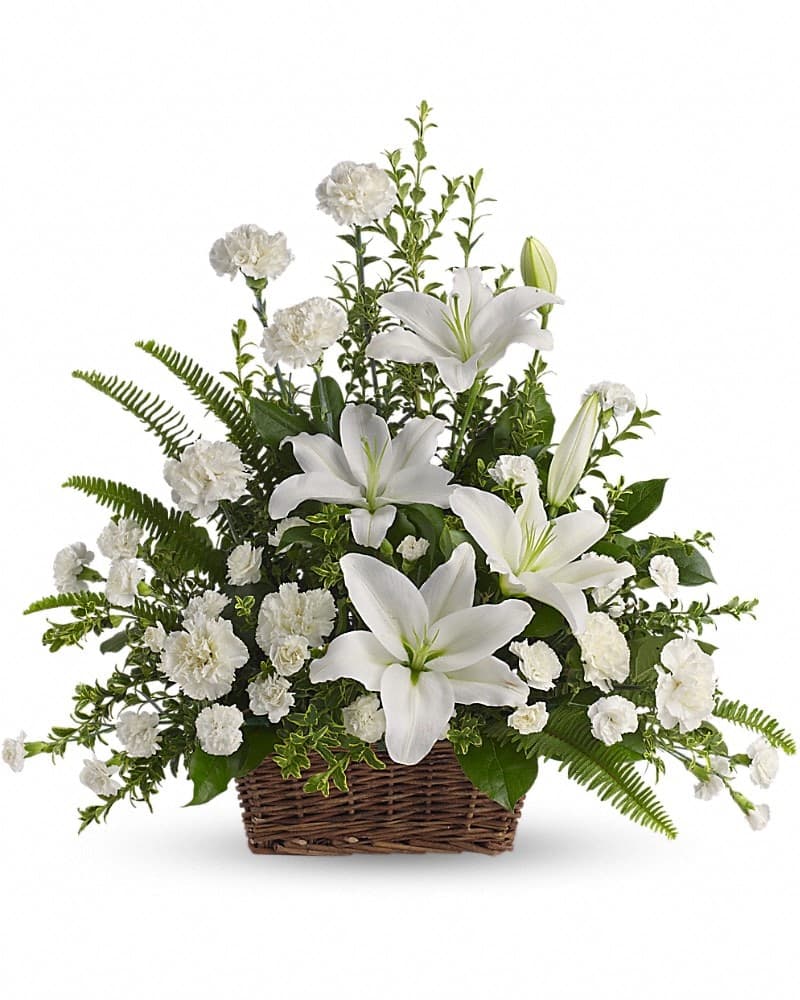
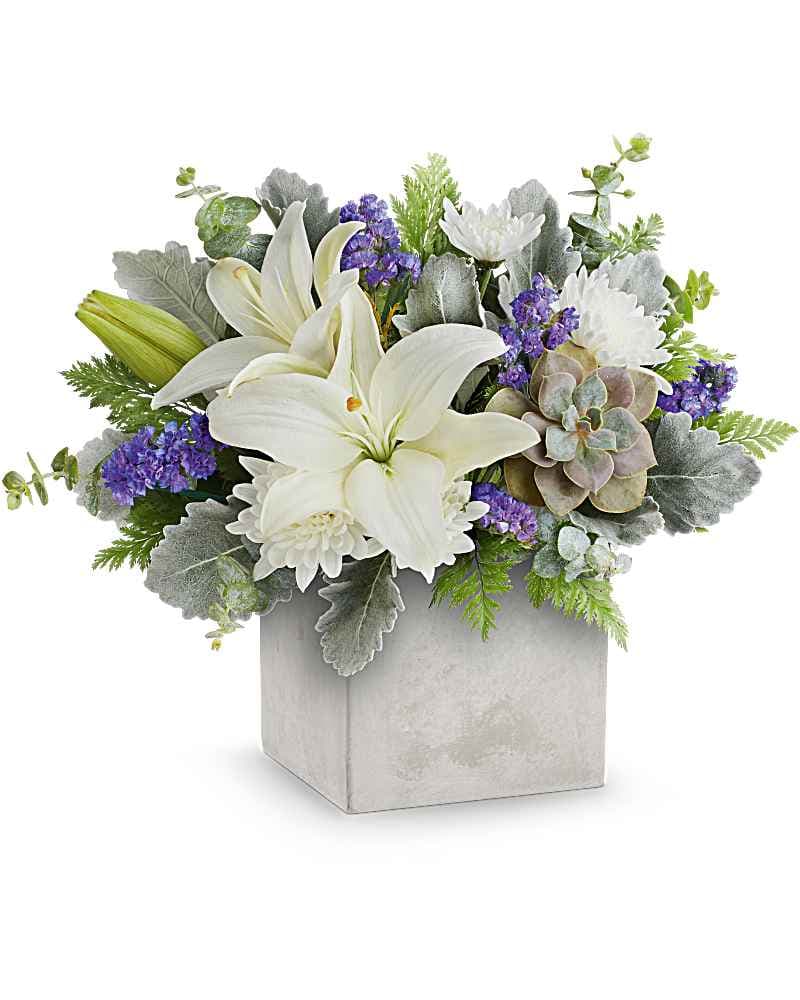
Bethlehem's first burial ground has not a single upright stone in it. God's Acre lies on Market Street beside the buildings the Moravians raised in 1741, and it is a lawn of flat markers laid level with the turf, every one of them the same size. The settlement buried in choirs — the married, the widows, the single brethren, the children, each in their own rows — rather than in family plots, on the principle that death ranks nobody above anybody. Walk it once and you understand the local grammar of grief before anyone explains it: small, even, unshowy. It carries straight into what you should order. A great deal of the sympathy work leaving these five shops is white and green, built low, sized to stand on a chancel step or a hall table without demanding the room's attention. Bigger is not warmer here. It reads as somebody who did not know the family.
The second thing an out-of-town sender should know is that a death here is often announced by music: the Moravian trombone choir still plays chorales to mark the passing of a member, a practice older than the United States. The congregation sets the rhythm — when the service falls, how the burial follows — before anyone thinks about flowers, so do not guess at timing. Read the notice; if there is none, telephone the funeral home and ask what hour the family is receiving.
Now the address, because this is the only category where a mistake cannot be repaired the same afternoon. Bethlehem straddles two counties — most of it Northampton, its western edge Lehigh — and holds churches of nearly identical dedication a few miles apart on opposite banks. Copy the building name, the street and the hour exactly as the obituary prints them, and expect two buildings rather than one: families here commonly receive at a funeral home one evening and hold the service at a church the next morning, sometimes across the Fahy or the Hill-to-Hill from the viewing. Then say which of three destinations the flowers are for — church, grave, or the house the family goes back to. Those are three different builds, and the shop will ask anyway.
The chapels cluster on a few streets. Connell Funeral Home on East Broad Street is among the most-requested Bethlehem addresses; Cantelmi Long on Linden Street serves both banks, and Linden carries more than one house, with Downing and Pearson further out the same street — which is why the street number matters as much as the name. Heintzelman on Main Street in Hellertown takes the southern end of the county. Burials go mainly to Nisky Hill, off the end of Market Street, opened in the 1860s once the flat ground at God's Acre had no room left; it stands on a bluff where the land falls away toward the Lehigh, and that exposure is a working fact rather than a view. Wind off the river puts a tall glass vase on its side within minutes, so a graveside piece belongs on a stand or in a weighted low vessel, set while the grounds crew is still working rather than while the family stands at the opening. Holy Saviour takes the Catholic burials, Fountain Hill Cemetery sits in the borough wrapped around the south side, and the Hellertown and Lower Saucon grounds hold the Saucon Valley services. A section and lot number, if the family has one, saves the runner twenty minutes of driving rows.
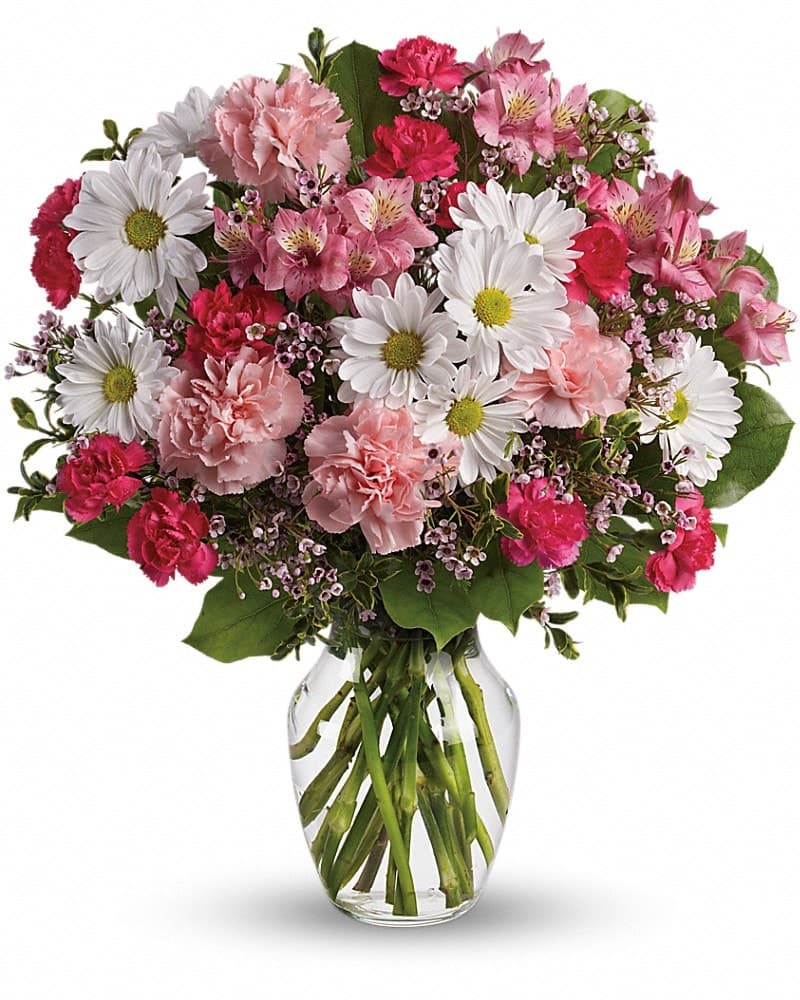
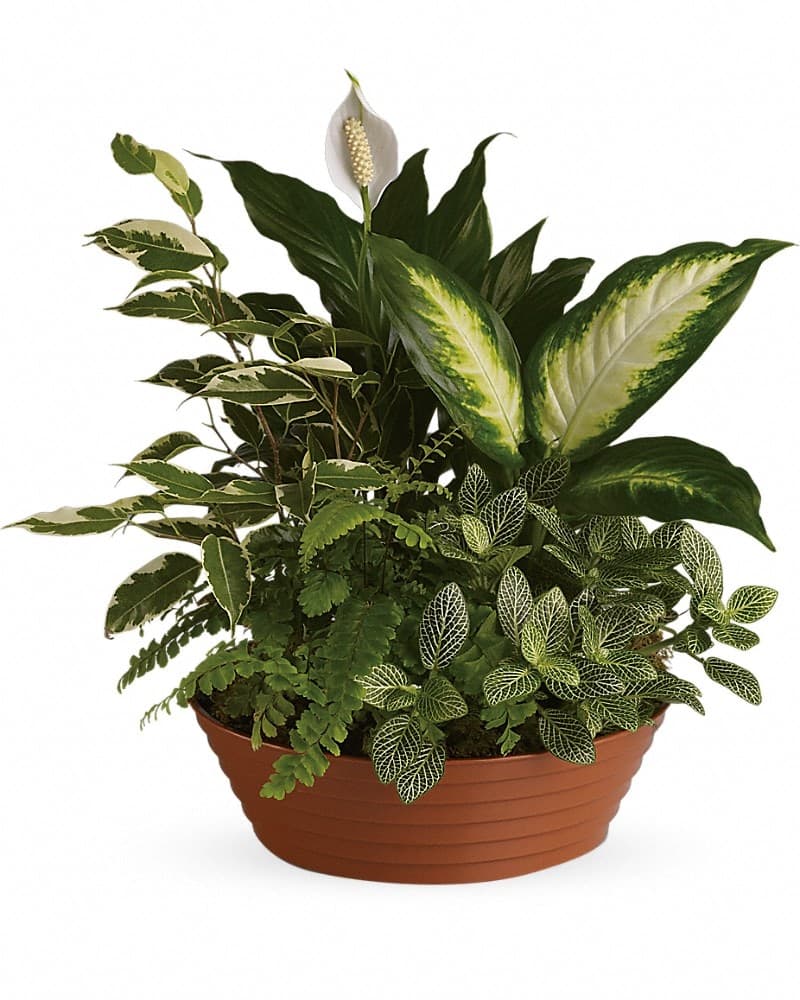
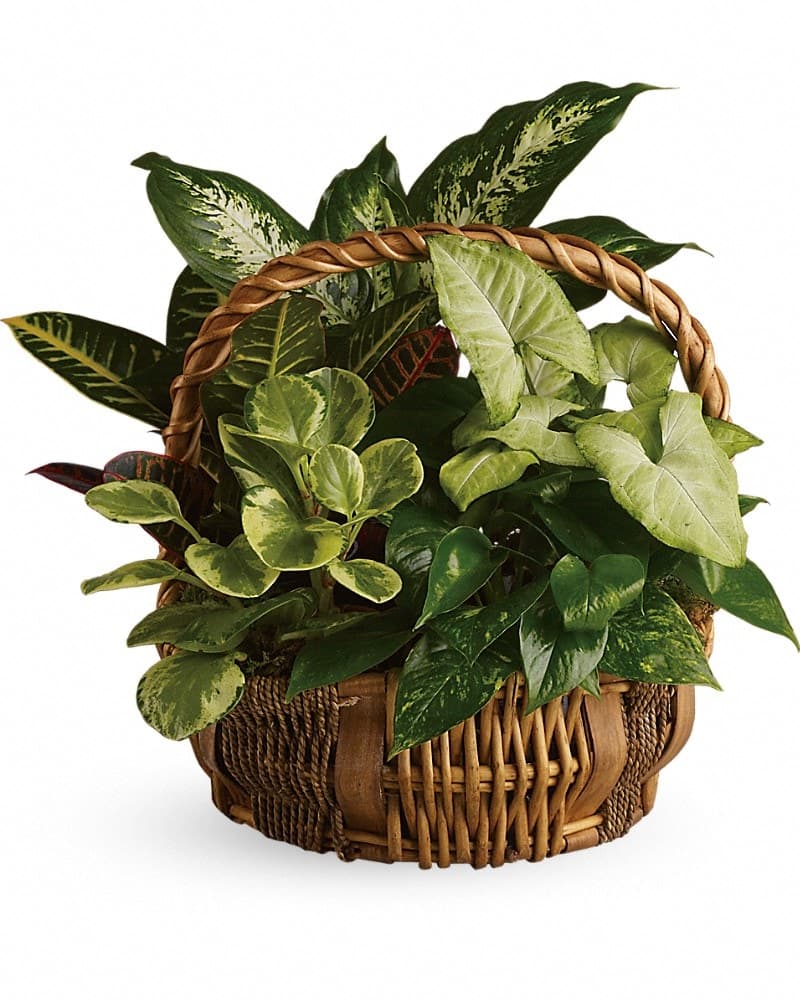
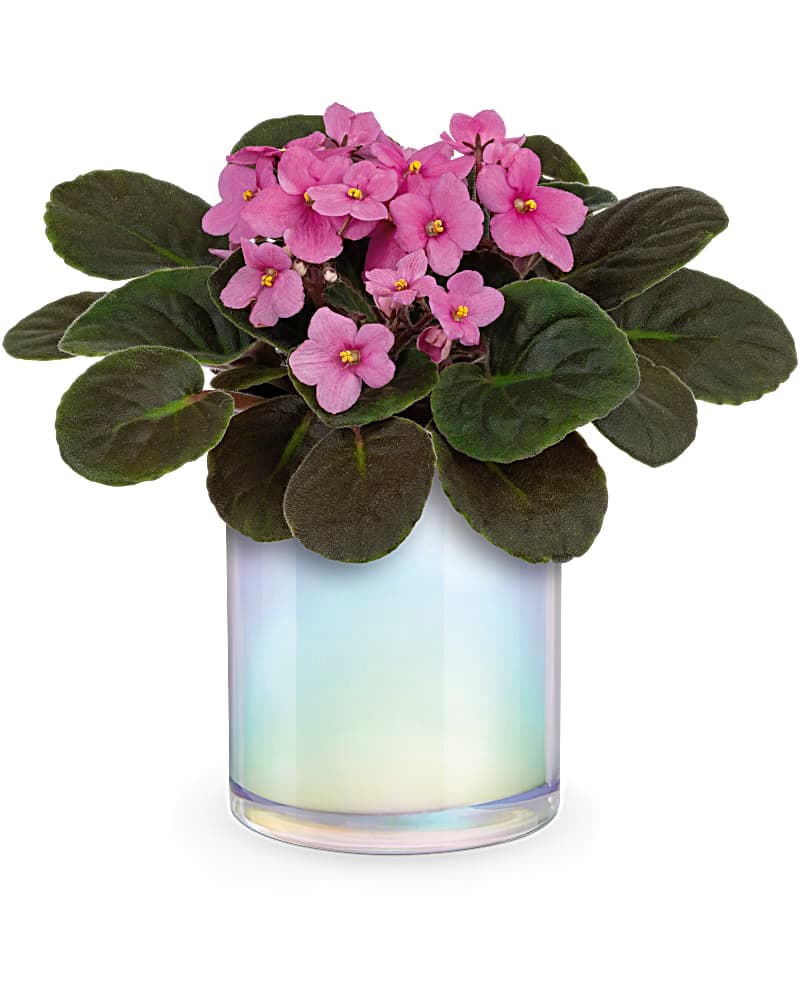
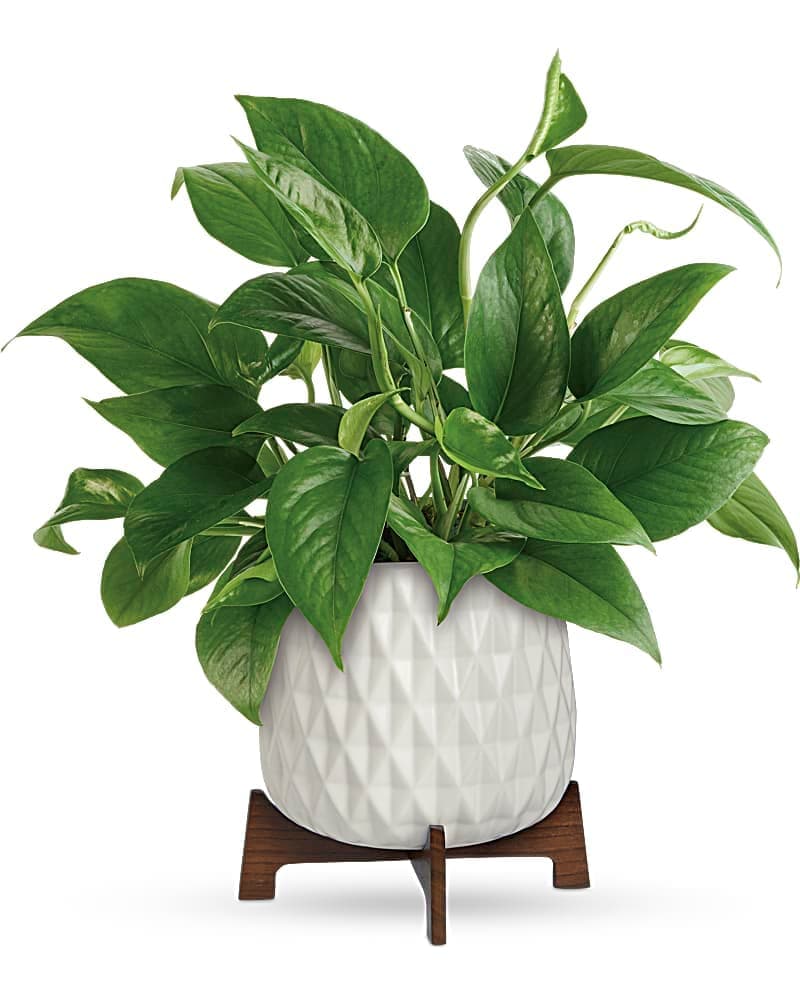
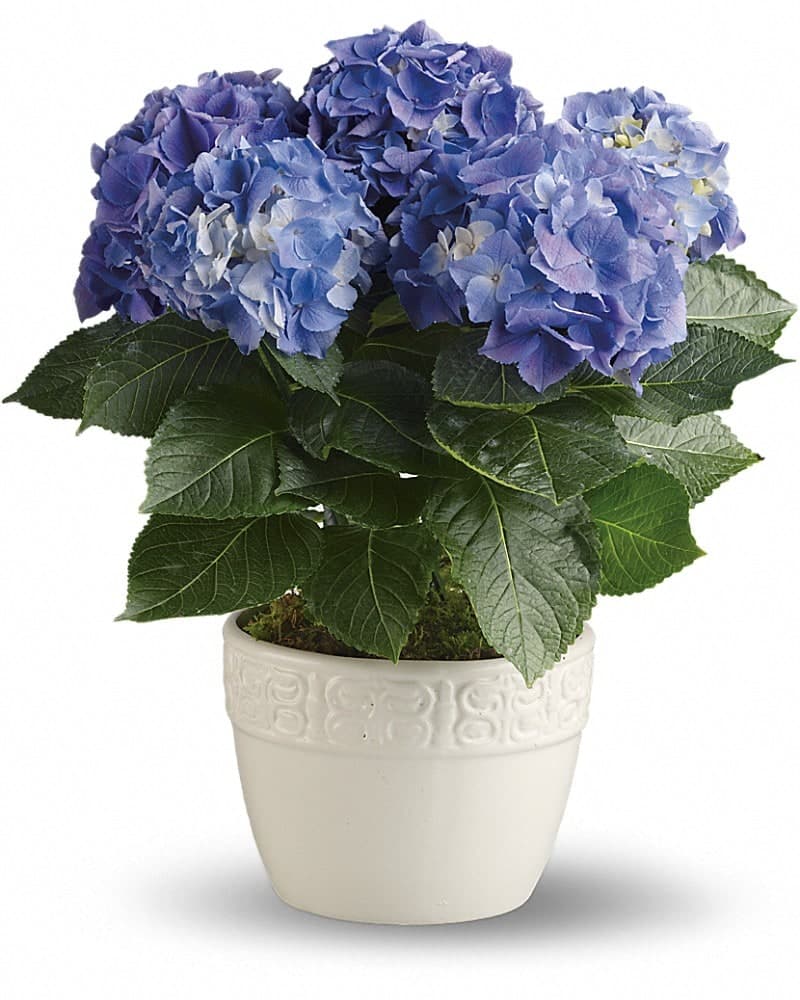
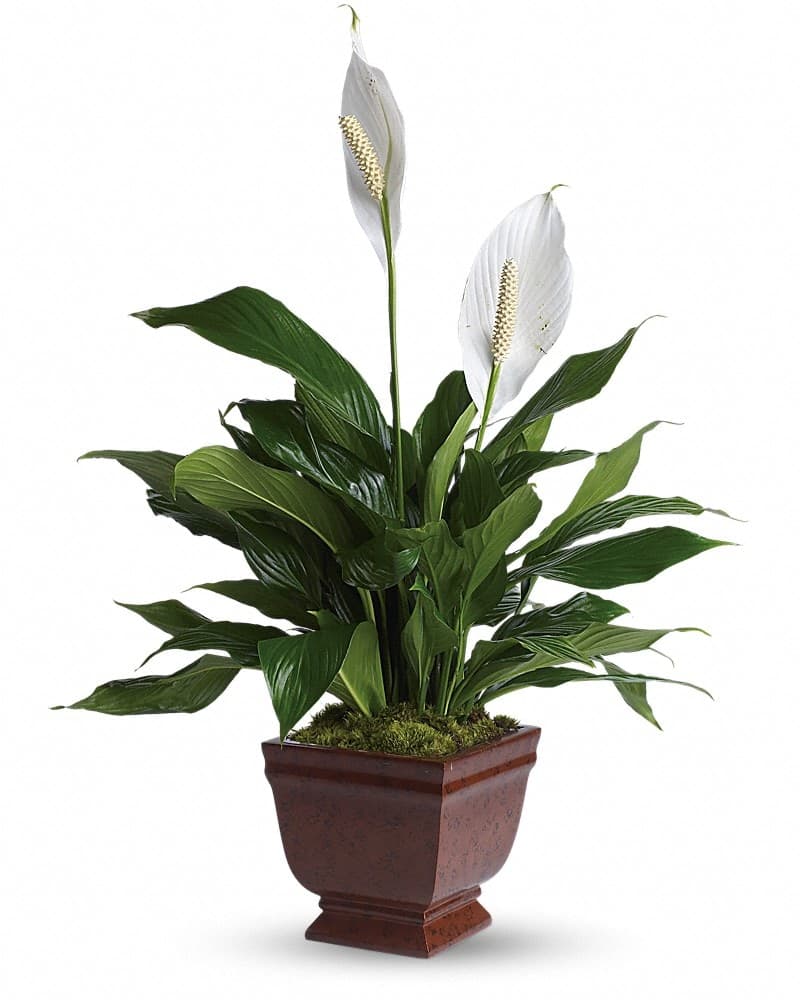
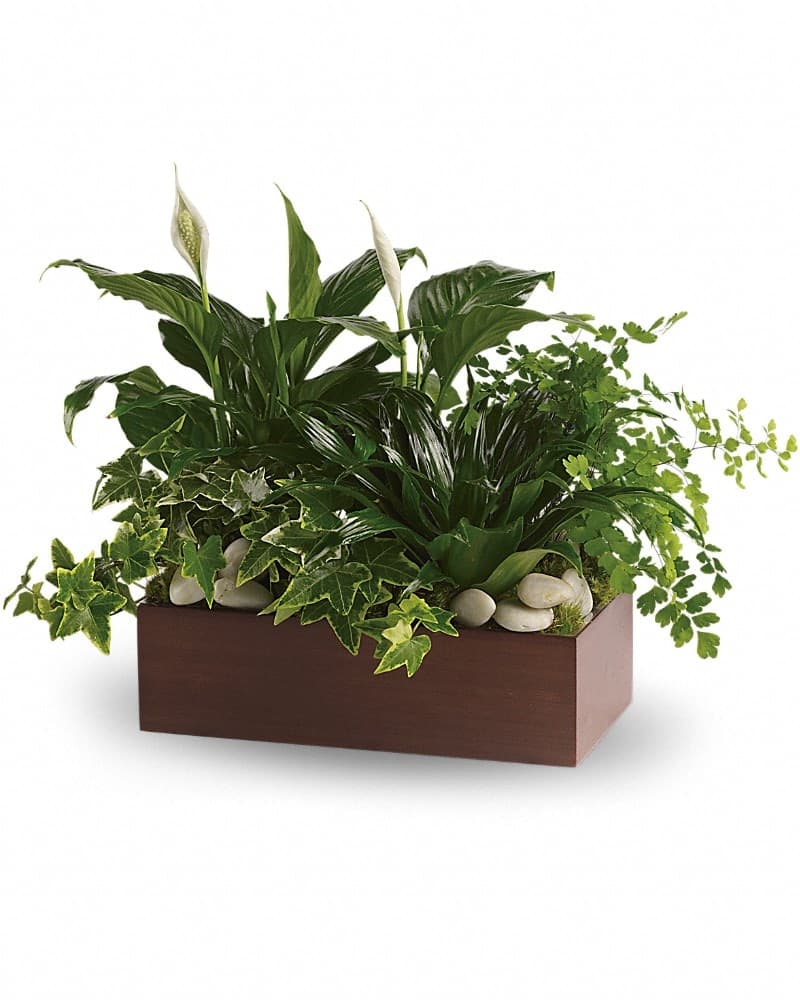
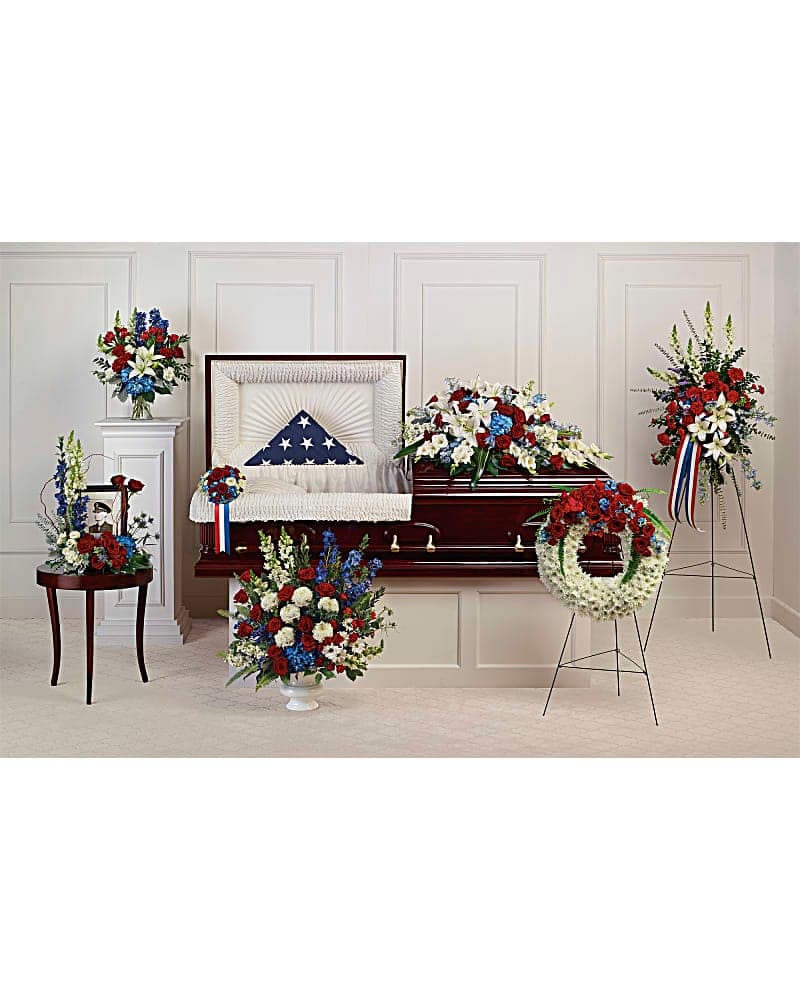
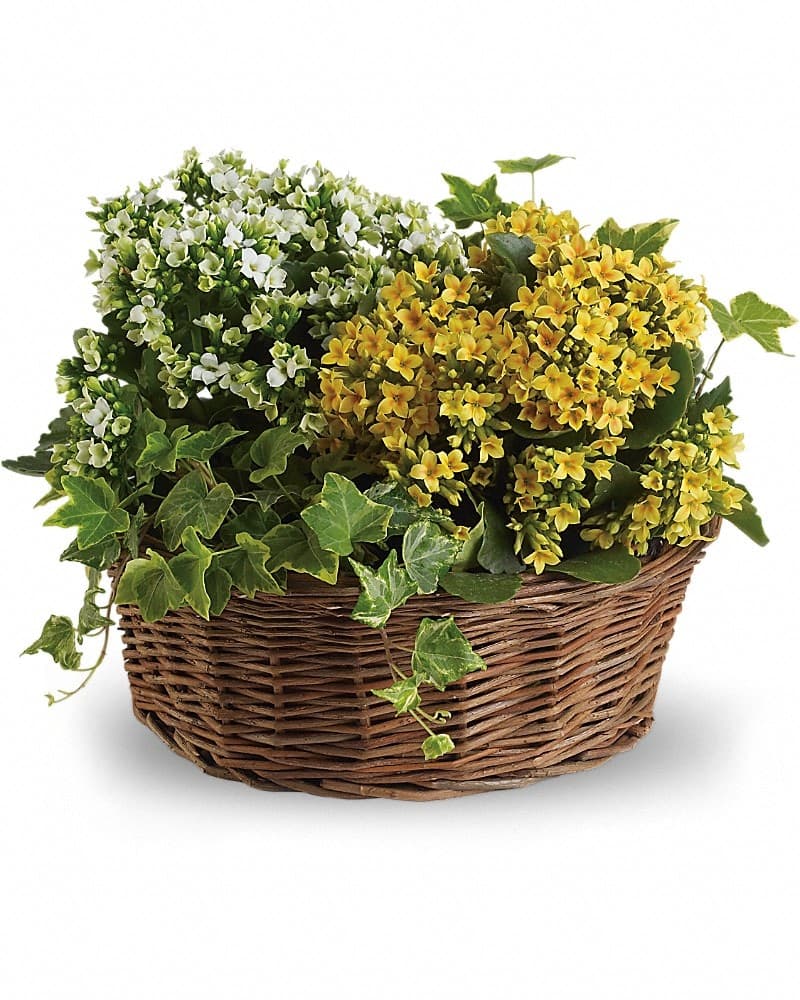
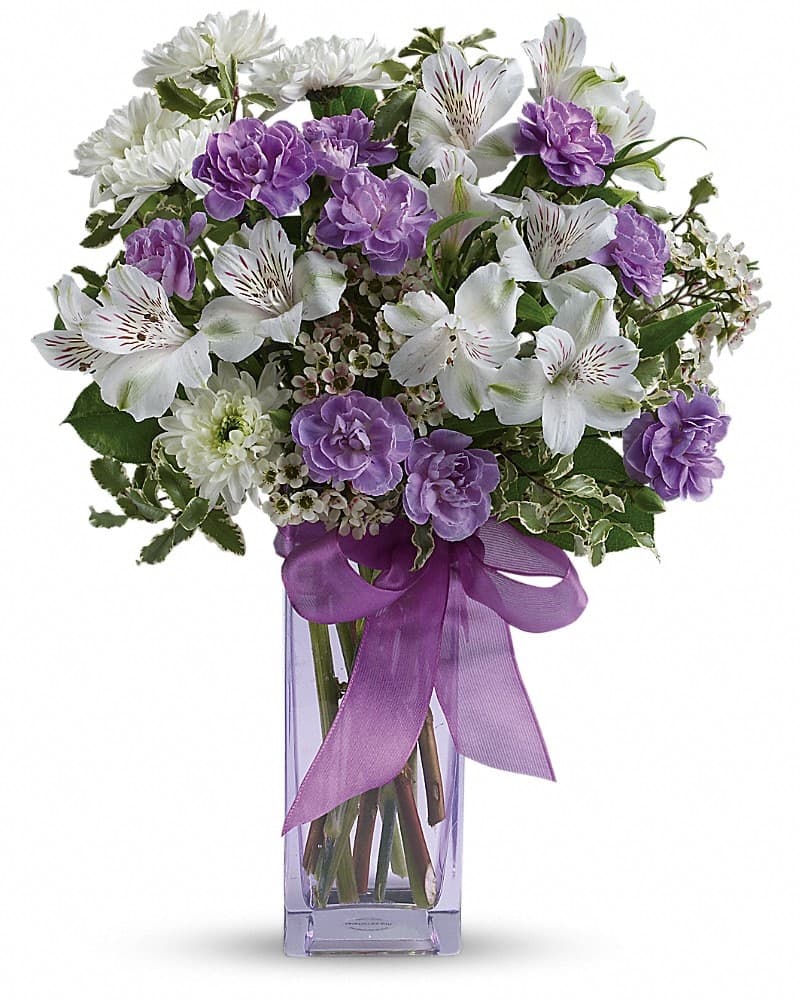
Custom varies street by street here, and it changes what is worth sending. At a Moravian service — Central Moravian at Main and Church, with the Edgeboro and west-side congregations — plainer is better, and white with green foliage in a low vessel belongs in the room in a way an elaborate build does not. Catholic work runs mainly through Holy Infancy on East Fourth Street, the south-side parish that served the mills' Irish, Italian, Hungarian and Slovak families and now holds Mass in Spanish, and through SS. Simon and Jude on West Broad; a church displays a piece on a frame, while the spray across the casket is the family's own order, settled with the funeral director rather than bought online. The Cathedral Church of the Nativity on Wyandotte Street is the seat of the Episcopal Diocese of Bethlehem, and a cathedral altar guild has its own view on what stands near the altar — one call to the parish office settles it. At St. Nicholas Greek Orthodox on West Union Boulevard the calendar continues past the funeral: families mark forty days and then a year, so a piece on one of those dates often means more than a second at the service. Among Jewish families — Congregation Brith Sholom stands on Macada Road — a chapel tribute is not the expected gift; a donation in the person's name is, and what helps is something sent to the mourners' house while they are sitting, a living plant or fruit rather than a formal arrangement. On the south side, in blocks the Steel's immigrants filled and Puerto Rican and Mexican families hold now, the rosary evenings said at home after a burial draw more people through the door than the funeral did, so a midweek delivery to that house does more than another vase at the chapel; write your card in Spanish and it is copied out in Spanish. If you cannot tell which custom applies, ask the funeral director — they field the question weekly and answer it in under a minute.