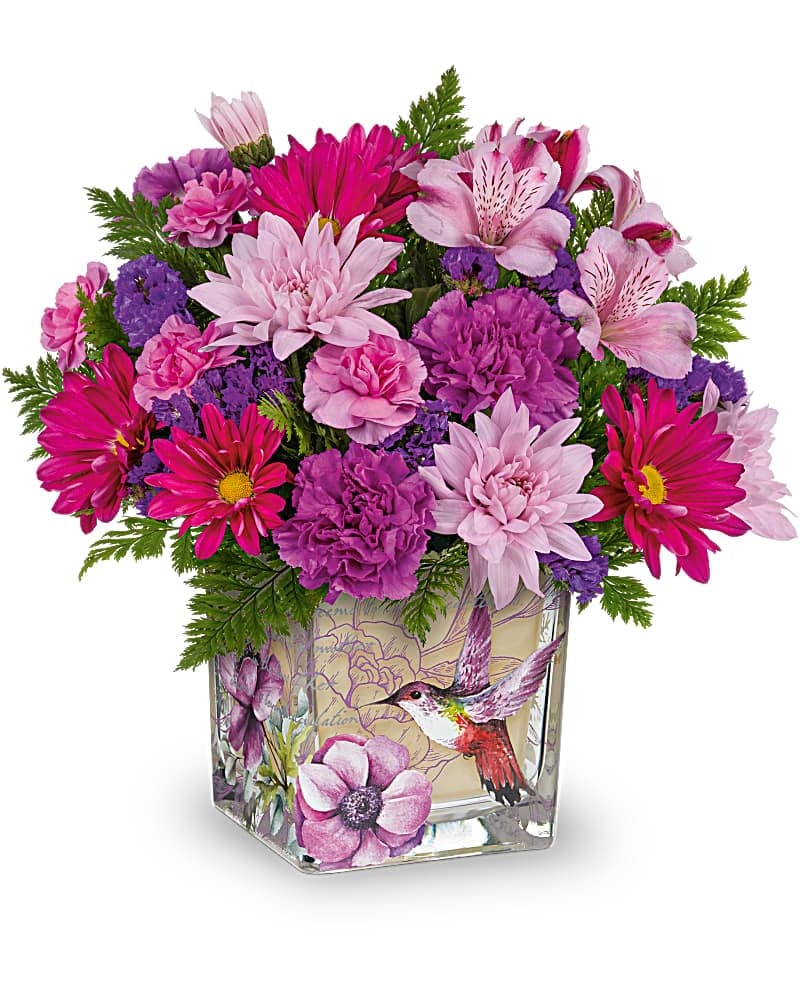
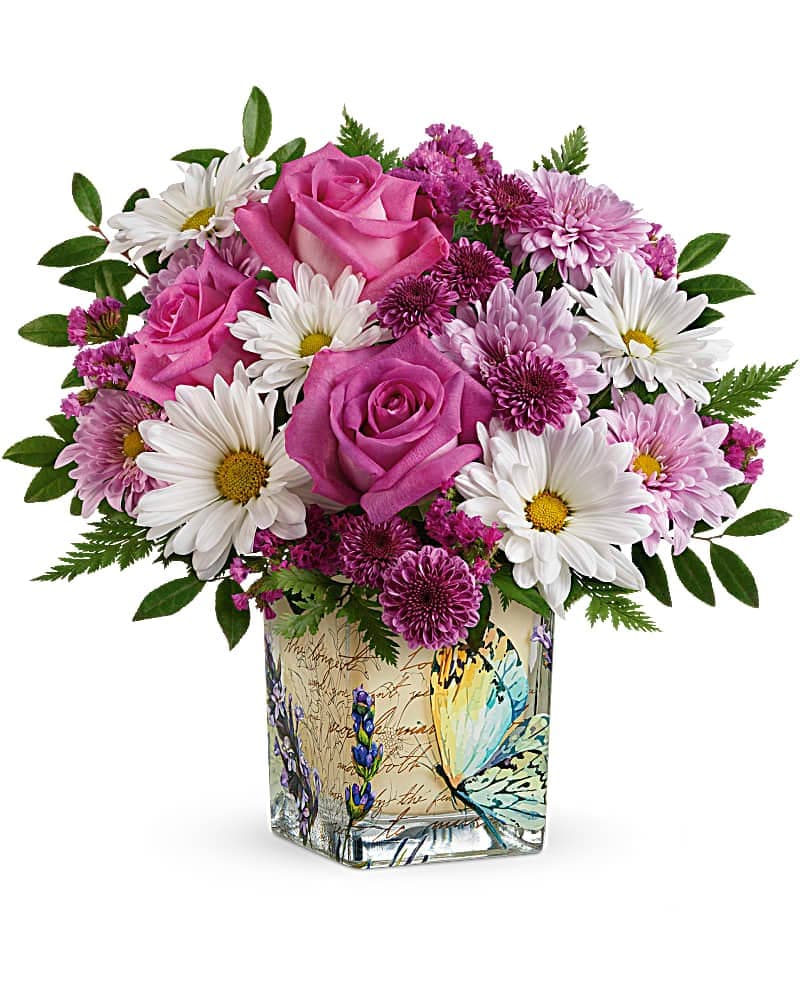
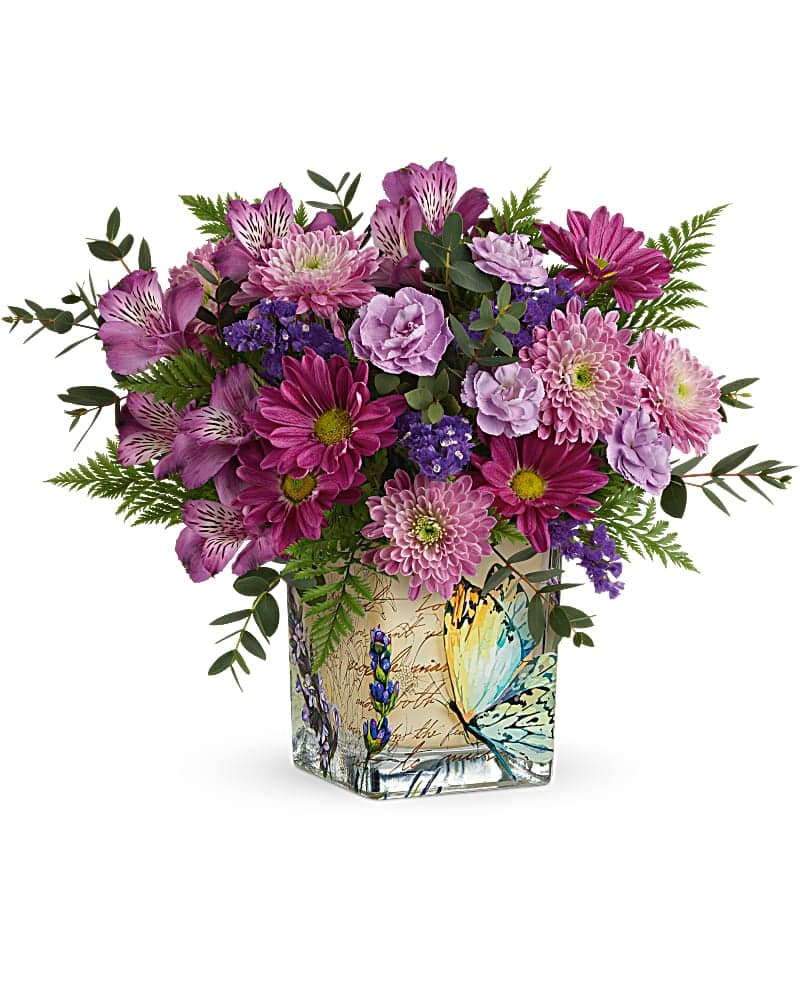
St. Luke's has been treating Bethlehem's injured since 1872, when the men carried in came off the railroad and out of the mills, and the hospital it grew into still sits where it started — up on Ostrum Street in Fountain Hill, the small borough wrapped around the south side, built into the slope that climbs toward South Mountain. That slope is the first practical fact about sending flowers there. The campus has grown uphill and downhill across decades, its entrances and parking decks meet the buildings at different levels, and a street address on its own does not tell a runner which door to walk into. So the order needs more than the hospital name: give the pavilion or tower if the family told you one, give the unit, and give the room. A driver with a unit name asks the right desk in one stop. A driver with only a street address asks four people, and the flowers spend forty minutes in a lobby that gets warm.
What you can actually send depends on the unit, and the unit decides, not the hospital and not us. Three rules carry most of it. Scent is the first thing that gets a vase carried out to the corridor: someone midway through chemotherapy at the cancer center on the Fountain Hill campus or at the Lehigh Valley Cancer Institute alongside Muhlenberg has a sense of smell that has turned against them, and a fragrance that reads as pleasant to a visitor reads as nausea to the patient. Pollen is the second: a stem that sheds gets intercepted at the desk on any floor caring for someone whose immune system is down, so those builds go out with the shedding varieties left out rather than trimmed on arrival. The third is furniture. A bedside table in an intensive-care room holds a water jug, a phone and a chart, and nothing else fits; the arrangement has to be short, wide-based and light enough for a nurse to lift with one hand while her other hand is on a pump. Two smaller notes that come up weekly: a mylar balloon tied to the vase is the item most often refused at a desk, and glass is unwelcome on some floors — say the word and we send a ceramic or unbreakable vessel instead. Tell us the unit and the studio builds to it. If the unit takes nothing at all, we arrange a lobby hand-off to a family member, which almost nobody thinks to ask for and which works every time.
Not every recovery happens in a hospital, and in Bethlehem the home half of this category has its own geography. The south side in 18015 is the hard one: the numbered streets above Fourth climb steeply, the blocks are narrow and one-way, and between December and March an untreated grade is a legitimate reason a run gets rescheduled rather than attempted. West Bethlehem in 18018 — the twins off Eighth Avenue, Union Boulevard and West Broad — is straightforward, though a shared front step under one roofline needs the house number and the side. 18017 north and northeast, out Center Street and Macada and through East Hills, has driveways and porches and is the easiest afternoon route on the grid. 18020, the township and Freemansburg side toward Green Pond Road and Route 33, is newer development where the building numbers repeat, so the development name and unit matter. For longer recoveries there are the named places people actually go: Gracedale out in Nazareth, Northampton County's own home, and Kirkland Village, Moravian Village of Bethlehem, Country Meadows and Holy Family Manor around the city, all of which take a delivery at a front desk that then walks it to the room — put the resident's full name and the building or wing on the order. Students recover in place too: Lehigh's halls on the Asa Packer campus and Moravian's on the north side both route through a package desk, never to a room, so the order needs the student's full name as the school has it and a mobile number so the desk can text.