The first question on a get-well order from this ZIP is not what to send. It is which building. Clermont County has exactly one hospital — Mercy Health Clermont Hospital, on Hospital Drive in Batavia, four to five miles from the Amelia centroid — and it handles a great deal of what the county needs: the emergency room visits, the surgeries people are home from in two days, the pneumonia that keeps a seventy-eight-year-old overnight. What it does not keep is the worst news. A serious trauma, a complicated cardiac case, a cancer diagnosis that needs a specialty team, a newborn in trouble: those move, and they move west and north, out Beechmont Avenue onto Columbia Parkway and up into Clifton, Corryville, Mount Auburn and Avondale, roughly twenty miles and forty minutes from a house on Ohio Pike. Families on this grid learn the phrase "they're transferring her downtown" early. So before you order, confirm the hospital and the room, because a bouquet delivered to Batavia for a patient who was moved to UC Medical Center on Goodman Street at two in the morning does not follow her. It sits at a nurses' station in the wrong county seat.
Clermont Hospital has its own rhythm, and it works against get-well flowers in one specific way: the stays are short. A patient admitted Monday after a gallbladder or a hip is frequently gone by Wednesday, and a same-day arrangement ordered Tuesday afternoon can reach the floor an hour after the discharge paperwork clears. If you are not certain the patient will still be in the building tomorrow, call the room or a family member first, or send to the house instead and let it be waiting when they get home — that is the single most common mistake we see corrected on this grid. The delivery itself is simple by city standards. Deliveries reach a main entrance desk and are carried up by staff or a volunteer on their own schedule rather than by our driver, which means the arrangement needs to survive an hour sitting on a counter: a vase with water in it, not a wrap that needs someone to find scissors and a container. Put the patient's full name as it is on the chart, plus the room number if you have it. A first name and "third floor" is not enough for a building that admits and discharges dozens of people a day.
The transfer hospitals are a different problem, and the restrictions get real. UC Medical Center on Goodman Street in Clifton is the region's Level I trauma center and the campus where the hardest cases from this county land, with the Barrett Cancer Center on the same grounds. The Christ Hospital on Auburn Avenue in Mount Auburn takes much of the cardiac work. Good Samaritan on Dixmyth Avenue in Clifton and Bethesda North on Montgomery Road in Montgomery carry the TriHealth share, Mercy Health's Jewish Hospital sits on Galbraith Road in Kenwood, the Cincinnati VA Medical Center is on Vine Street in Corryville, and Daniel Drake Center on Galbraith Road takes the long, slow recoveries that follow a bad month in intensive care. Pediatric cases go to Cincinnati Children's on Burnet Avenue in Avondale, with Shriners Children's Ohio on the same avenue for burns. Three rules hold across all of them, and they are the rules worth knowing before you spend money: intensive-care rooms generally accept nothing at all, so the delivery goes to a waiting-room family member instead; transplant and blood-cancer floors turn away both cut flowers and potted plants because of what lives in soil and standing water; and children's units run latex-free, so a mylar balloon is fine and a latex one is not. Ask the nurses' station what their floor allows today — the answer changes by unit and sometimes by week, and a studio cannot guess it for you.
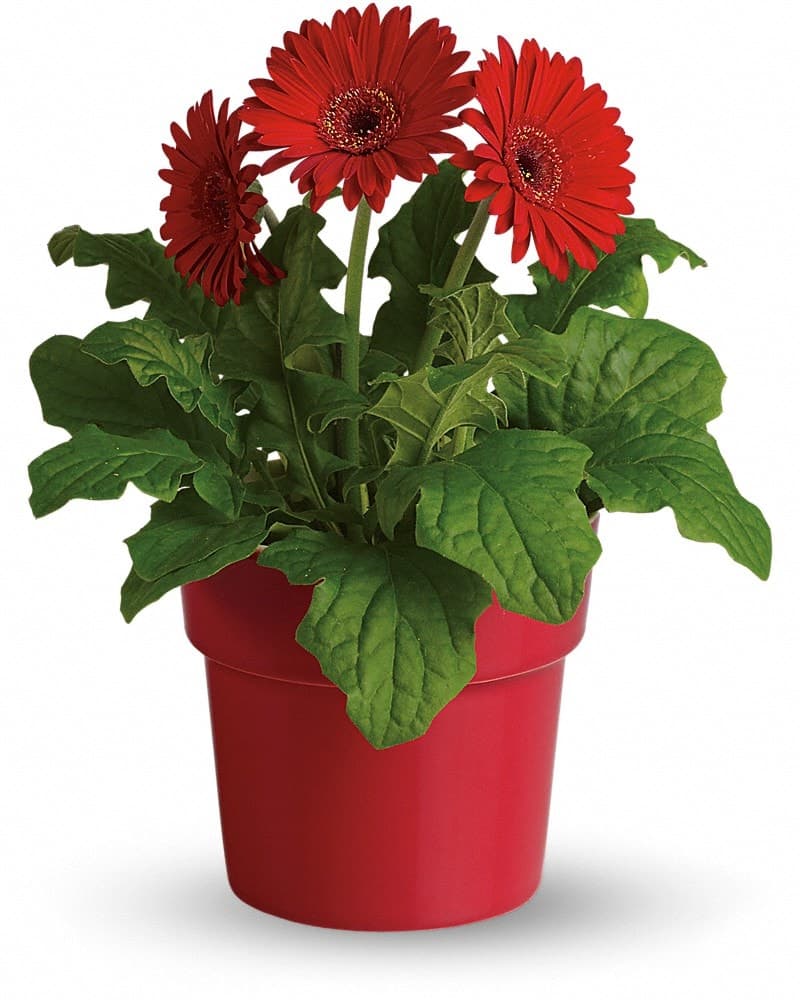
What actually works in a hospital room is smaller than people expect. The horizontal surface a patient owns is a tray table shared with a water pitcher, a phone and a box of tissues, so a compact vase design in the mid-thirties beats a tall arrangement at the top of the band that a nurse has to move to the windowsill and the patient never sees again. Keep the scent down. Anyone on chemotherapy, on the second day after general anesthesia, or fighting nausea will experience a heavily fragrant arrangement as a problem rather than a gift, which is the practical reason lilies and heavy stock get left out of get-well work and not just a pollen rule. Ask for bright, low-scent, and long-lasting: alstroemeria, gerbera, spray roses, lisianthus and carnation will still look alive on day five, which matters when the visit that follows the flowers is four days later. For a stay that is going to run weeks — a Drake Center recovery, a long oncology course — a plant is the better spend, because it goes home with them at the end and keeps going. And write the card for the room they are in: on this grid the most-quoted line back to us is not a get-well wish, it is a specific one, the neighbor promising to keep cutting the grass until they are back.