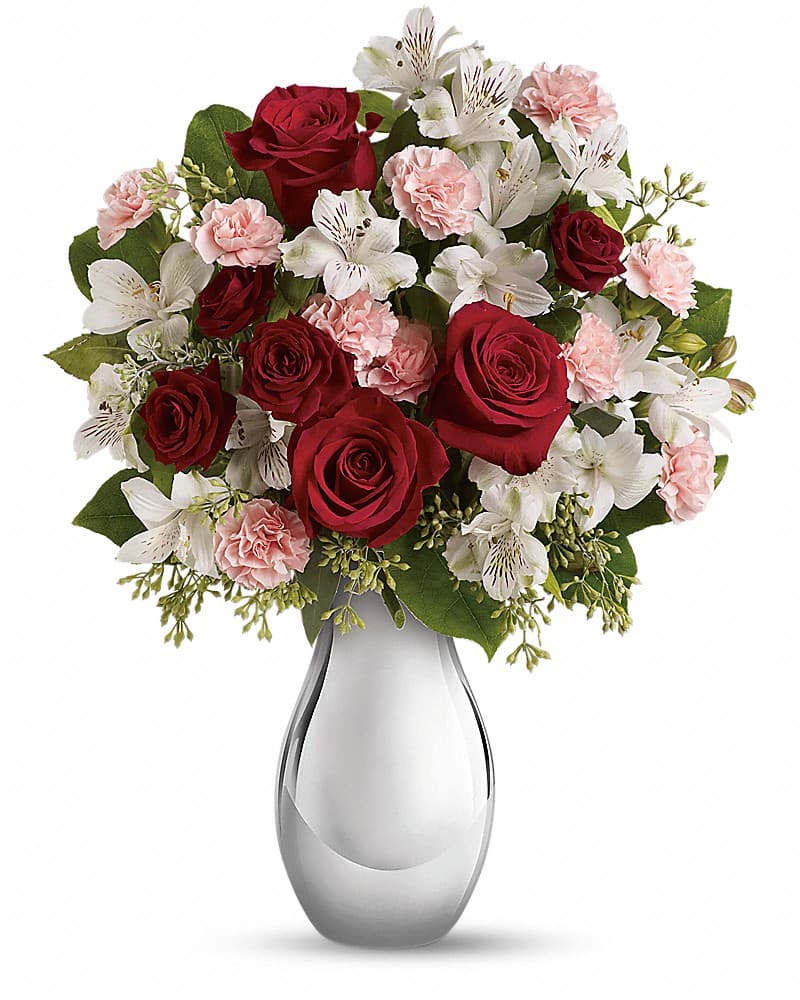
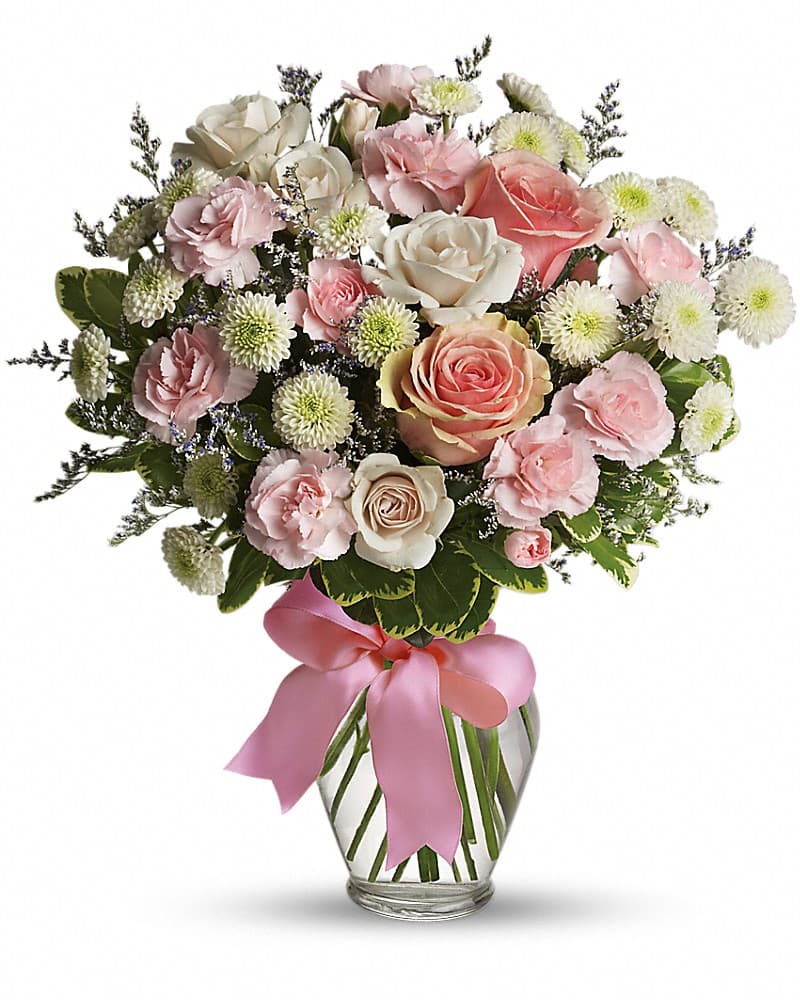
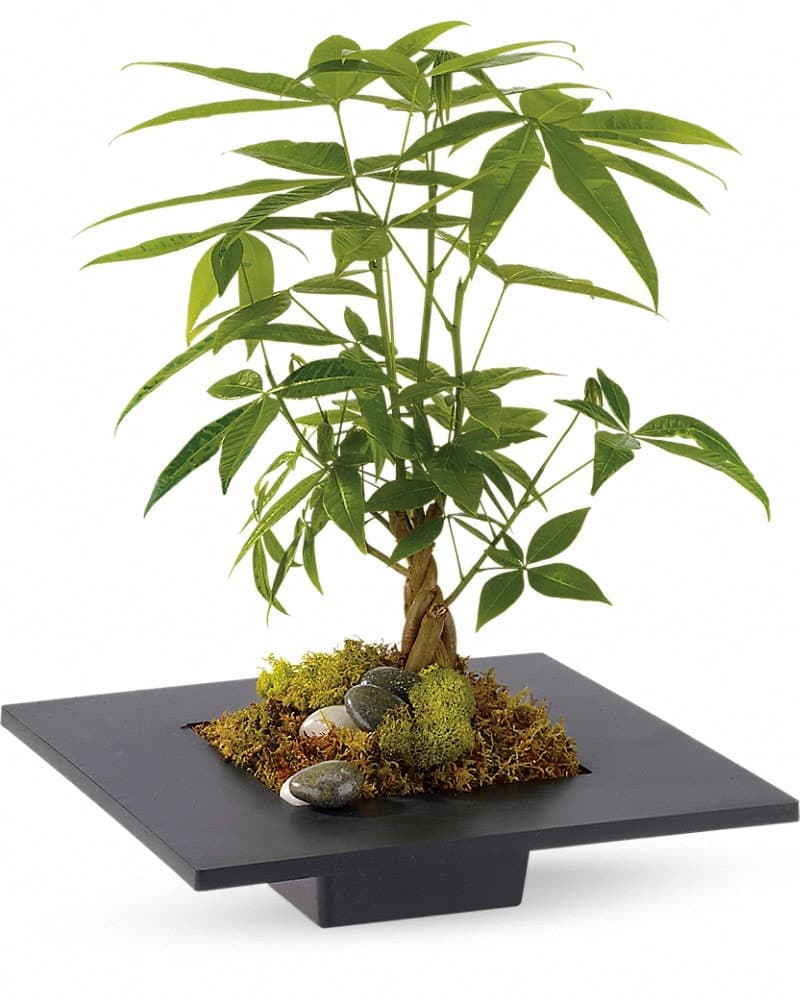
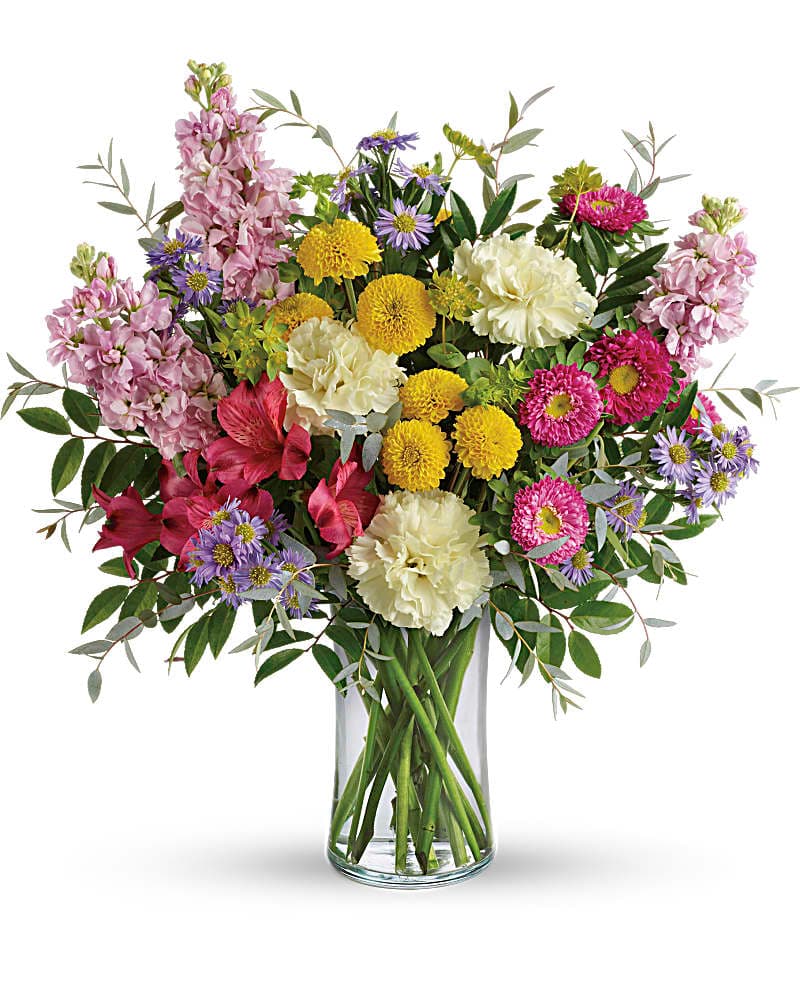
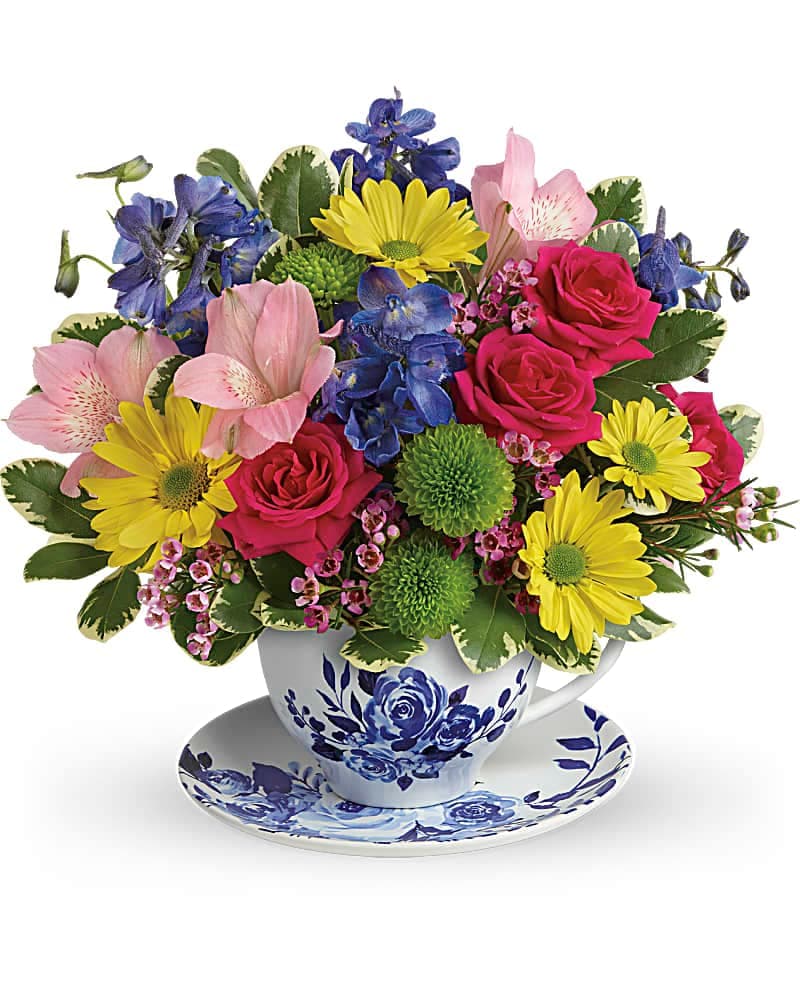
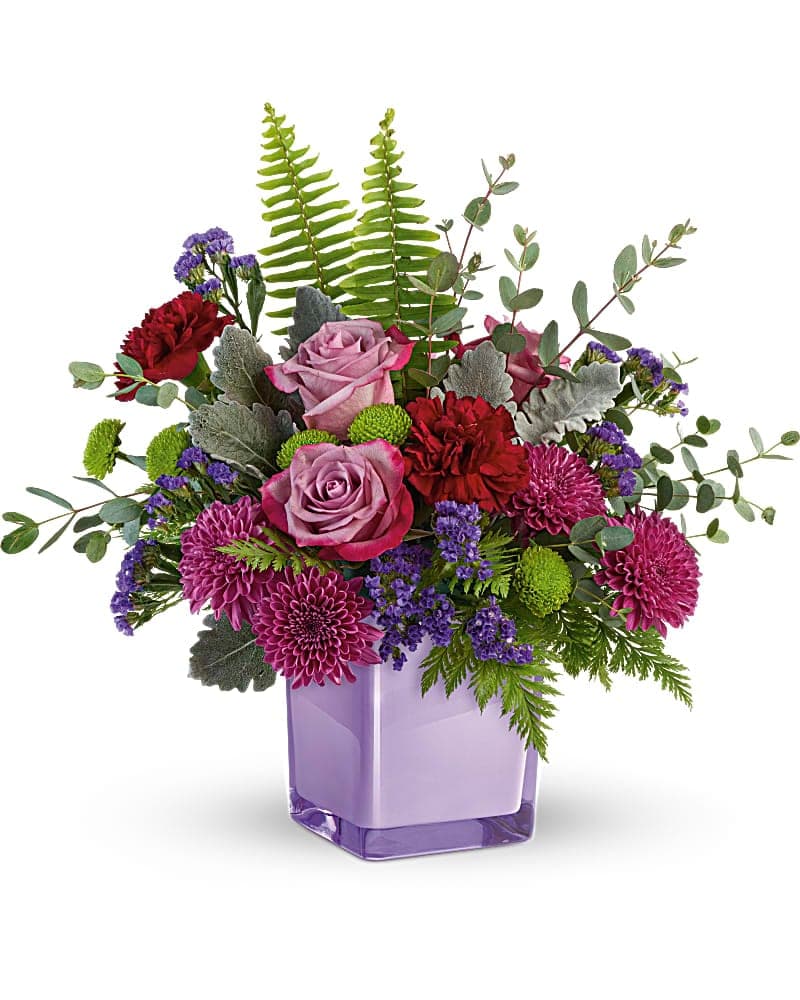
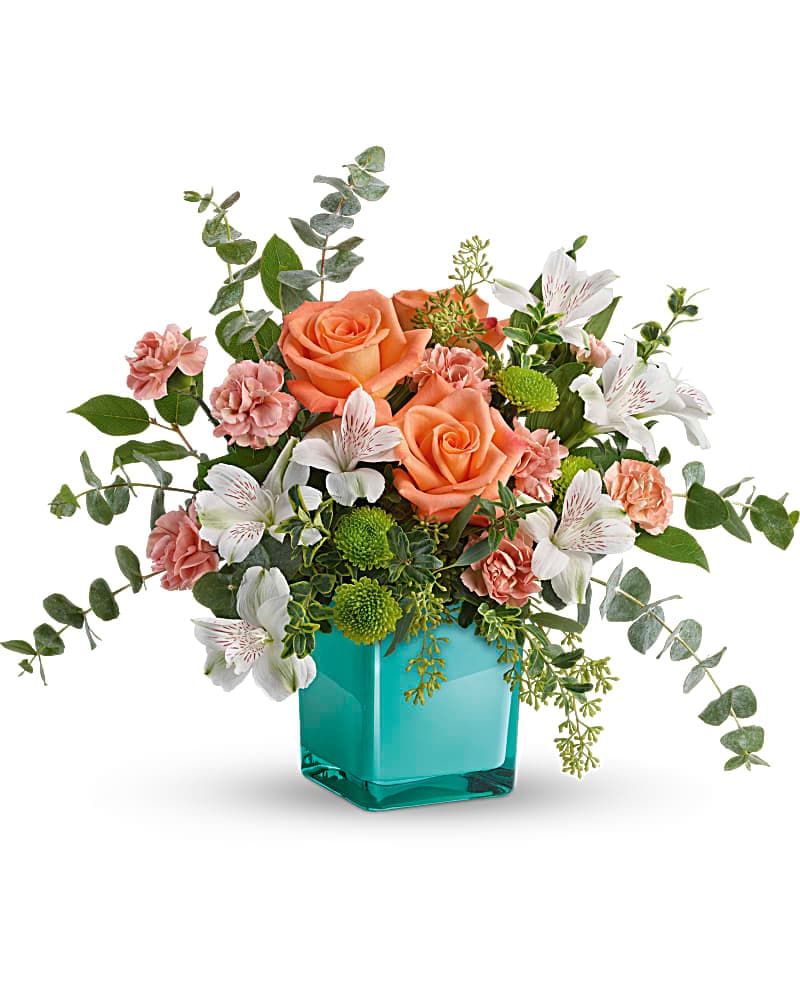
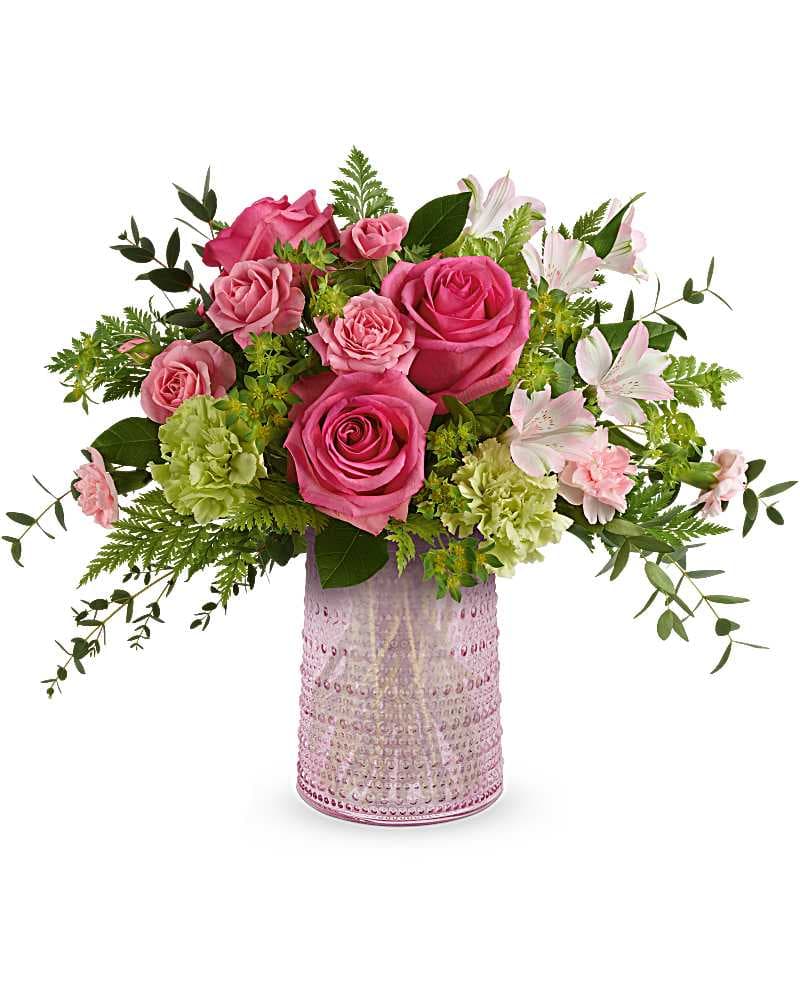
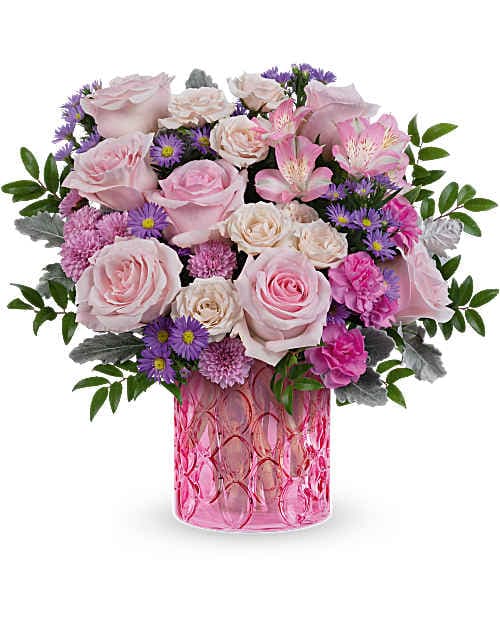
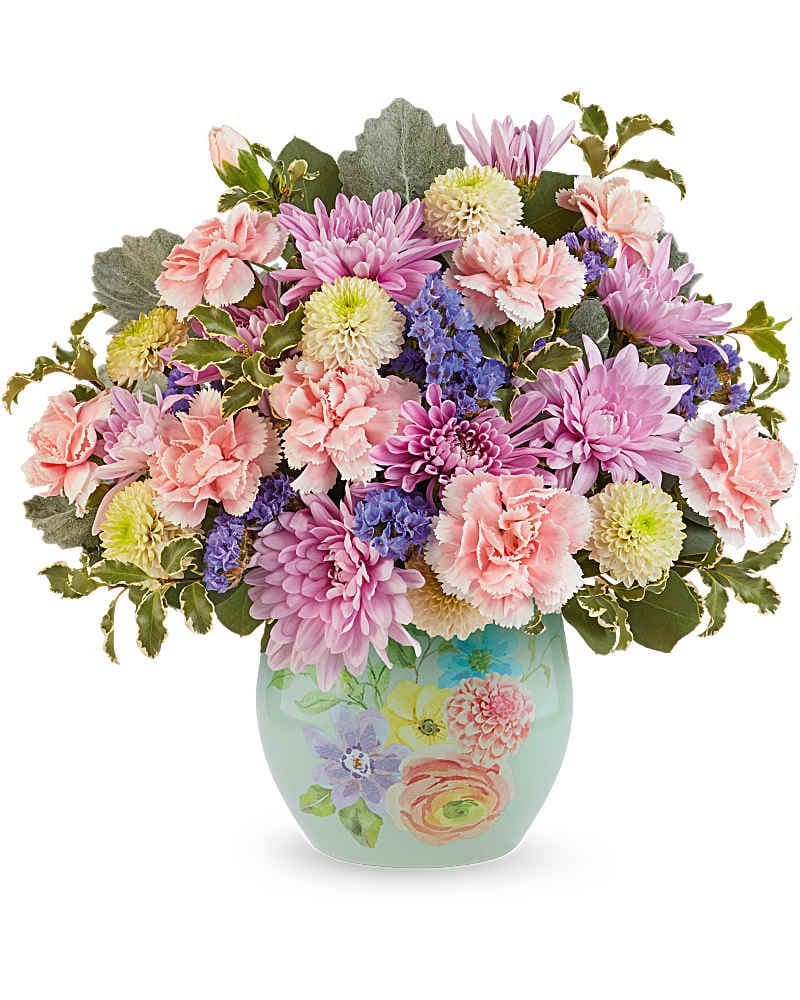
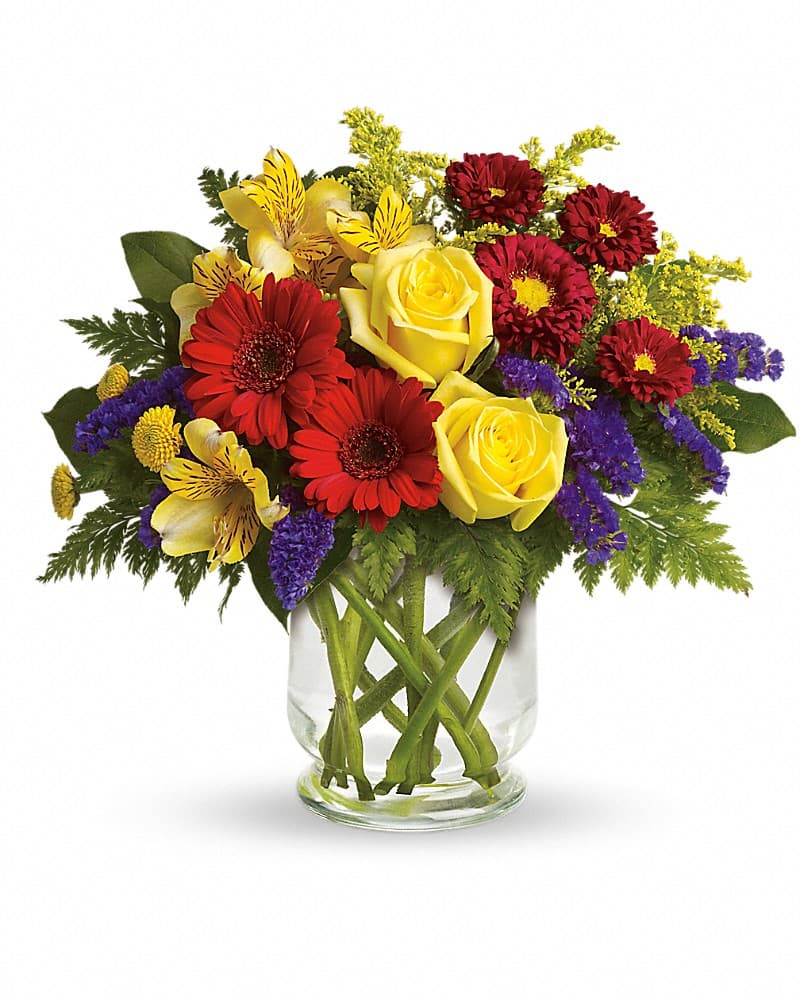
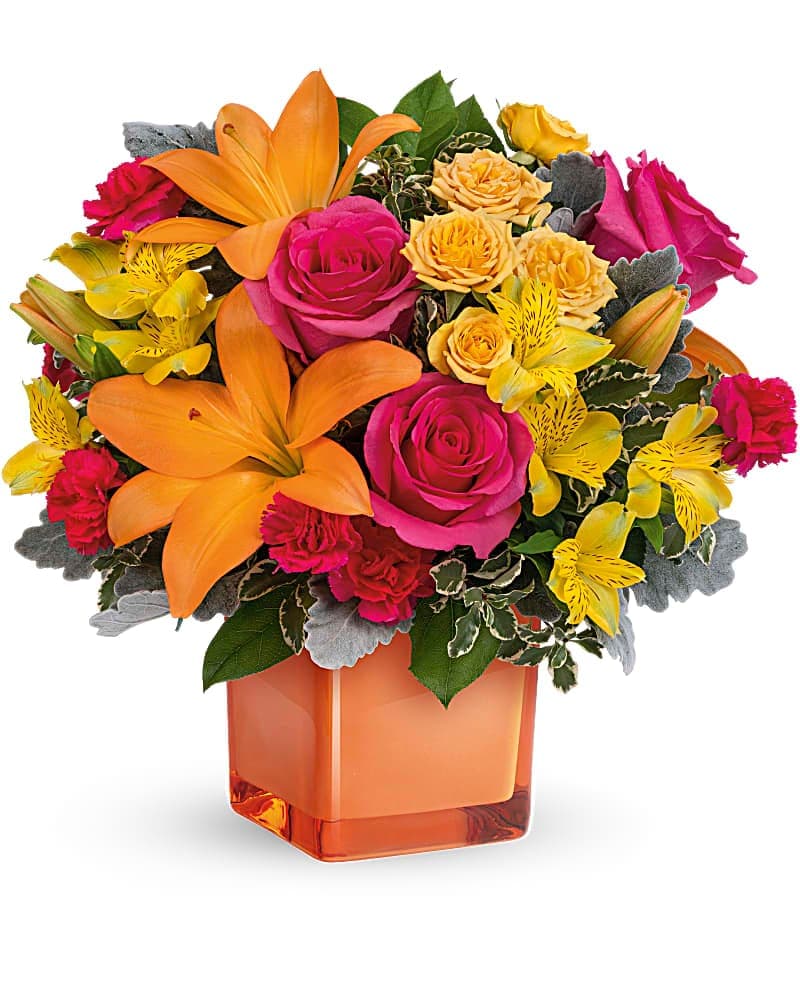
Palo Alto is named after a tree that is still standing. El Palo Alto — the coast redwood the Spanish expedition used as a landmark in 1769 — grows beside San Francisquito Creek at the north end of Alma Street, under the Caltrain trestle, on the line that separates this city from Menlo Park and Santa Clara County from San Mateo. It is not a monument anyone makes a trip to see; it is a tree at the end of a street, which is roughly the register this occasion works in. Just-because flowers are the least ceremonial thing on this site and the most frequently sent: the bunch that goes to the neighbor who took the bins out for three weeks, to the friend whose week you know was bad without being told why, to the person who covered a shift, to a mother-in-law on an ordinary Wednesday. Nothing here has a date attached, which means nothing here has a deadline — and that is the reason these orders are the easiest ones on the whole network to get right, provided you know where the door is.
The everyday routes are short and they repeat. Midtown — the Middlefield Road and Colorado Avenue corner with Piazza's on Middlefield — carries a lot of it, because that is where the mid-city errands happen. So do the California Avenue blocks around the Sunday farmers' market, the downtown Saturday market on Gilman Street, and the small commercial strips at Charleston and Arastradero. Barron Park has its own gravity: the donkeys at Bol Park are a genuine neighborhood institution and the bike path beside them is how half the neighborhood moves. Bryant Street is the city's north-south bicycle boulevard, and in a flat city where a great many people genuinely do not drive to work, a delivery is often the only vehicle that will visit a house all day. That is worth remembering when you are deciding between a small arrangement and a large one: nobody here is going to carry it anywhere, so weight is not a constraint and a container that holds water is better than one that has to be unwrapped and dealt with.
Most of these deliveries end on a porch, and Palo Alto has two porch problems worth a sentence in the note. The first is the Eichler stock — Greenmeadow, Fairmeadow, Green Gables, the flat-roof blocks in Charleston Meadows and around Ventura — where the front door faces an interior atrium or sits behind a fence, so what a driver sees from the street is a carport and a wall. The second is the north side: Old Palo Alto, Crescent Park, Professorville and the Duveneck/St. Francis streets run to deep setbacks, tall hedges, long driveways and house numbers that a mature tree has quietly covered over. In both cases the fix is one line — entrance through the side gate, door inside the atrium, leave under the overhang — and in College Terrace, where the streets are named for colleges and the traffic diverters block the obvious approach, a note about which end of the street to enter from saves a lap. None of this is exotic; drivers here handle it daily, but they cannot see a layout from the curb that the layout was designed to hide.
A large share of Palo Alto's just-because volume is thanks rather than affection, and it runs to institutions. The school offices take it constantly — Addison, Walter Hays, Ohlone, Duveneck, Palo Verde, Barron Park, El Carmelo, Escondido, Fairmeadow, Hoover and Nixon on the elementary side, the middle schools, and the front offices at Palo Alto High School on Embarcadero Road and Gunn on Arastradero — where a delivery for a teacher should go to the office with the teacher's name and the room or grade, since nobody will interrupt a class for it, and arriving before the last bell is the whole trick. Stanford departments and labs take the same kind of order, usually a thank-you to an administrator who has quietly run something for a decade, and there the rule is the same as anywhere on campus: a named person and a building, not a department name alone. Avenidas on Bryant Street, the senior center that half the city's older residents pass through, is another recurring address for exactly this sort of unshowy gratitude.