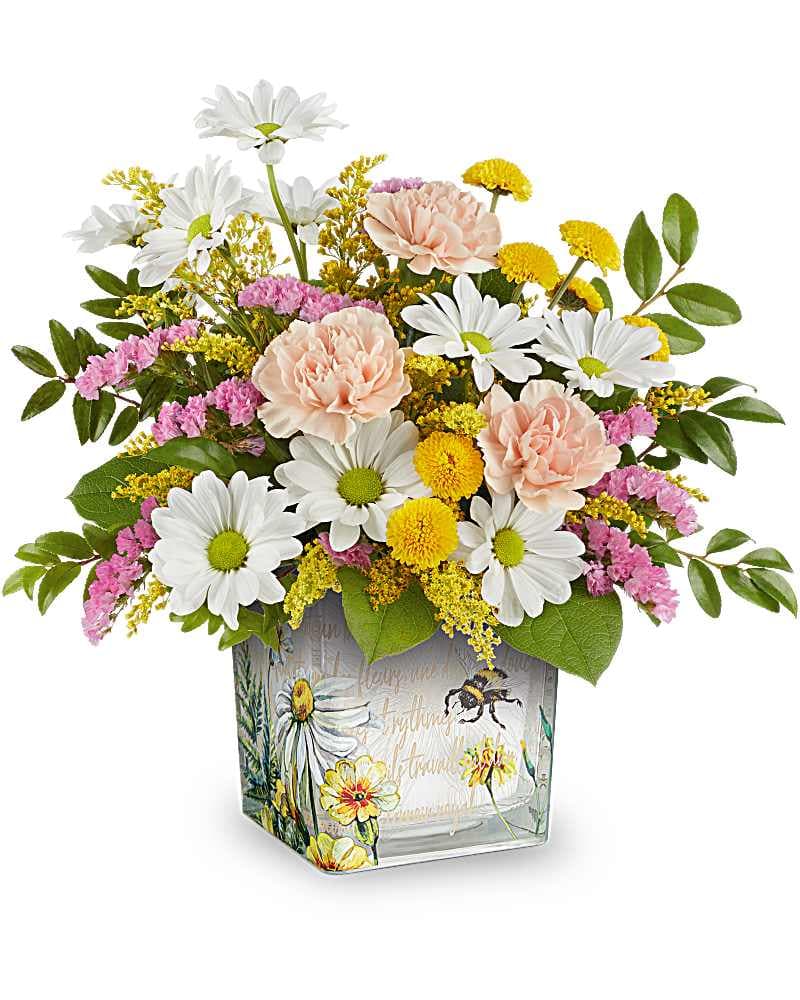
Most flower pages are built for an event. This one is built for a Wednesday. Lomita is a 1.9-square-mile city of roughly 20,000 people with a single ZIP code, 90717, that calls itself The Friendly City on its own signs and mostly earns it — you can cross the whole place in four minutes, which means a just-because delivery here is usually shorter than the walk to the car. The town sits inside what was Rancho San Pedro, the 1784 Domínguez land grant that was the first in Spanish California; it was subdivided as farmland early in the twentieth century, worked in large part by Japanese-American truck farms and nurseries until the war took those families away; and it only incorporated as a city in 1964. The signature building is a replica Victorian depot on 250th Street — the Lomita Railroad Museum, opened in 1966, with a Southern Pacific Mogul steam locomotive, No. 1765, parked behind it. Two miles west, the runway at Zamperini Field was built in 1941 as the Lomita Flight Strip, and the airport that grew out of it kept the flight path and gave up the name. That is the town: small, old, unpretentious, and dense enough that a florist 0.6 miles away can make a bouquet at noon and hand it over at two.
So who actually gets these? In our experience, in this order. The grandmother or aunt two streets over — Lomita's housing stock is small post-war bungalows and apartment courts, and a lot of the town's older residents have been in the same house for forty years. The neighbor who watched the dog, the friend who is having a hard month, the teacher at Lomita Magnet Elementary, Eshelman Avenue Elementary or Fleming Middle School, the front counter of a shop on Pacific Coast Highway where someone did you a favor, the new resident who just moved onto Walnut Street or into one of the courts off 250th. Then the workplace thank-yous, which nearly all cross a city line, because Lomita has no corporate campus of its own: American Honda's Torrance Boulevard campus, Robinson Helicopter at Zamperini Field, the small offices around Sartori and Cravens Avenues in Old Torrance, the retail floors at Del Amo Fashion Center and Rolling Hills Plaza, the shift crews at the ports of Los Angeles and Long Beach and the Carson and Wilmington refineries, and the El Segundo aerospace and defense belt to the north. Then the quieter ones: the skilled-nursing and senior-living addresses along Pacific Coast Highway and Narbonne Avenue, and the Lomita Sheriff's station and City Hall on Narbonne when a neighborhood group wants to say thanks.