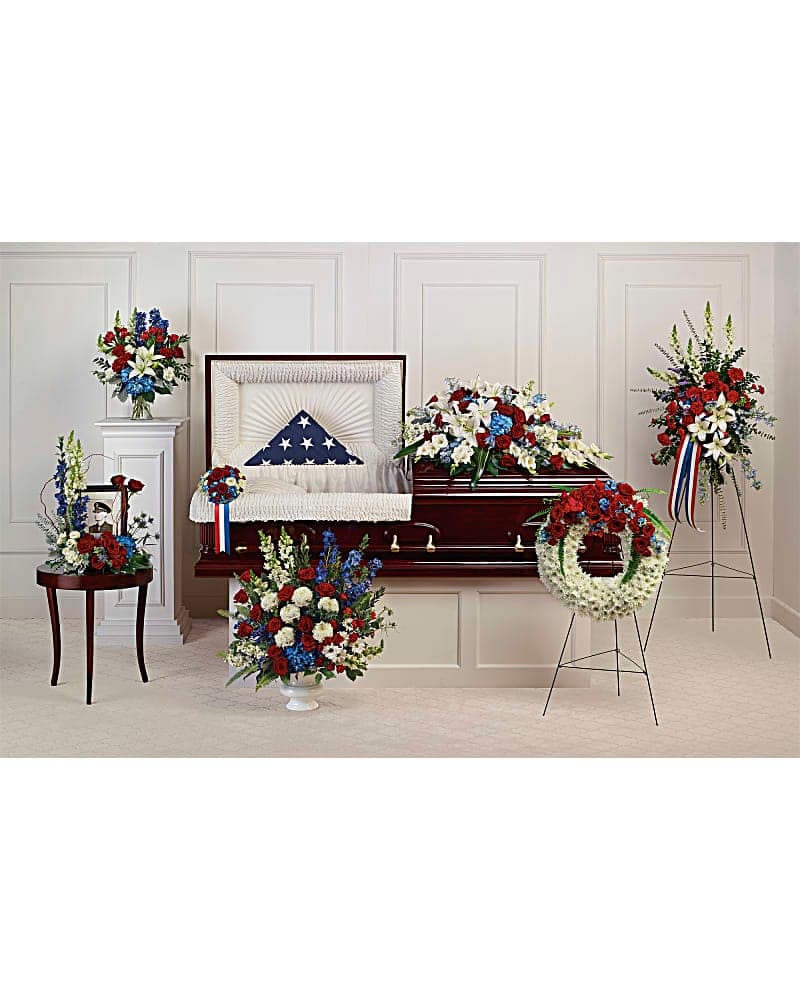
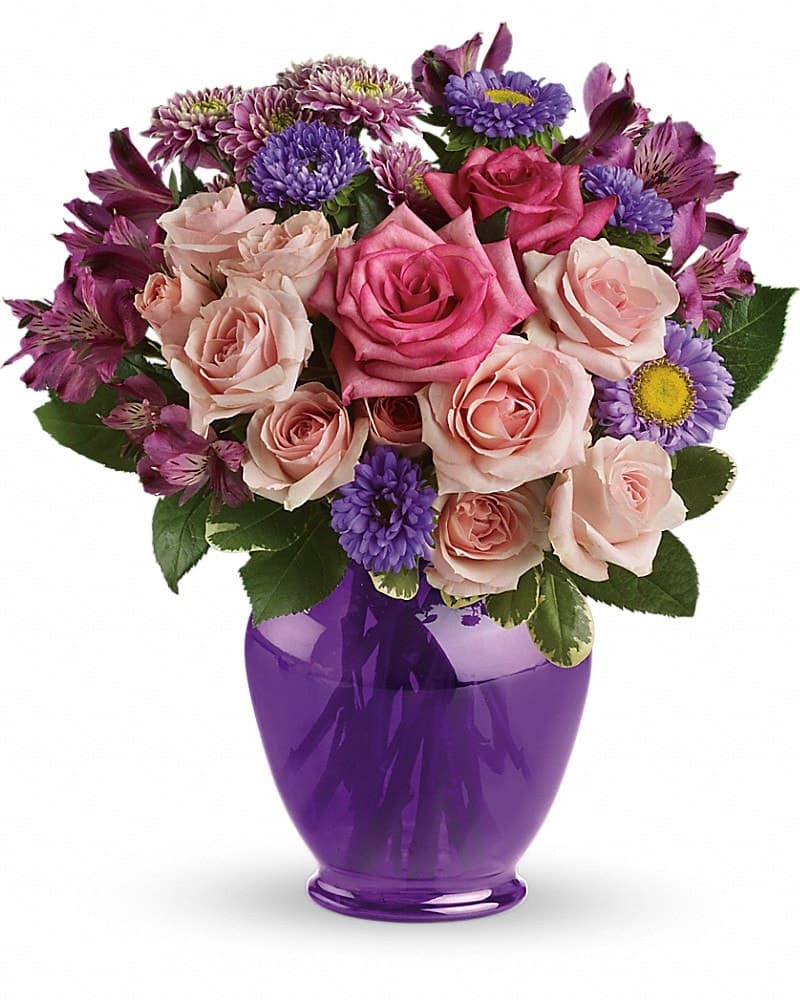
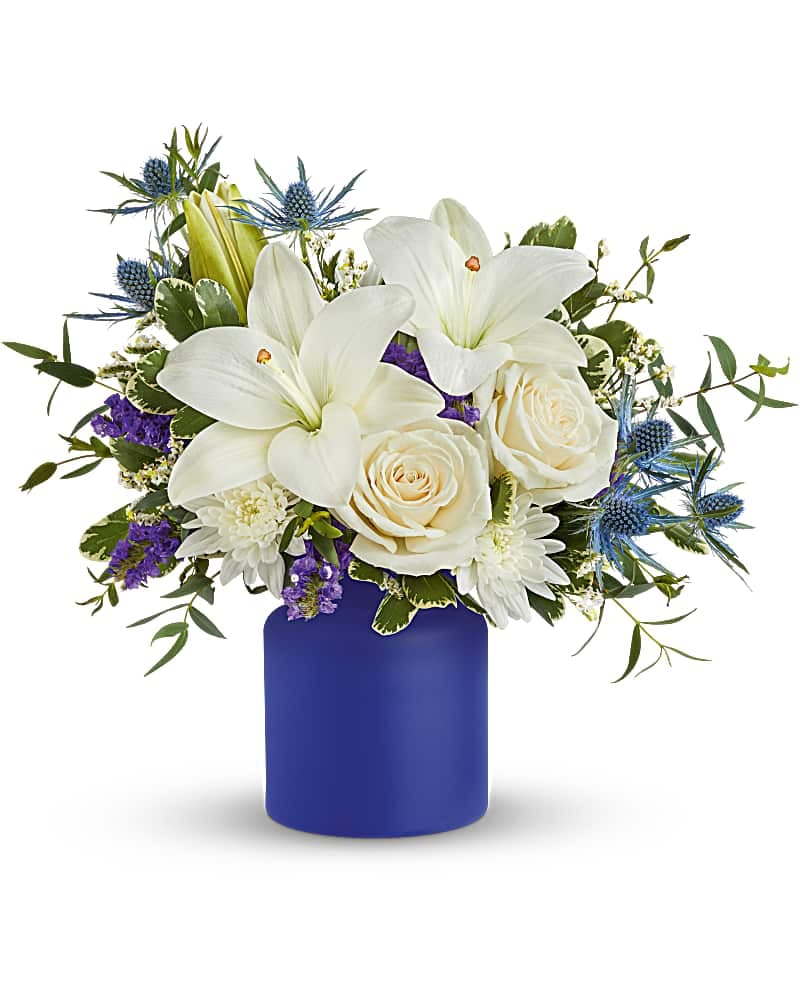
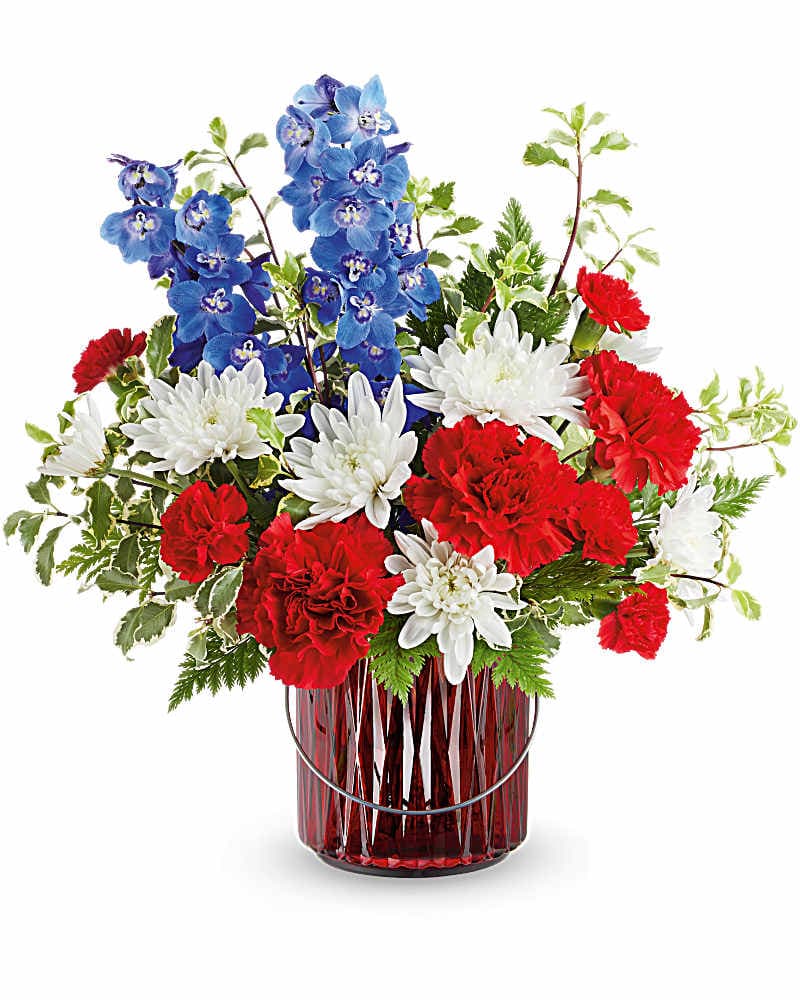
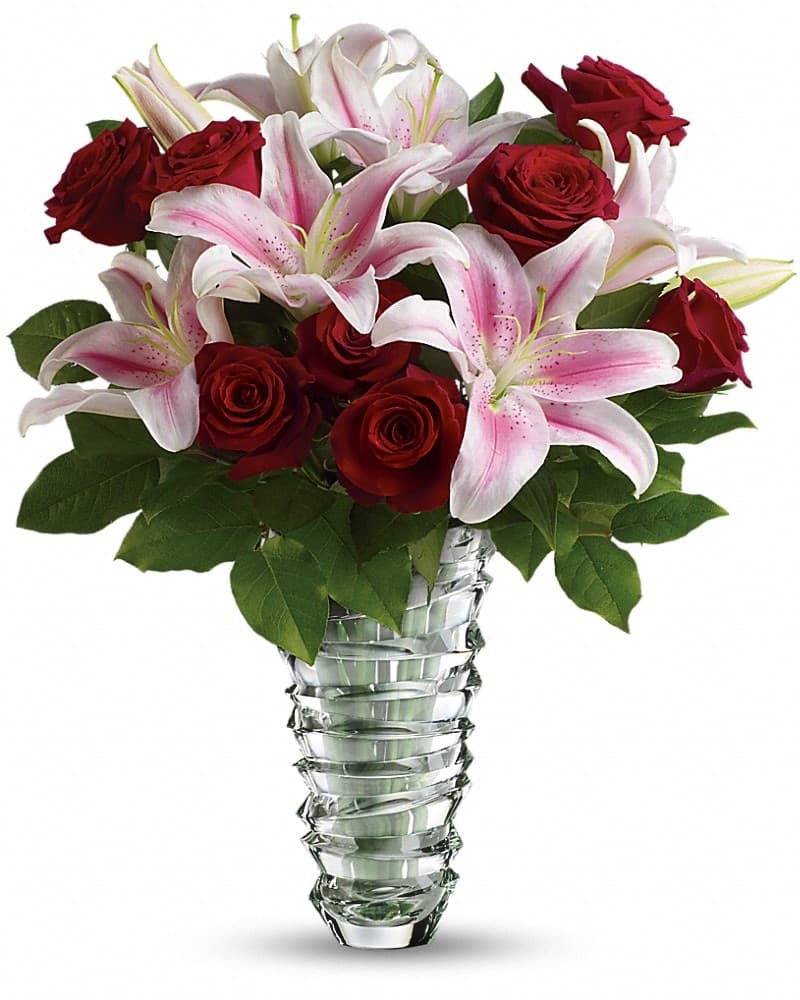
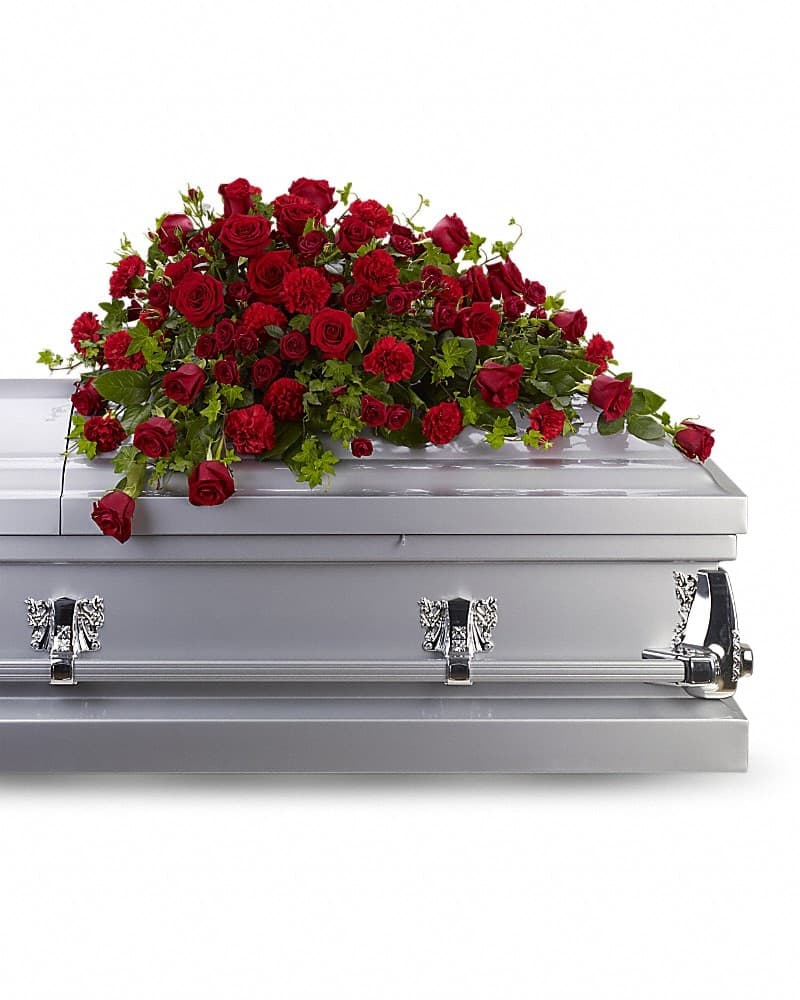
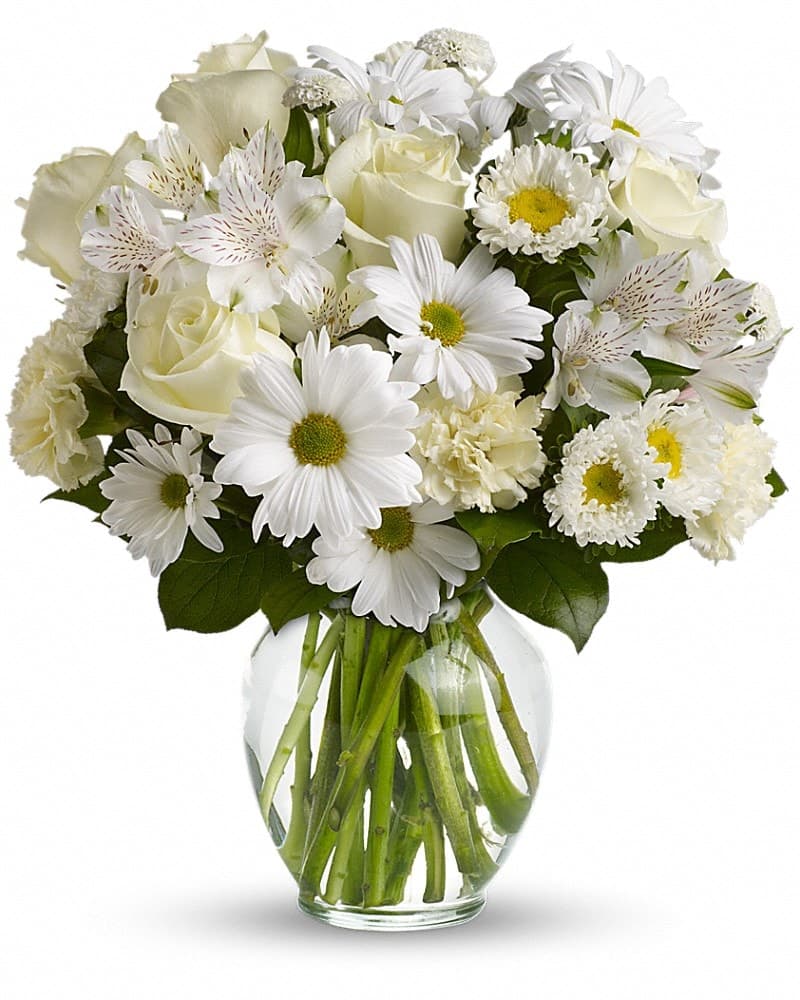
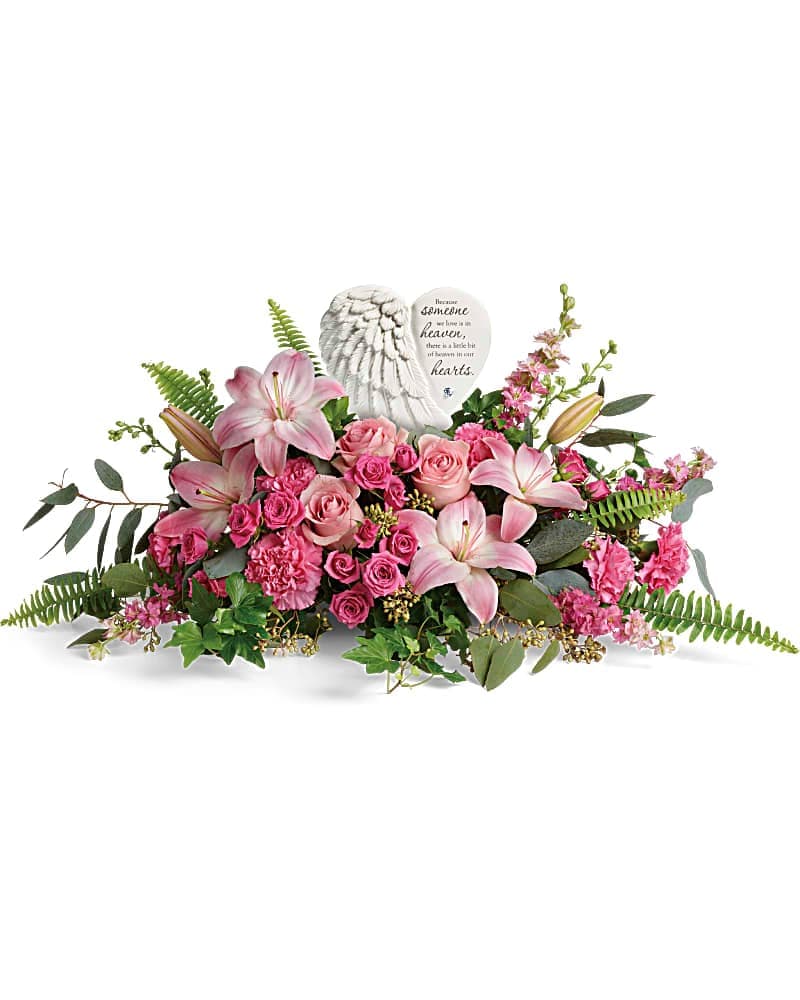
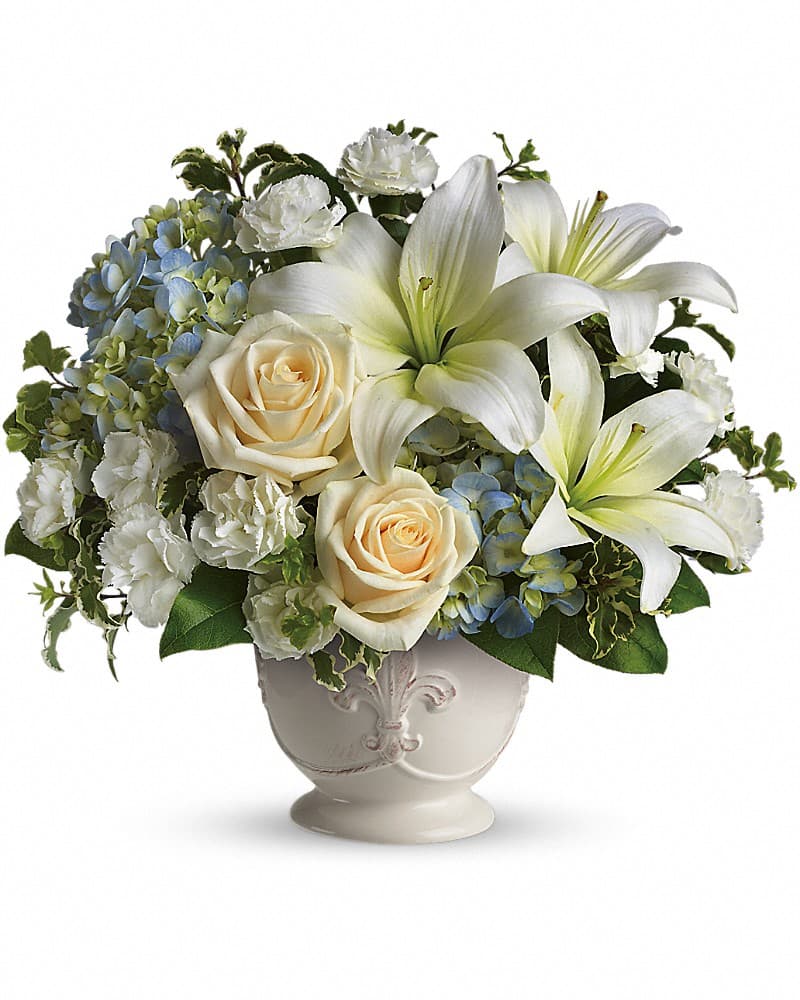
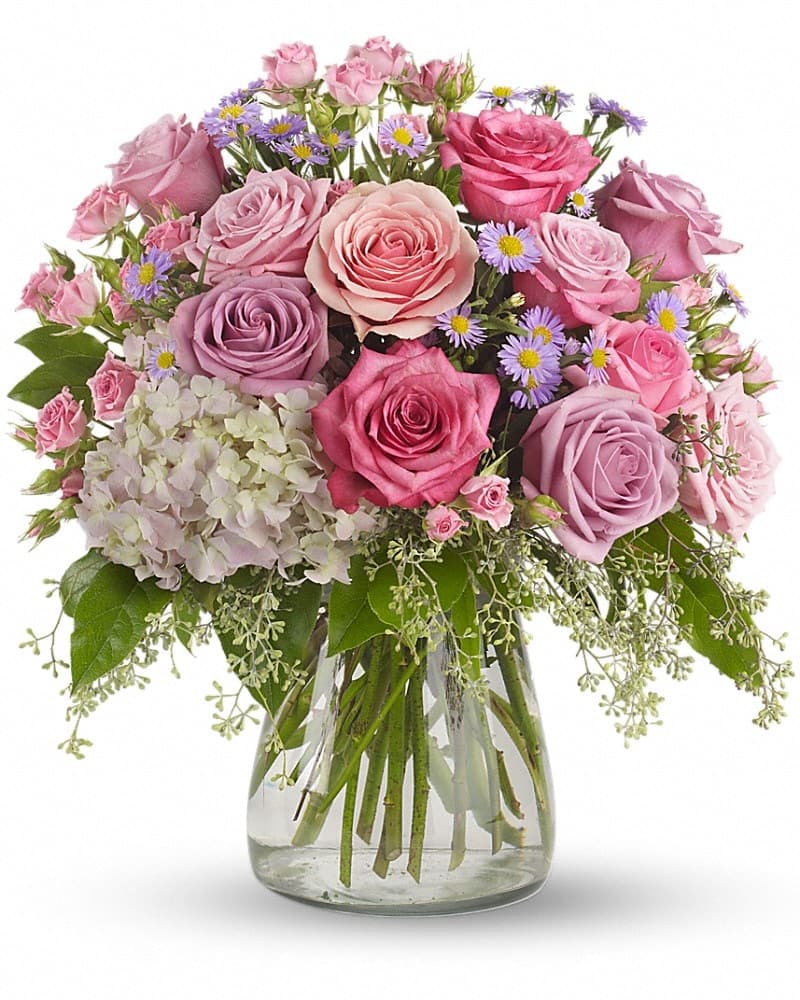
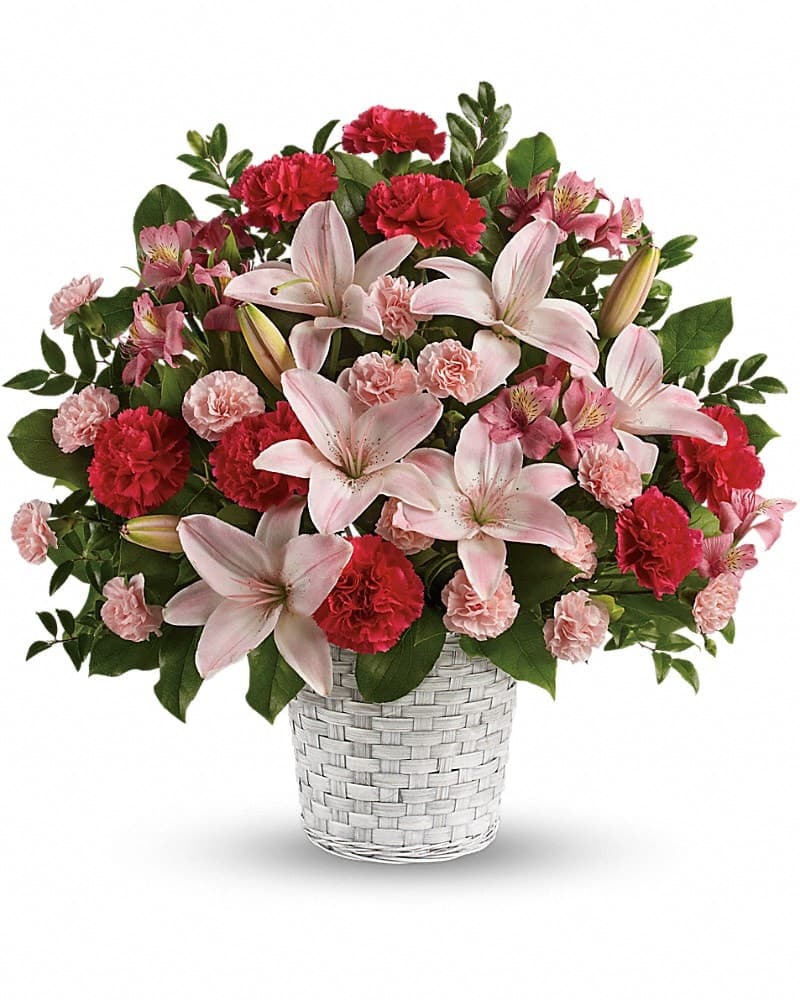
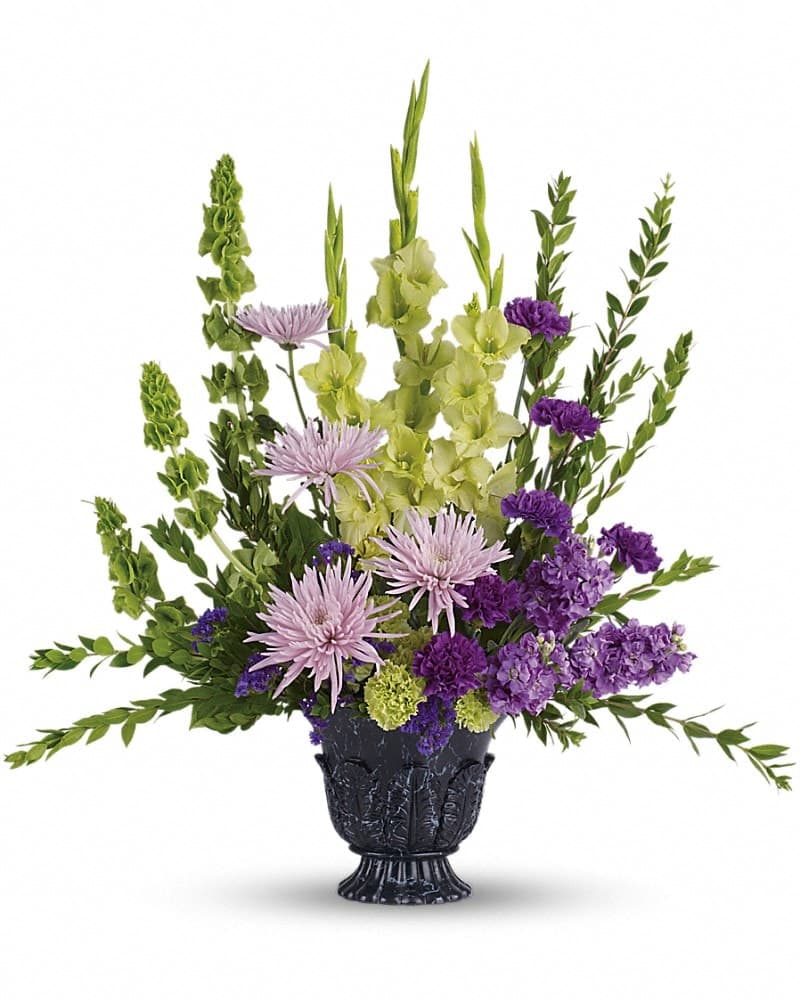
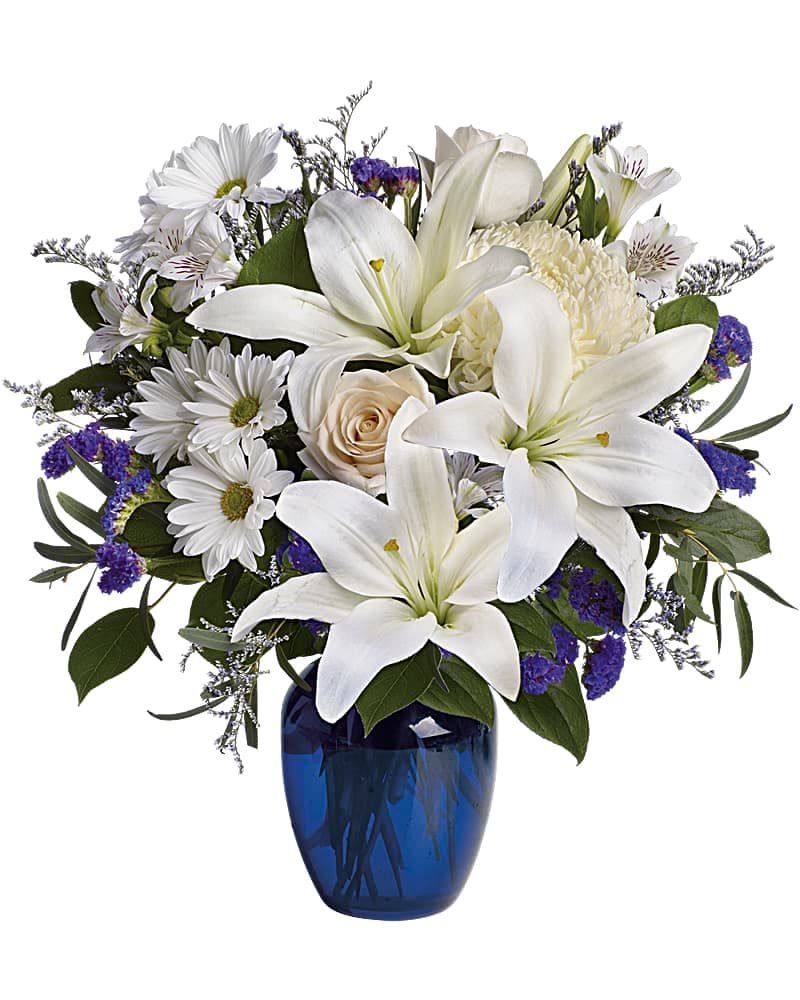
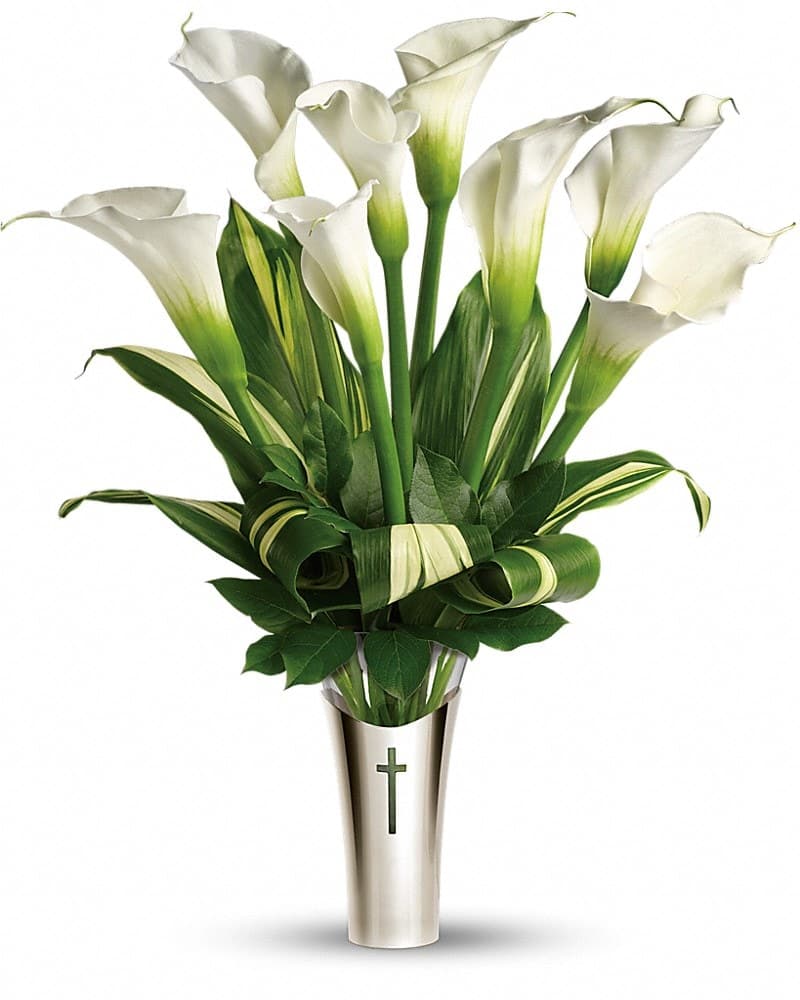
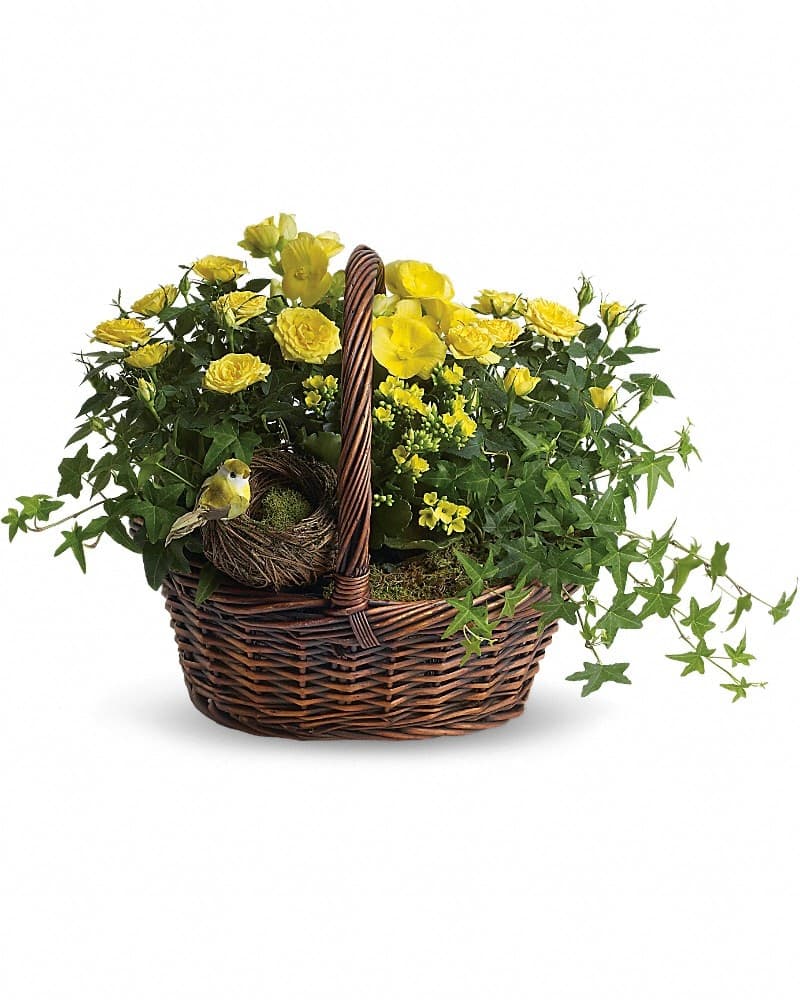
Kearny is one of the few towns in this part of New Jersey where the grave is closer than the church. Arlington Cemetery sits inside the town limits on Schuyler Avenue, a large non-sectarian ground on the slope above the marsh, and Holy Cross Cemetery on Ridge Road in North Arlington — the Archdiocese of Newark's ground for this corridor — is barely a mile beyond the Arlington section at the north end of town. What that means in practice is that a Kearny funeral often inverts the usual order of difficulty: the burial is the short leg, and the viewing or the Mass is the one that crosses water. Families who left West Hudson a generation ago still bury here, which is why so many of these orders arrive from Florida or the Carolinas carrying a cemetery name, a date and nothing else. That is enough to start with. But tell us which moment you are sending into — the viewing, the service, or the week afterward — because those three ask for three different objects, and only one belongs at a front door.
The grounds within reach of a Kearny order, roughly outward: Arlington Cemetery on Schuyler Avenue inside the town; Holy Cross Cemetery on Ridge Road in North Arlington, the Archdiocese ground a mile north and the most common Catholic burial for Kearny families; Holy Name Cemetery on West Side Avenue in Jersey City, the Archdiocese's Hudson County ground, reached over the Wittpenn or under the Skyway; Mount Olivet, Fairmount and Woodland in Newark, a quarter of an hour west once you are over the Passaic; Bayview–New York Bay Cemetery in Jersey City on the bay side; Glendale Cemetery in Bloomfield and Holy Sepulchre in East Orange on the western arc; East Ridgelawn Cemetery in Clifton at the northern rim of the radius. For Jewish families the grounds inside the radius are B'nai Abraham Memorial Park and Hollywood Memorial Park in Union and King Solomon Memorial Park in Clifton; none of the three is a place a floral piece belongs. For the funeral Mass itself, St. Cecilia's is the long-standing Catholic parish in Kearny, Queen of Peace serves North Arlington immediately above it, and Portuguese-speaking families frequently hold the service at Our Lady of Fátima in the Newark Ironbound, ten minutes south.
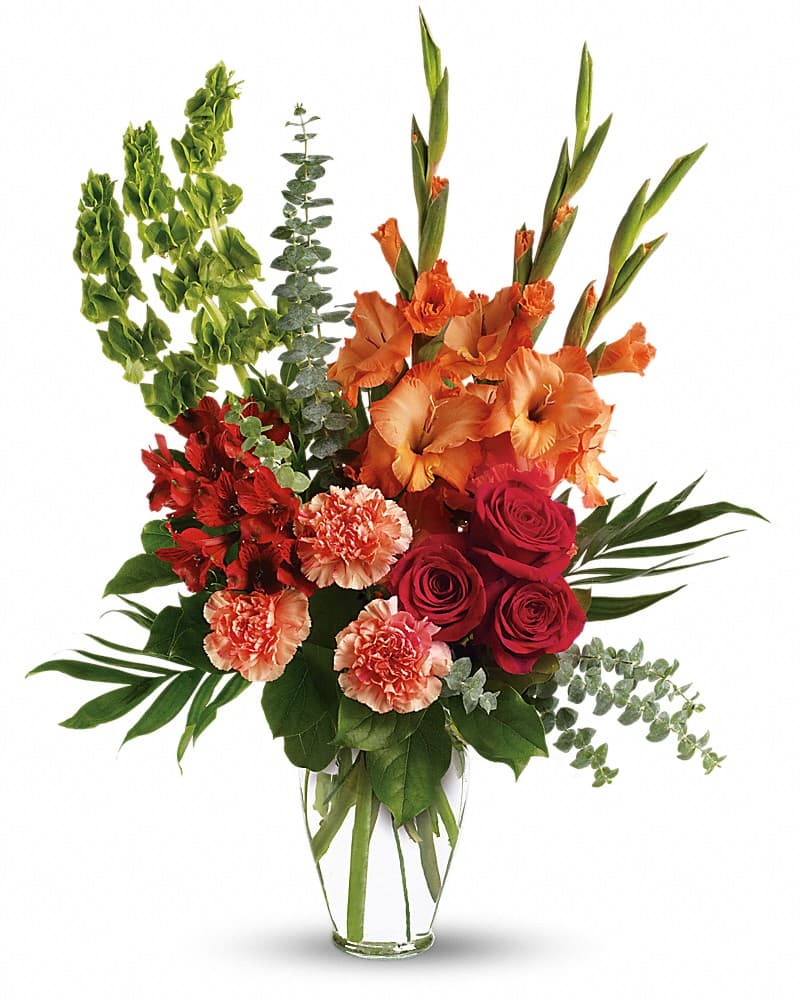
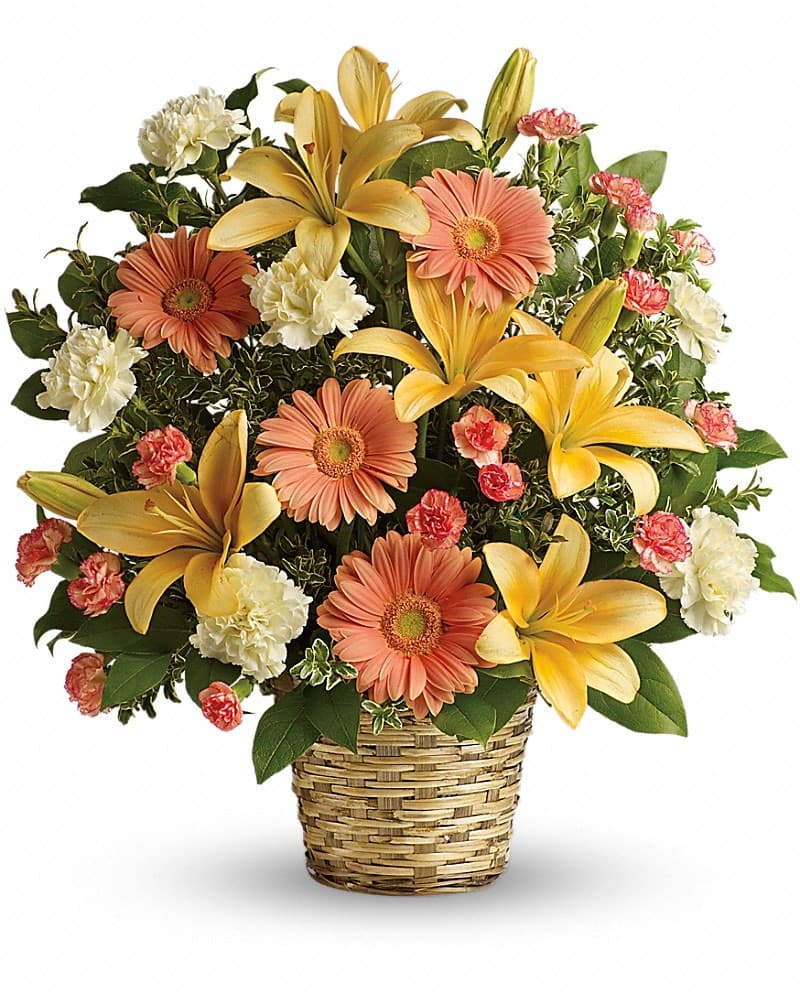
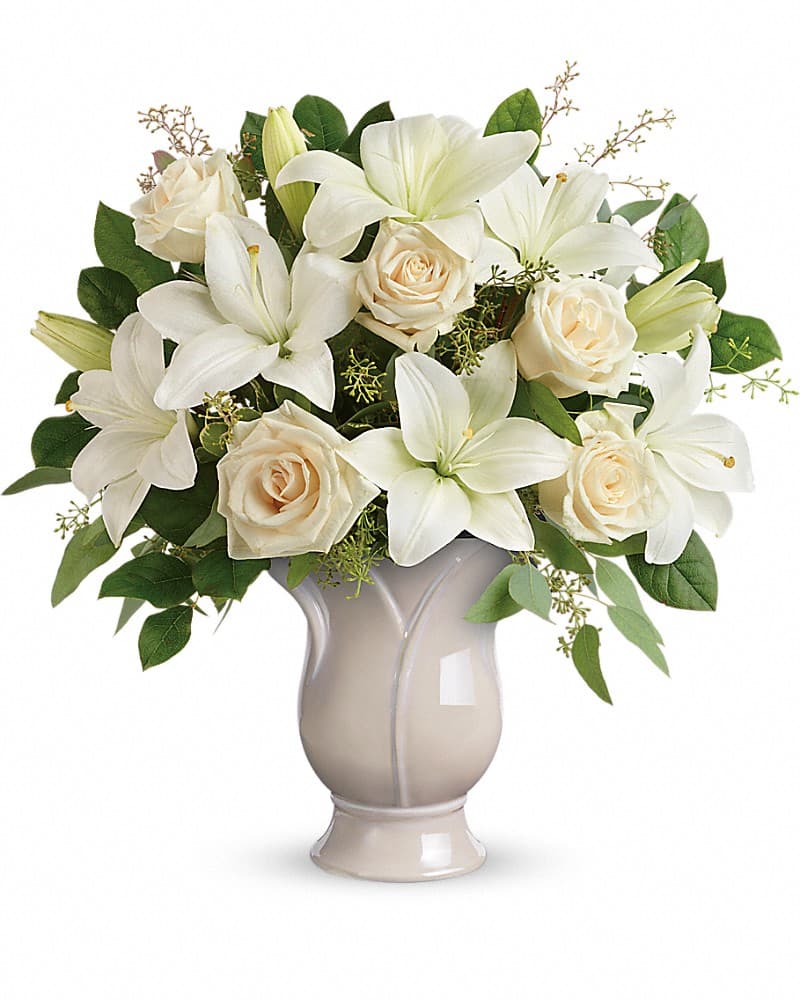
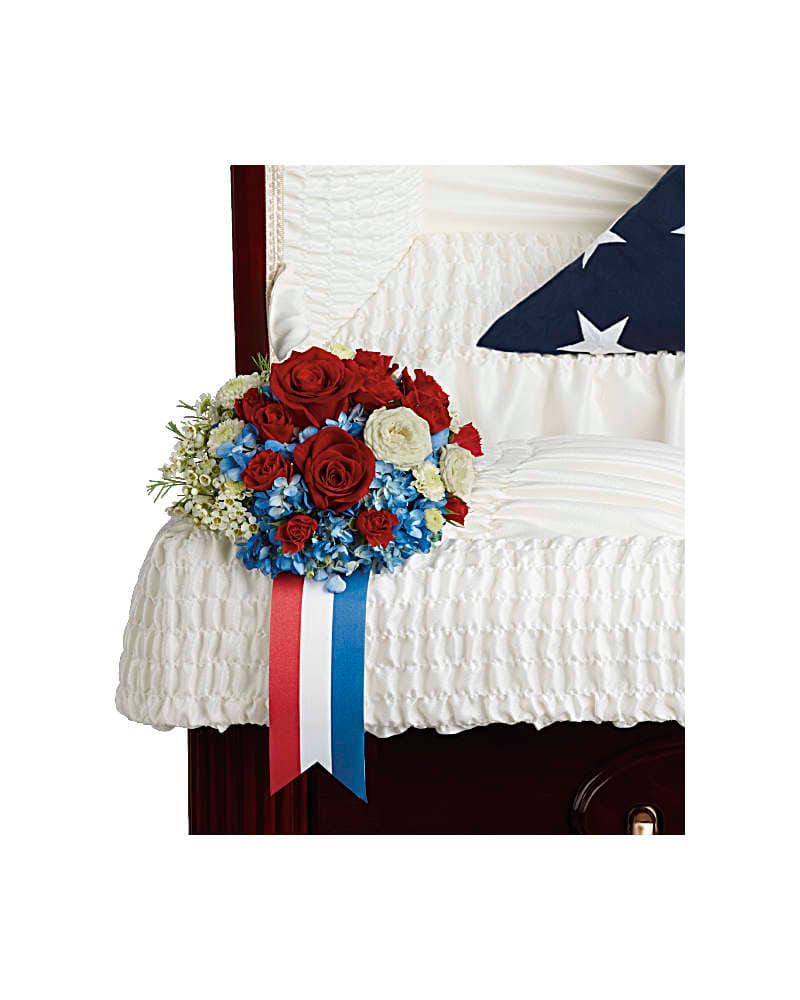
Kearny's traditions sit in visible layers and the flowers differ by layer. The town was built by Scottish and Irish immigrants who came for the Clark Thread mills, and the Presbyterian and Methodist congregations they founded along Kearny Avenue still keep a restrained convention: a standing basket or an easel piece, and no casket spray from outside the immediate family. The Catholic parishes of Kearny, Harrison and North Arlington follow full Archdiocesan practice, where crosses and hearts are recognized forms rather than ornament. Then there is the Portuguese and Brazilian community that came up the avenue from the Ironbound: in those services the coroa — the standing ring on its own easel — is the expected piece, often with a ribbon lettered in Portuguese naming the relationship, *Pai*, *Mãe*, *Avó*, *Dos Teus Netos*, rather than the sender. Our shops letter that without a second phone call. Ecuadorian, Peruvian, Puerto Rican and Dominican families in the same blocks use the Spanish *corona* with the same logic, and the relationship line still outranks the surname. Kearny's Muslim families hold the janazah without flowers in the room; the gesture belongs at the house once the burial is done, and the shops will time it that way. Hindu families take white — garlands, all-white arrangements — and the shops here source both.