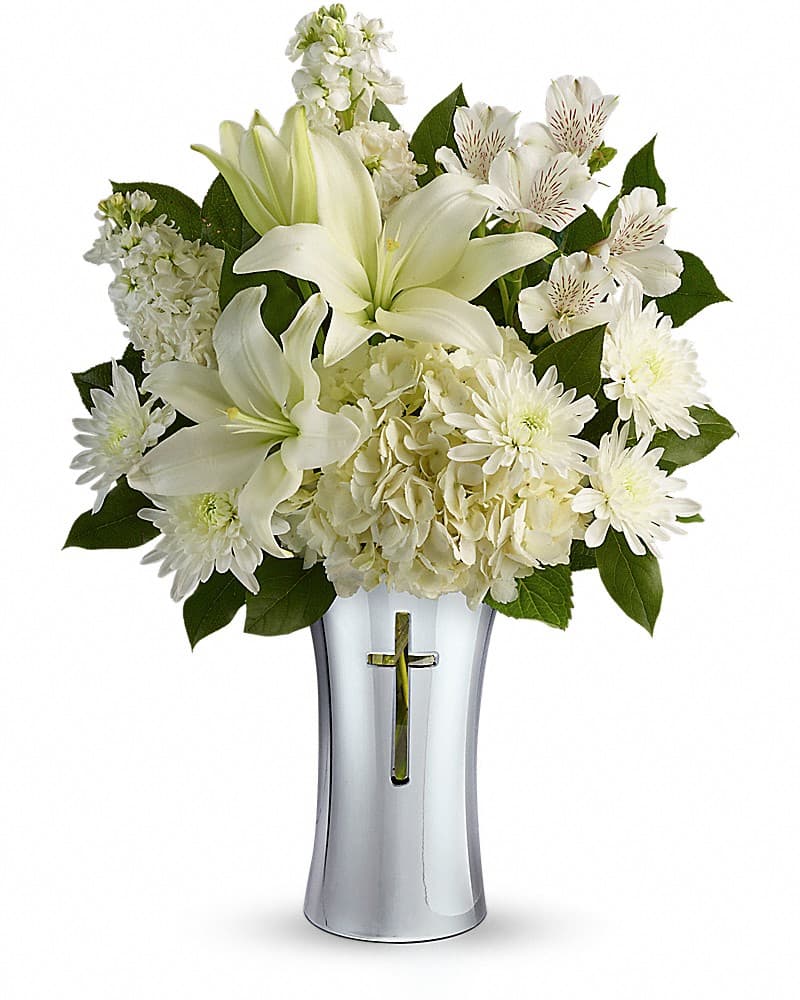
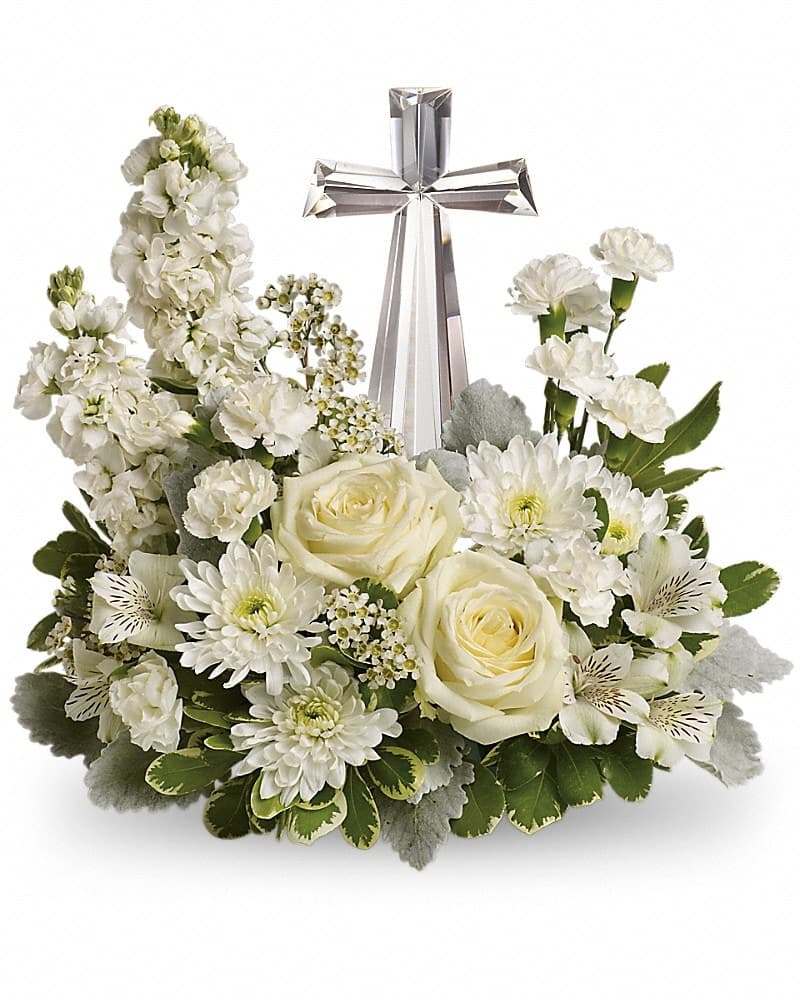
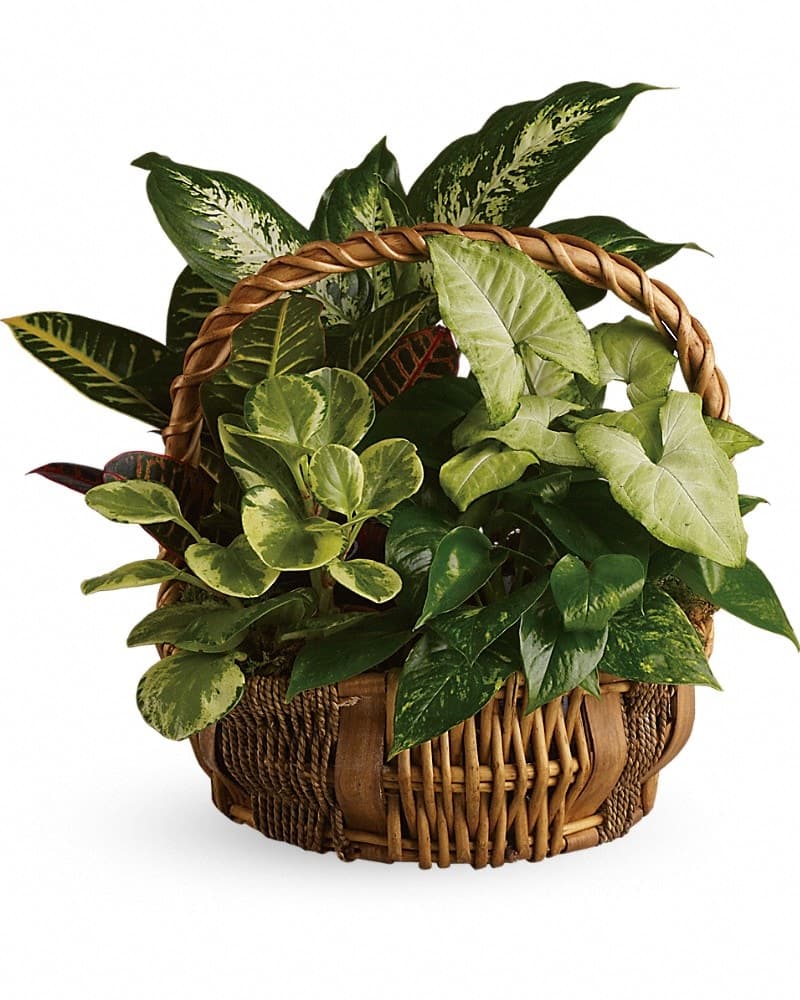
The defining fact about sympathy orders in Greenville has nothing to do with Greenville's own neighborhoods. ECU Health Medical Center at 2100 Stantonsburg Road is the region's referral hospital and its Level I trauma center, the teaching hospital of the Brody School of Medicine, and it draws critically ill patients from a very wide stretch of eastern North Carolina. People are brought here from counties two hours away. When they die here, the funeral almost never happens here — the service and the burial go home to the town the family is from. What a Greenville sympathy order turns on, then, is the address rather than the design: the chapel where the service will be held, which may be in Kinston or Tarboro or Snow Hill, or the family's house, which may be a third town again. Addressing flowers to "Greenville" on the strength of where somebody died is how most of the waste happens on these orders, and a single call to the family prevents all of it.
Ask two things in that call. First, where is the service and at what hour — a morning service means the piece has to be standing in the chapel the evening before or very early that day, and in this market that means ordering the day before, because one studio covers sixty miles of the coastal plain. Second, is a graveside service separate from the chapel service, because in Pitt County and the counties around it the burial very often happens at a small church cemetery or a family plot rather than at a commercial memorial park. Those places frequently do not have a street address that a map will find. What works instead is the church's name plus the road and the nearest crossroads, or the name of the community — Bethel, Falkland, Fountain, Simpson, Grimesland, Stokes, Grifton. Families here give directions that way naturally. Write down exactly what they tell you and put it in the delivery notes verbatim rather than trying to convert it into a street address that does not exist.
The roads govern more than you would expect, because Greenville is not on an interstate. Everything moves on two-lane and four-lane US and state highways: NC-11 / Memorial Drive south to Ayden and Kinston and north to Bethel, US-264 west toward Wilson and east toward Washington, NC-33 northeast toward Tarboro, US-13 southwest toward Snow Hill and Goldsboro, and Greenville Boulevard as the bypass loop that stitches them together. Reaching a chapel at Kinston or Washington costs a genuine half-hour in each direction with nothing quicker available, and an order taken at one in the afternoon will never stand in a Tarboro chapel for a nine o'clock service. Two seasonal notes belong here as well. Hurricane season, late August into October, closes roads in this part of the state — the Tar River is right there, and Floyd, Matthew and Florence are all inside living memory in Greenville. And on ECU home football Saturdays the streets around Dowdy-Ficklen Stadium are congested for hours, which matters if the service is at a congregation near campus.
Within Greenville itself, there are institutions that shape this work. The city's congregations do a great deal of the sympathy volume directly: Jarvis Memorial United Methodist Church anchors the Fifth Street end of downtown, and Sycamore Hill Missionary Baptist Church is one of the historically significant Black congregations in the city, its original site downtown now marked by the Sycamore Hill Gateway Plaza at the Town Common. In eastern North Carolina the home-going service is a substantial, well-attended occasion, frequently on a Saturday, often with a viewing the evening before, and the floral vocabulary is generous — standing pieces, sprays and vase work sent by church auxiliaries, fraternal organizations, employers and extended family in large numbers. If you are sending into one of those services, the timing that matters is the viewing the night before as much as the service itself, because that is when the family is actually in the room with the flowers. Ask which one the family wants covered. And where a service is at ECU Health Medical Center's chapel or where a patient is still on a palliative unit, send to the family rather than to a floor: critical-care units in this hospital, as in any Level I center, often do not accept fresh flowers or plants.