Here is the useful fact about sending get-well flowers in Fort Myers: the shops and the hospitals share the same two roads. Lee Memorial Hospital — the oldest of the Lee Health campuses, and the one that takes the county's trauma cases — is at 2776 Cleveland Ave in 33901. Xpres's Floral is at 4144 Cleveland Ave, a little over a mile down the same street, and Nicksfortmyer's Florist is at 4650 S Cleveland Ave. So the drive is almost never what decides whether a bouquet reaches a bedside. What decides it is what happens after the front door. A delivery to a hospital of any size goes to a lobby or volunteer desk first, then gets walked to the unit, where a clerk matches the name on the card against the census on that floor. A name with no unit attached is a search; a name with a unit and a room number is a two-minute errand. If the patient was moved overnight, which happens constantly between step-down and medical-surgical floors, the clerk needs a way to chase it — so the single most valuable line you can add to a get-well order is a phone number for a family member who is in the building. Not the patient's cell, which is usually face-down and silenced on a bedside table.
Know which campus you are sending to, because they are not interchangeable and they are not close together. Lee Memorial on Cleveland Avenue takes the acute and trauma work. HealthPark Medical Center, off the Summerlin Road side of south Fort Myers, is the one address on this board that receives two entirely different kinds of flowers all day long: Golisano Children's Hospital of Southwest Florida shares those grounds, and so do the county's birth suites and its heart program, so a courier arriving at noon may be carrying a new-baby arrangement and a post-surgical one on the same run. Golisano has its own wrinkle worth knowing before you shop: latex is commonly restricted in pediatric and surgical areas, so leave the balloon off entirely, and a children's floor will take something small and unbreakable over something tall every time. Gulf Coast Medical Center sits off Metro Parkway near the Daniels Parkway corridor and is the system's largest campus; Lee Health Coconut Point is down in Estero at the southern edge of this delivery ring; Cape Coral Hospital is across the Caloosahatchee on Del Prado Boulevard South, which means a tolled bridge crossing. There is also a rehabilitation hospital on the HealthPark grounds where stays run into weeks rather than days.
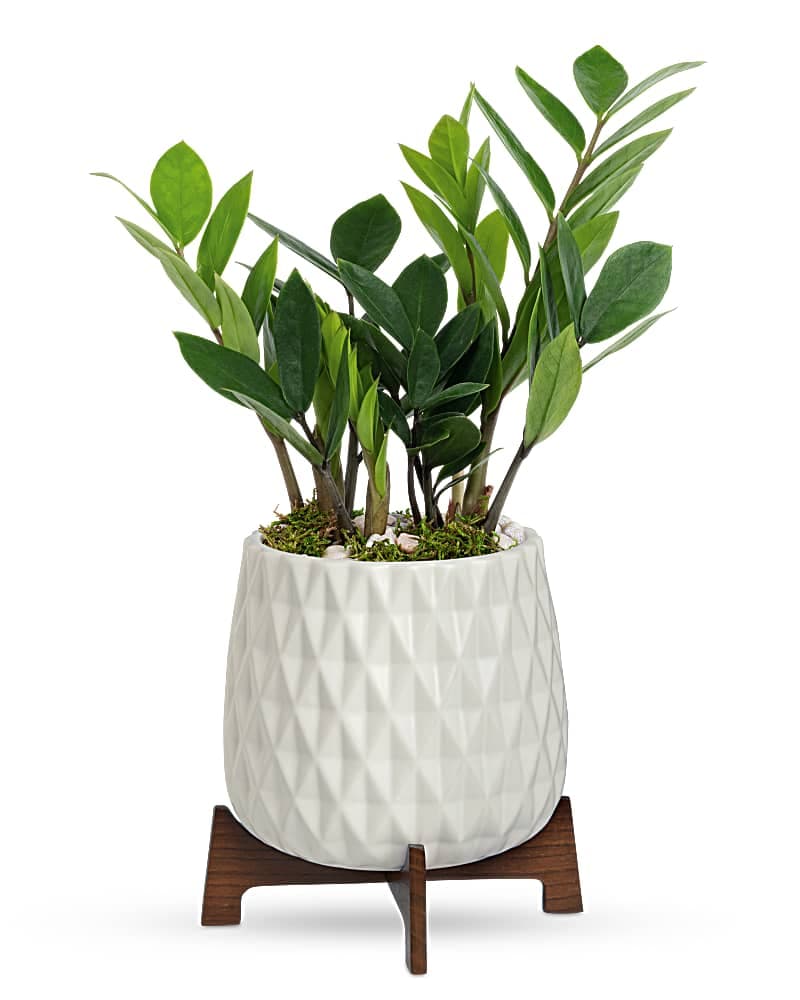
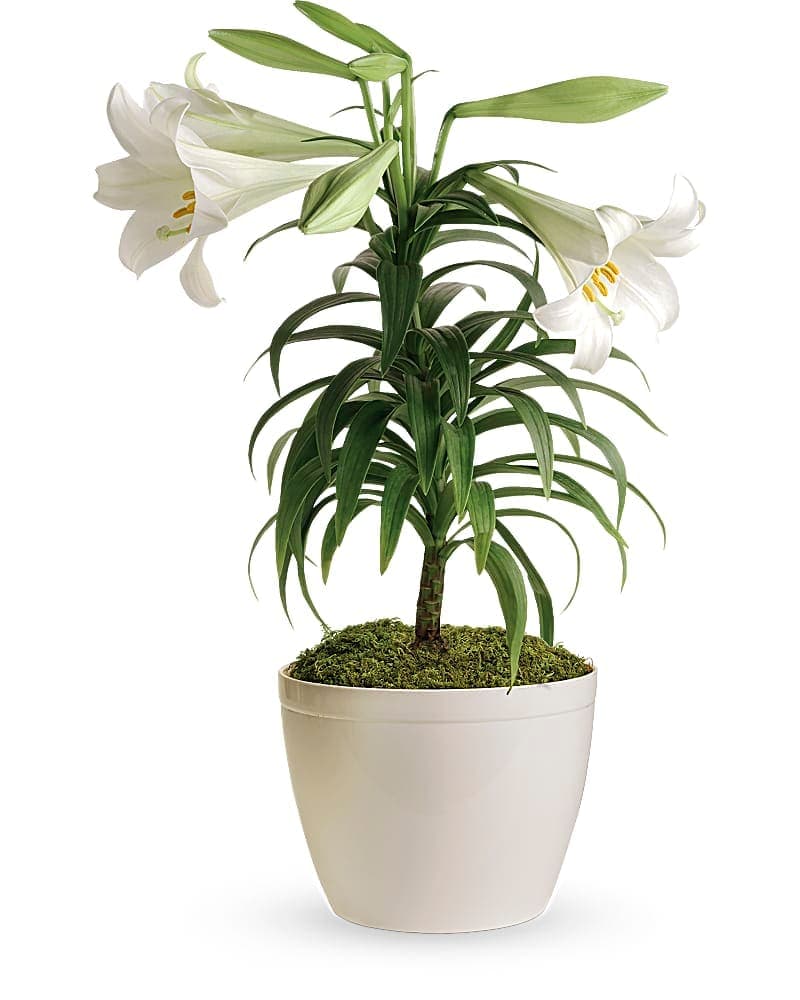
What gets an arrangement refused at a nurses' station is never the sentiment — it is physics, and each restriction has a mechanism behind it rather than a rule for its own sake. Lilies are the usual culprit twice over: the pollen is a genuine hazard where patients are immunocompromised, and the scent is the issue everywhere else, because a bud that looked shut at three in the afternoon is wide open and perfuming the corridor by the time the night shift comes on. Heavy fragrance of any kind runs into the same wall, since a patient partway through chemotherapy or a few hours out of anesthesia is often fighting nausea, and a small room does not dilute anything. Soil is the third: potted plants get turned back on protective-isolation and transplant units, which is precisely why the peace lily that makes the best discharge gift makes a poor room gift. The fourth is scale, and it is the one senders misjudge most. The only genuinely usable surface in a hospital room is the over-bed table, and it swings across the bed at every meal, so anything with height gets relocated to a window ledge behind the curtain where the patient cannot see it from lying down. Keep it low, keep it light, and remember that somebody has to carry that vessel out to a hot parking deck on discharge day with their arms already full.
Critical care throws all of that out. A good many intensive care and cardiac units take no flowers whatsoever, partly for infection control and partly because there is nowhere in the room to put anything, and that is how hospitals in this region generally operate rather than a rule unique to one building. If that is where your person is, the flowers still have somewhere to go, and two of the options are arguably better than the room. The surgical and critical-care waiting rooms hold families who have been sitting there since six in the morning, drinking vending-machine coffee, and nobody ever sends them anything. The house is the other: an arrangement waiting on the kitchen counter of a home nobody has cooked in for a week does more good than one a sedated patient will not see. The third option is simply to wait — ask the charge nurse when a transfer off the unit is likely and send it the day after the move. Lee County's outpatient volume deserves the same thinking. An infusion appointment at the Regional Cancer Center or a Florida Cancer Specialists office, a dialysis session, a same-day surgical or imaging suite: none of those bays has a room number, the patient is gone by mid-afternoon, and they walk out carrying paperwork and a bag. Send to the home, timed for that evening or the following morning, once the hard part of the day is behind them. SalusCare, the region's behavioral health provider here in Fort Myers, works to a rulebook of its own — phone the unit before you order anything at all.