Commerce is one of those cities where the get-well order always has an out-of-town address on it, because there is no hospital inside the city limits. Whoever you are sending to has been driven somewhere else, and which direction depends on where they were when it happened. North-west across the East Los Angeles Interchange lies the Boyle Heights cluster: Adventist Health White Memorial on East Cesar E Chavez Avenue, and the LAC+USC campus off State Street and Marengo, with USC Norris Comprehensive Cancer Center on Eastlake Avenue on the same hill. North, up Atlantic or Garfield, are Monterey Park Hospital on South Atlantic Boulevard and Garfield Medical Center on North Garfield Avenue. East and south-east are East Los Angeles Doctors Hospital on Whittier Boulevard, Beverly Hospital on West Beverly Boulevard in Montebello, PIH Health's Whittier hospital on Washington Boulevard, and the Downey hospitals off Imperial Highway including Rancho Los Amigos. Six or seven different answers to one question, which is why the first thing to ask the family is not how they are but which building they are in.
Before you choose a bouquet, make one phone call to the nurses' station and ask two questions: whether the floor accepts flowers at all, and whether this patient can have them. The answers vary by unit inside the same building, and the reasons are medical rather than decorative. Intensive care and cardiac care units frequently take nothing, because standing water and soil are an infection risk in a room with lines and drains. Transplant and blood-cancer patients - the population at USC Norris and on the oncology floors generally - are frequently kept away from pollen and from soil entirely, and lilies are the flower most often named in the refusal because a single stem sheds heavily and its scent carries down a corridor. Burn and respiratory units usually want nothing scented. None of this is a reason to send nothing; it is a reason to ask first, then tell us, and we build to the answer.
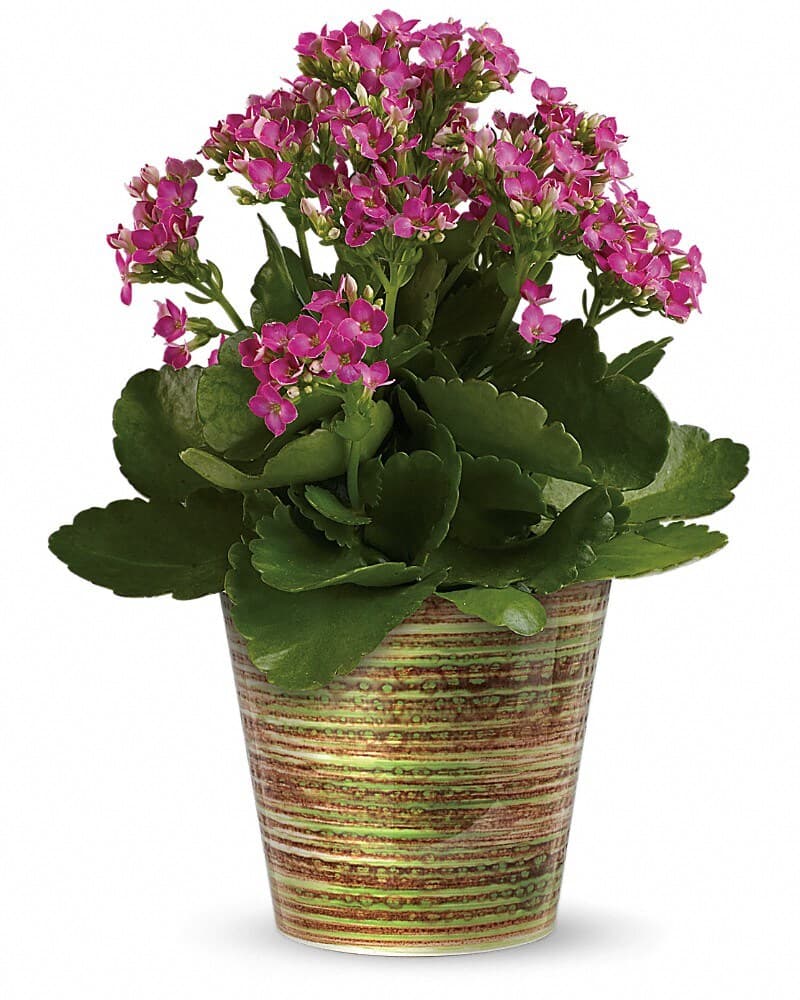
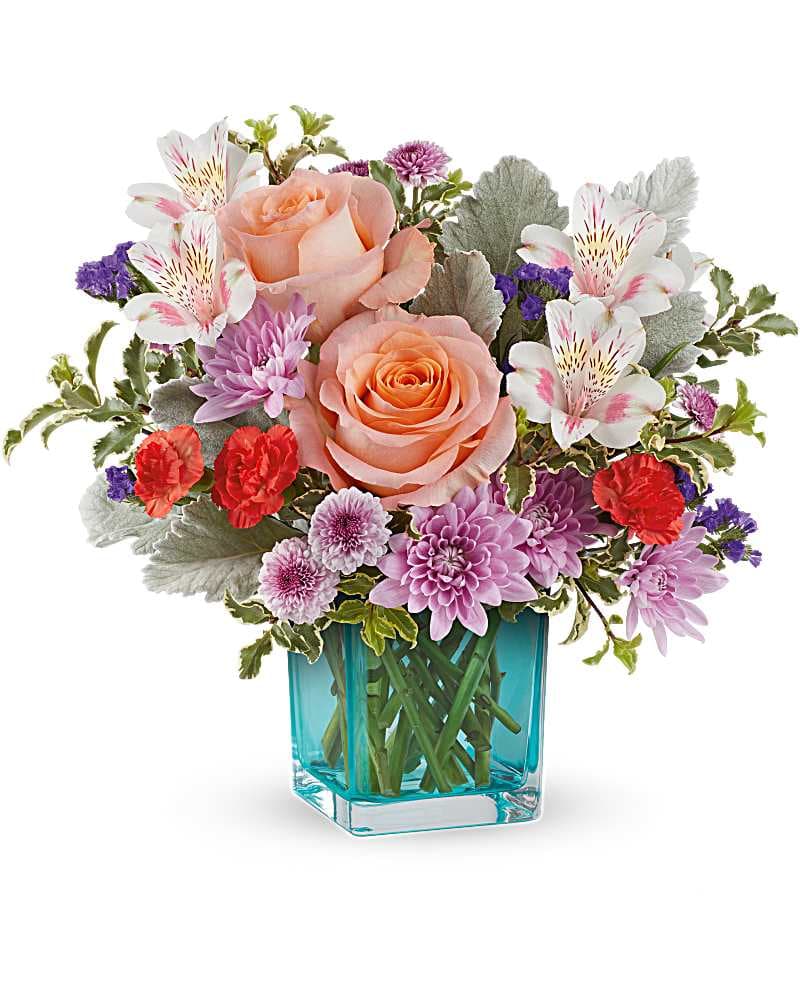
When the answer is yes, build small. A hospital bedside table is perhaps eighteen inches square and it is already carrying a water jug, a phone, a call button, a box of tissues and whatever the last visitor brought. A tall wrapped hand-tie has to be unwrapped, cut and put into a container the room does not own, usually by a nurse who has other work. So ask for a compact vased design with the vase included, in a container that will not tip if the table is bumped, and skip the balloon if the unit has a latex rule. If the stay is going to be long - and Rancho Los Amigos in Downey is a rehabilitation hospital where stays run into weeks - a living plant beats cut flowers outright. The Sky Glass jade plant on the listed shelf is the one to reach for: it survives a fluorescent room, it needs almost nothing, and it goes home in the car afterwards instead of into a bin.
Commerce generates its own particular category of get-well order, and it comes off the shop floor. This is a working city - rail yards, distribution buildings, food and apparel plants - and the injuries are the ones that come with pallet jacks, forklifts, loading docks and long shifts: hands, backs, shoulders, knees. When someone on a crew goes to an emergency department, the crew sends one arrangement together rather than a dozen separately, and nobody on it has ever visited the room. Two things to get right. Put every name on the card, or the department and the shift, and it costs nothing extra however long the list runs. And confirm the patient is still admitted, because a great many of these stays are two days: if the order arrives on day three it arrives to an empty bed and gets held at a desk. When in doubt, send to the house instead and skip the hospital entirely - it will be there when they get home, which is when the boredom actually starts.