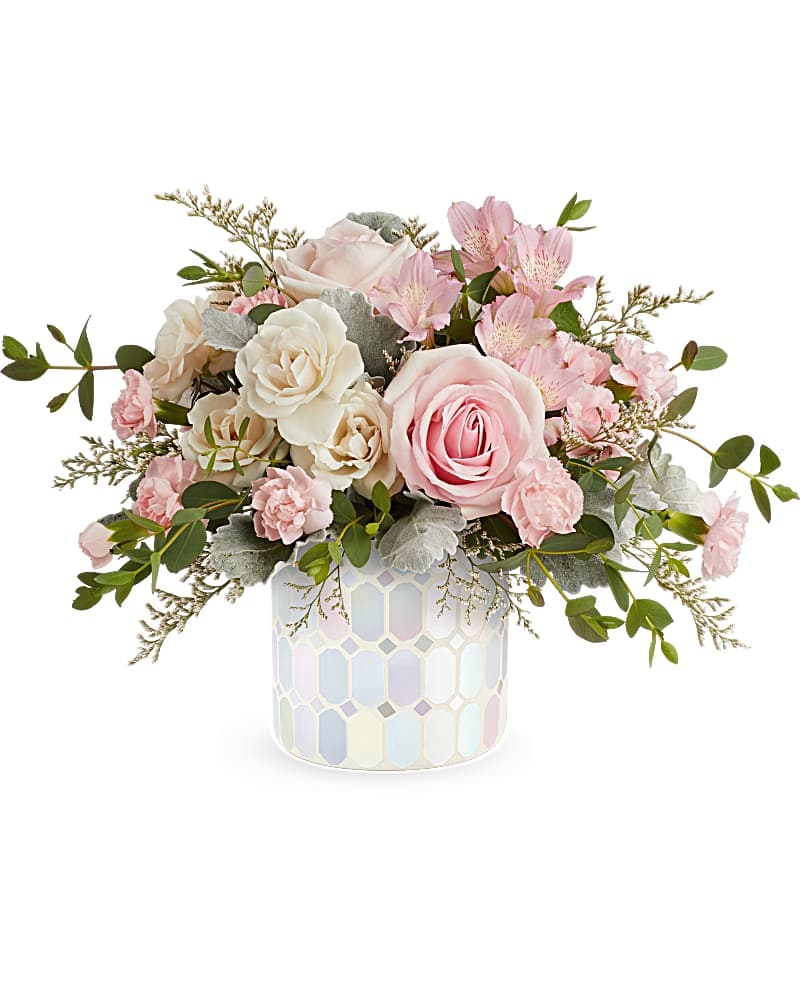
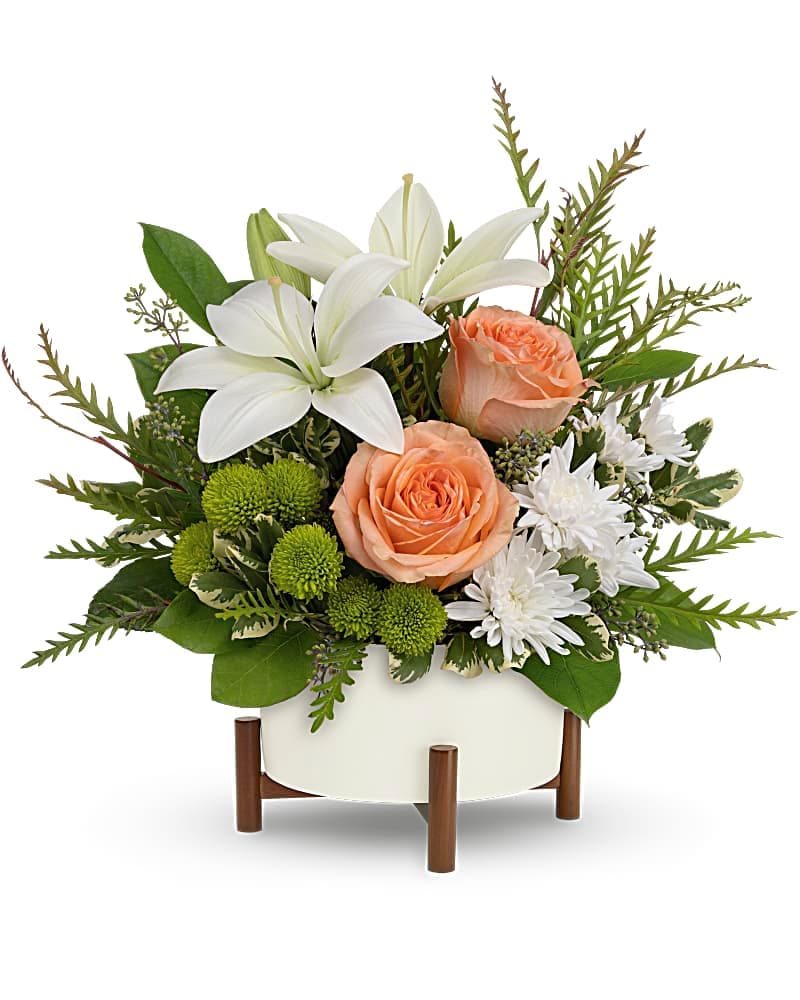
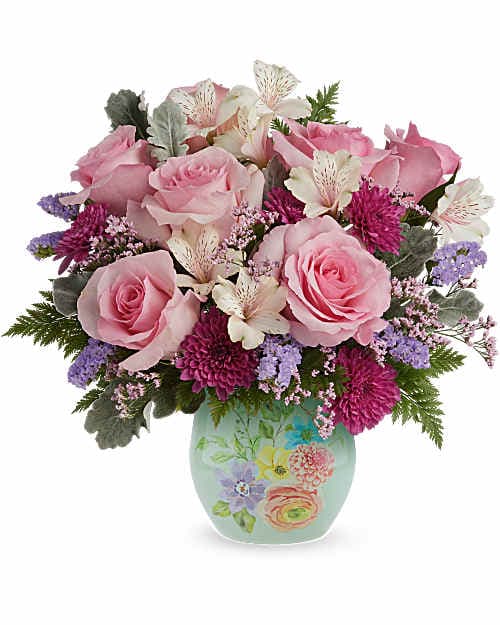
Then ask one question that feels nosier than it is: not which hospital, but which unit. The answer rewrites the brief. If it is Hillman on Centre Avenue, an infusion suite, a transplant service or any hematology bed, this is the strictest work in the trade. No lily of any variety. Nothing that drops pollen onto bedding. No perfume, because scent travels across a shared room whether or not the neighbour consents. And — the part that surprises people — no living soil, since the spores in a pot are a real hazard to somebody whose immune defences have been switched off deliberately, which makes the houseplant that would be the smarter present in any other week the single item barred until discharge day. If it is a critical-care bay or the newborn unit, assume the answer is nothing and stop looking for a way around it; that door is closed for the patient's protection, not for the convenience of the staff behind it. If it is a locked behavioural unit, or certain rehabilitation corridors, the objection is hardware rather than botany — glass, florist wire and a yard of trailing ribbon are what get refused, so the piece has to be plastic or ceramic with soft mechanics only. If it is Magee on Halket Street, a maternity floor, a step-down bed or an ordinary medical room, relax: those rooms take practically anything. What travels safely into every building on this map is gerbera daisies, carnations, spray roses, stock, alstroemeria, lisianthus and solidago, built wide rather than tall and kept no higher than the water jug it will stand beside, so it can be set down once and left where it is. Skip the latex balloon; a lot of these buildings refuse it on allergy grounds and the money buys more flower anyway. And scent deserves a local footnote: this valley made glass, steel and coke for a century, a great many of its older residents have the lungs to show for it, and an unperfumed arrangement is the kinder default here regardless of what the ward permits.
The line that actually decides whether the flowers arrive is the address line. It needs the patient's legal name, the building, the unit and the room — four items, and the last two are the ones people skip. A hospital switchboard is not permitted to look a patient up for you, and plenty of patients are not listed in the directory at all, so an order reading UPMC and a city name has nowhere to go once the van reaches a lobby. Oakland is where this bites hardest, because the names sound like one place and are not: Presbyterian and Montefiore share a campus, Magee-Womens is its own address on Halket Street, Shadyside and Hillman are a mile away up Centre Avenue, the VA is on University Drive, and Children's is not in Oakland at all but out Penn Avenue in Lawrenceville. If the family cannot give you all four items, get a mobile number instead and put the flowers on their kitchen table rather than gambling on a lobby desk. Second, do not overestimate the stay. Two nights counts as a long admission for most of what happens up Bower Hill, and a vase that lands at ten on the morning somebody is being wheeled out rides home on the floor of a car and arrives as a wet mess. When the procedure was yesterday and the discharge is tomorrow, aim the delivery at the house for the day after — the stretch no one thinks to cover, when the visitors have tapered off and getting dressed is still a project. Winter adds a third consideration. January here does not forgive a long carry across an open parking deck, so ask for a heavy sleeve, and give the driver a phone number rather than a doorbell when the garage runs four levels underground.